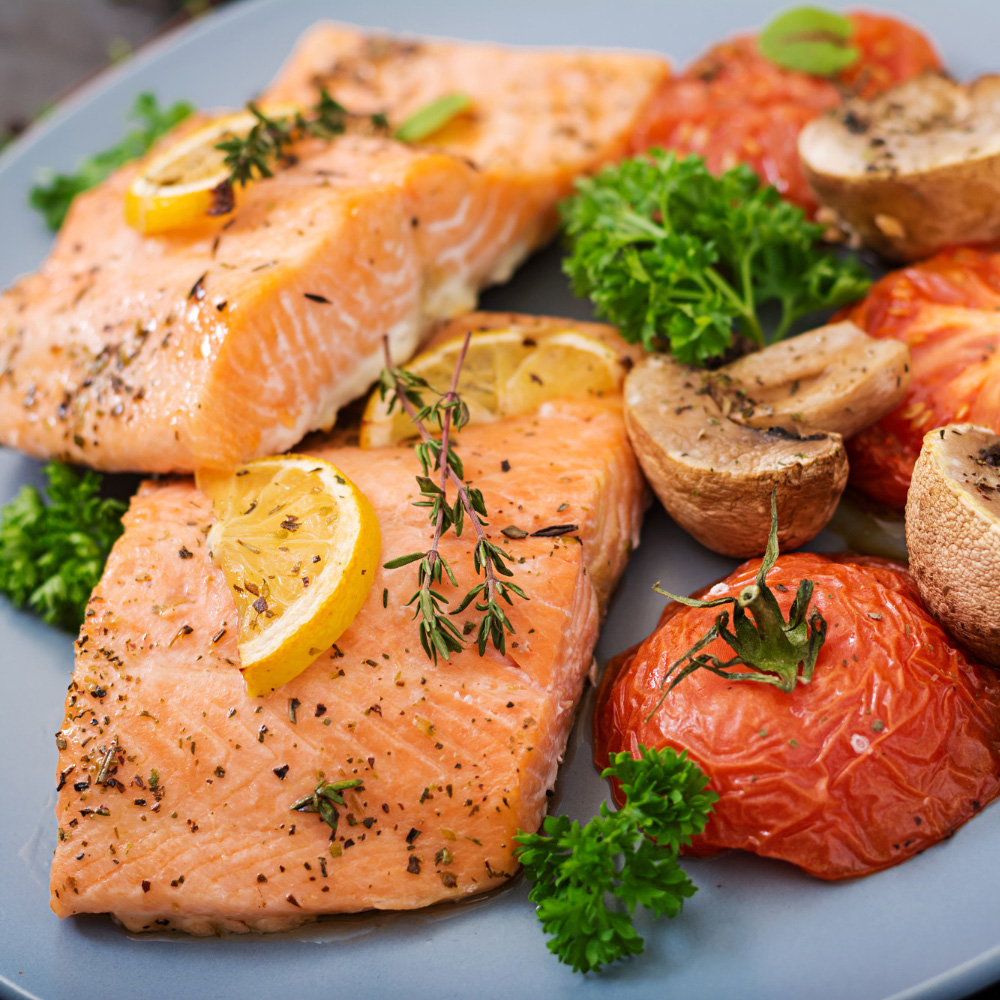
This baked salmon cooks on a bed of cherry tomatoes and mushrooms, which soften into a garlicky, lemony sauce around the fish. It takes 30 minutes from start to finish, needs one dish, and serves 4. It’s naturally low in carbohydrate, so it suits most eating plans, and goes well with rice, potatoes or a simple salad.
- Serves: 4
- Prep time: 10 minutes
- Cook time: 20 minutes
- Total time: 30 minutes
Ingredients
- 4 salmon fillets, about 140 g (5 oz) each
- 300 g (10.5 oz) cherry tomatoes
- 250 g (9 oz) mushrooms, halved or quartered
- 2 tablespoons olive oil
- 3 garlic cloves, sliced
- 1 lemon: zest of half, and the rest cut into wedges
- ½ teaspoon salt and black pepper
- 2 tablespoons chopped fresh parsley or dill
- Optional: a pinch of chili flakes or a few sprigs of thyme
Method
- Heat the oven to 200°C (400°F), or 180°C (350°F) for a fan oven.
- Put the tomatoes, mushrooms and garlic in a roasting dish large enough to hold the salmon in one layer. Toss with 1½ tablespoons of the oil, half the salt, some pepper and the chili or thyme, if using.
- Roast the vegetables for 8 minutes, until the mushrooms start to soften and the tomatoes begin to split.
- Rub the salmon with the remaining oil, salt and pepper and the lemon zest.
- Nestle the fillets among the vegetables, skin side down if they have skin.
- Roast for 10 to 12 minutes more, until the salmon is just cooked and the tomatoes have burst into a light sauce.
- Squeeze a lemon wedge over each fillet, scatter with parsley or dill, and spoon the tomato and mushroom juices over the top.
Is it cooked?
Fish is safe once it reaches 63°C (145°F) in the thickest part, the temperature the US Food and Drug Administration gives for most seafood. The flesh should look opaque all the way through and flake when pressed gently with a fork. Fillets vary in thickness, so check the thickest one first.
Tips for the best result
- Give the vegetables a head start. Mushrooms release water as they roast, and the extra 8 minutes lets some of it cook off.
- Leave space around the fish so it roasts rather than steams.
- Use room-temperature fillets. Take the salmon out of the fridge 15 minutes before cooking so it cooks more evenly.
- Don’t overcook. Salmon keeps cooking for a minute or two after it comes out of the oven.
Swaps and variations
- White fish: cod, haddock or hake work well. Thinner fillets may need only 8 to 10 minutes.
- Mediterranean: add olives, capers and a few strips of red pepper to the vegetables.
- With greens: stir a handful of spinach into the hot vegetables just before serving, so it wilts in the juices.
- With beans: add a drained can of white beans with the salmon for a more filling, higher-fiber dish.
Why this is a good everyday dinner
Salmon is an oily fish, rich in the omega-3 fats EPA and DHA. The NHS recommends at least 2 portions of fish a week, including 1 of oily fish, and this recipe gives each person a 140 g portion, the size the NHS uses. Our guide to omega-3 foods explains more about why oily fish matters.
The dish is also low in carbohydrate: about 7 g per serving, mostly from the tomatoes. If you follow keto, it fits easily, and our guide to seafood on keto covers other fish and shellfish.
Nutrition per serving (estimate)
Figures are worked out from USDA FoodData Central values for farmed Atlantic salmon, cherry tomatoes, white mushrooms, olive oil, garlic, lemon and parsley:
| Nutrient | Per serving |
|---|---|
| Calories | 385 kcal |
| Protein | 32 g |
| Carbohydrate | 7 g |
| Fiber | 2 g |
| Sugars | 4 g |
| Fat | 26 g |
| Saturated fat | 5 g |
| Sodium | 380 mg |
Farmed salmon is fattier than wild: per 100 g raw, about 13.4 g of fat compared with 6.3 g, according to USDA values. Most of that fat is unsaturated. Using wild salmon lowers the calories.
Contains: fish. There are no other common allergens as written.
Keeping leftovers
Cool the salmon and vegetables quickly and refrigerate them within 2 hours, then use them within 3 to 4 days, as the USDA advises for cooked leftovers. Cold salmon is good flaked into a salad or grain bowl the next day. If you reheat it, do it gently, covered, in a low oven, so it doesn’t dry out.
What to serve with it
- Steamed rice, couscous or crusty bread to soak up the juices.
- Roasted or boiled baby potatoes.
- Our green beans with toasted almonds.
This article is general information, not medical advice. Nutrition figures are estimates from USDA FoodData Central and will change with the brands and amounts you use. If you follow a diet for a medical reason, check the recipe with your doctor or dietitian.