This vegetable fried rice turns leftover cooked rice into a quick dinner: the rice is stir-fried in a hot pan with garlic, mixed vegetables and scrambled egg, then seasoned with soy sauce and a few drops of sesame oil. It takes about 20 minutes, serves 4, and is the best use of yesterday’s rice, as long as that rice was cooled and stored safely.
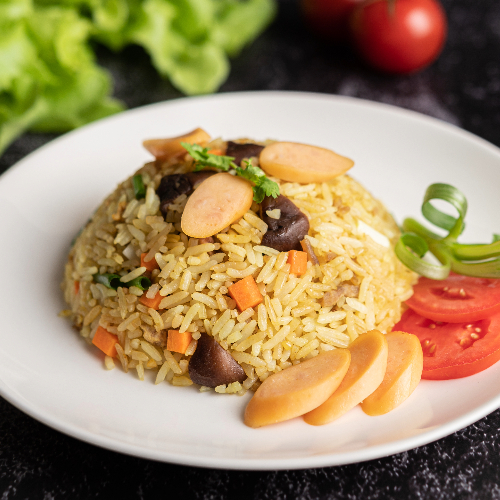
- Serves: 4
- Prep time: 5 minutes
- Cook time: 15 minutes
- Total time: 20 minutes, using rice cooked in advance
Ingredients
- 750 g (about 4½ cups) cold cooked long-grain rice, from about 250 g (1¼ cups) uncooked rice
- 2 tablespoons vegetable oil, divided
- 3 eggs, beaten
- 3 spring onions (scallions), sliced, white and green parts kept separate
- 2 garlic cloves, finely chopped
- 300 g (2 cups) frozen mixed vegetables, such as peas, carrots, corn and green beans
- 3 tablespoons soy sauce, or to taste
- 1 teaspoon toasted sesame oil
- Optional: chili flakes or chili sauce, to serve
Method
- Break up any clumps in the cold rice with your fingers so the grains are separate.
- Heat 1 tablespoon of the oil in a wok or large frying pan over high heat. Pour in the beaten eggs and scramble for about 1 minute until just set. Tip onto a plate.
- Add the remaining oil to the pan. Add the white parts of the spring onions and the garlic and stir-fry for 30 seconds.
- Add the frozen vegetables and stir-fry for 3 to 4 minutes until hot and any water has cooked off.
- Add the rice and spread it out across the pan. Leave it for 1 minute to get slightly crisp, then stir and repeat for 4 to 5 minutes, until the rice is piping hot all the way through.
- Add the soy sauce and stir well. Return the egg, breaking it into pieces, and stir through.
- Turn off the heat, stir in the sesame oil and the green parts of the spring onions, and serve straight away.
Why cold rice works best
Freshly cooked rice is soft and steamy, so it clumps and turns mushy in the pan. Rice that has been cooled and refrigerated has firmer, drier grains that stay separate and fry rather than steam. If you only have freshly cooked rice, spread it on a tray and let it cool for 15 to 20 minutes, then refrigerate it until cold.
Rice food safety
Cooked rice needs careful handling. Uncooked rice can contain spores of bacteria that survive cooking, and if cooked rice is left at room temperature, they can multiply and produce harmful substances that reheating won’t destroy. Food Standards Scotland advises:
- Cool cooked rice as quickly as possible, ideally within an hour, spreading it out or dividing it into smaller portions.
- Keep it in the fridge and eat it within 24 hours.
- When you reheat it, make sure it’s steaming hot all the way through.
- Don’t reheat rice more than once.
So for this recipe, cook the rice the day before, cool it quickly, refrigerate it, and use it the next day. Eat the fried rice straight away rather than reheating it again later.
Tips for the best result
- Use a very hot pan, and don’t overfill it. If your pan is small, cook the rice in two batches.
- Have everything ready before you start. Stir-frying is fast, so chop and measure first.
- Season gradually. Soy sauces vary in saltiness. Start with 2 tablespoons and add more to taste.
- Add sesame oil at the end, off the heat, so its toasted flavor stays strong.
Swaps and variations
- Lower salt: use reduced-sodium soy sauce, which brings the sodium down noticeably.
- Brown rice: use cooked, cooled brown rice for more fiber.
- More protein: add cooked chicken, shrimp or cubes of firm tofu with the vegetables. If you cook raw chicken in the pan, make sure it reaches 74°C (165°F), the temperature in the USDA’s safe temperature chart.
- Fresh vegetables: use diced carrot, peppers, broccoli, cabbage or bean sprouts. Hard vegetables need a few minutes longer.
- Vegan: leave out the egg and add tofu instead.
- Gluten-free: use tamari or another gluten-free soy sauce.
Nutrition per serving (estimate)
One serving is a quarter of the recipe. These figures are estimates calculated from USDA FoodData Central values for the ingredients above, with regular soy sauce.
| Nutrient | Per serving |
|---|---|
| Calories | 435 kcal |
| Protein | 14 g |
| Carbohydrate | 65 g |
| Fiber | 4 g |
| Sugars | 1 g |
| Fat | 13 g |
| Saturated fat | 2 g |
| Sodium | 750 mg |
Most of the sodium comes from the soy sauce. The World Health Organization recommends adults keep sodium under 2 g a day, so if you’re watching your salt, use reduced-sodium soy sauce and add less.
Contains: egg, soy and wheat (gluten, in regular soy sauce), plus sesame. Check the labels on packaged ingredients if you’re cooking for someone with an allergy.
What to serve with it
- A crunchy cucumber salad dressed with rice vinegar.
- Stir-fried greens such as bok choy or broccoli.
- For a full meal, our chickpea curry is another quick weeknight option.
This article is general information, not medical advice. Nutrition figures are estimates from USDA FoodData Central and will change with the brands and amounts you use. If you follow a diet for a medical reason, check the recipe with your doctor or dietitian.