Leafy greens such as kale, spinach and collards belong in an anti-inflammatory way of eating, but they aren’t a treatment for inflammation on their own. A review of 83 studies found that eating more fruit and vegetables lowered blood markers of inflammation such as C-reactive protein (CRP), and most of that research looked at fruit and vegetables together, not greens alone. The benefit comes from your overall pattern of eating, with greens as one useful part of it.

What “anti-inflammatory” means for food
Inflammation is the body’s normal response to an injury or infection, such as the swelling around a cut. The kind that matters for diet is low-grade chronic inflammation, which can carry on quietly for years. Harvard Health notes that chronic inflammation has been linked to heart disease, diabetes, arthritis, depression, Alzheimer’s disease and some cancers.
No food switches inflammation off. When researchers call a food “anti-inflammatory”, they usually mean one of two things: people who eat more of it tend to have lower levels of inflammation markers in their blood, or those markers fell when people ate more of it in a trial (example). Common markers are CRP, interleukin-6 (IL-6) and tumor necrosis factor alpha (TNF-α). They’re useful signals, but they’re a step removed from the outcomes that matter most, such as heart attacks.
What the research shows
The strongest evidence comes from a 2018 systematic review and meta-analysis in the American Journal of Clinical Nutrition. It included 83 studies, 71 of them clinical trials. Most of the trials, 48 of the 71, found that eating more fruit or vegetables improved at least one marker of inflammation. When the results were pooled, fruit and vegetable intake lowered levels of CRP and TNF-α.
For greens in particular, the evidence is thinner. A study of 1,005 middle-aged women in Shanghai found that those who ate the most cruciferous vegetables had lower blood levels of three inflammation markers (TNF-α, IL-1β and IL-6) than those who ate the least. The cruciferous family includes kale, collards, bok choy, cabbage and broccoli. A similar but weaker pattern showed up for all vegetables combined. That was an observational study, so it shows a link, not proof that the vegetables caused the difference.
Put together, eating more vegetables, greens included, is fairly consistently linked with lower inflammation markers, and several trials have seen those markers fall when people ate more produce. Because most of the studies look at fruit and vegetables as a group, claims that one particular green “fights inflammation” go further than the evidence.
Is kale anti-inflammatory?
Kale is often singled out, and it’s a good choice, but the case for it rests on what it contains and the group it belongs to, rather than on studies of kale by itself. Per 100 g (3.5 oz) raw, kale provides about 4 g of fiber, 93 mg of vitamin C and 390 mcg of vitamin K, along with carotenoids such as lutein, according to USDA FoodData Central. As a cruciferous vegetable, it’s part of the group linked with lower inflammation markers in the Shanghai study.
Spinach, collards, Swiss chard, arugula (rocket) and romaine lettuce share much of the same profile in different amounts. Here’s how they compare per 100 g raw, using values from USDA FoodData Central:
| Green (100 g raw) | Calories | Fiber | Vitamin C | Vitamin K | Folate | Potassium |
|---|---|---|---|---|---|---|
| Kale | 35 | 4.1 g | 93 mg | 390 mcg | 62 mcg | 348 mg |
| Spinach | 23 | 2.2 g | 28 mg | 483 mcg | 194 mcg | 558 mg |
| Collards | 32 | 4.0 g | 35 mg | 437 mcg | 129 mcg | 213 mg |
| Swiss chard | 19 | 1.6 g | 30 mg | 830 mcg | 14 mcg | 379 mg |
| Arugula (rocket) | 25 | 1.6 g | 15 mg | 109 mcg | 97 mcg | 369 mg |
| Romaine lettuce | 17 | 2.1 g | 4 mg | 102 mcg | 136 mcg | 247 mg |
A few things stand out. Kale and collards have the most fiber, kale has by far the most vitamin C, spinach and romaine are good sources of folate, and every one of them gives you more than the daily vitamin K that the NIH Office of Dietary Supplements recommends for adult women (90 mcg; 120 mcg for men). Eating a mix gets you more of everything than picking a single favorite.
Greens are one part of an anti-inflammatory diet
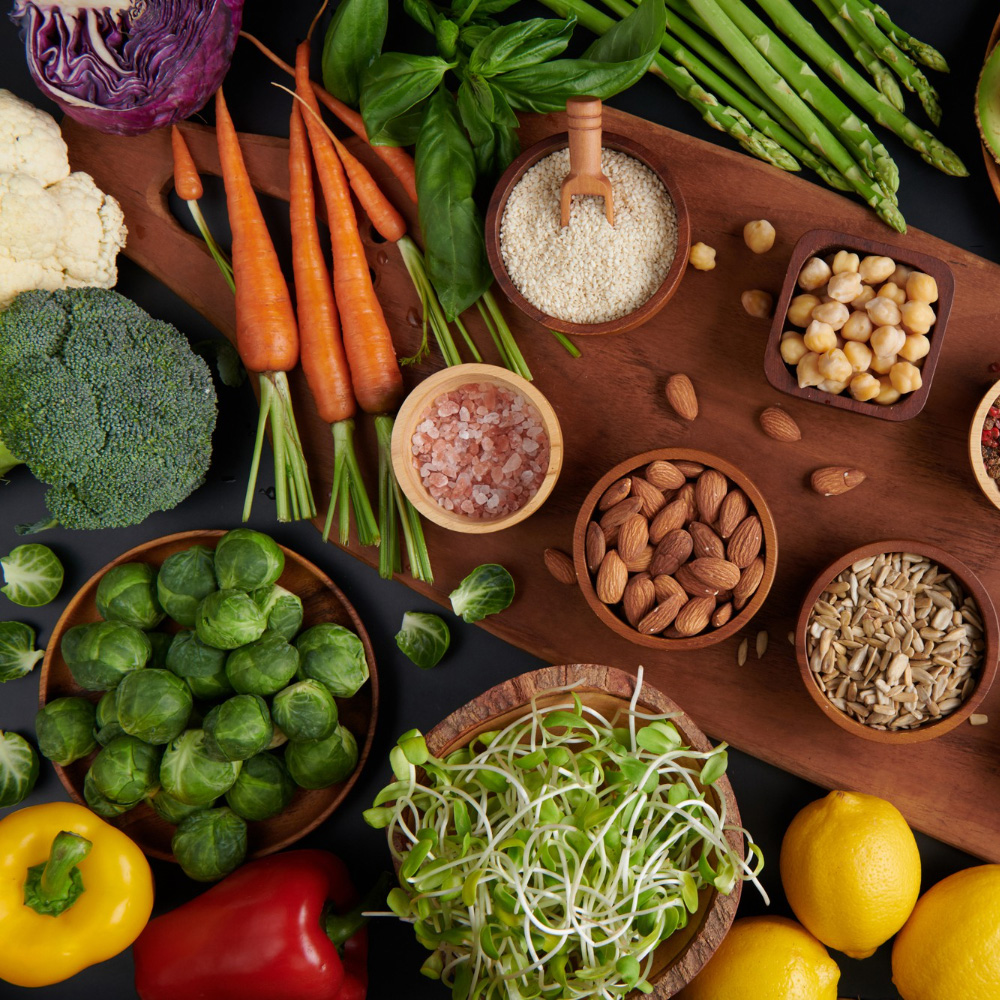
Harvard Health lists green leafy vegetables alongside tomatoes, olive oil, nuts such as almonds and walnuts, fatty fish such as salmon and sardines, and fruits such as strawberries, blueberries, cherries and oranges as foods that help fight inflammation. On the other side, it suggests limiting refined carbohydrates such as white bread and pastries, fried foods, sugar-sweetened drinks, red and processed meat, and margarine, shortening and lard.
That’s close to a Mediterranean style of eating. A bowl of kale won’t make up for meals built mostly from the second list, while greens eaten with olive oil, beans, fish and whole grains fit the pattern Harvard Health recommends. Tomatoes are on the list too, and our stuffed tomatoes and peppers pair them with herbs and olive oil.
How to eat more leafy greens
The World Health Organization recommends that everyone older than 10 eats at least 400 g of fruit and vegetables a day. Greens are an easy way to add to that, because they cook down so much. Some simple ways in:
- Stir two big handfuls of spinach into soups, curries, stews and pasta sauces in the last few minutes of cooking. It wilts down to almost nothing.
- Swap half the lettuce in a salad for arugula, watercress or baby kale for a stronger, peppery flavor.
- Massage chopped kale with a little olive oil, lemon juice and salt for 2 to 3 minutes before adding it to a salad. It turns softer and less bitter.
- Sauté chard, collards or kale with garlic and olive oil for 3 to 5 minutes as a quick side dish.
- Blend a handful of spinach into a smoothie with frozen fruit, which hides the taste.
- Keep a bag of frozen spinach or kale in the freezer for the days when the fresh ones run out.
- Eat greens with a little fat. Vitamin K is fat-soluble, according to the NIH Office of Dietary Supplements, so olive oil, avocado or nuts in the same meal are a sensible partner.
Raw or cooked?
Both count. Cooking shrinks greens, so a cooked portion packs in more leaves, while some of the vitamin C, which breaks down with heat and leaches into cooking water, is lost. Raw salads and cooked greens each have something to offer, so it’s worth eating both. A good rule of thumb is to cook greens briefly and use as little water as you can, or to add them to a soup or stew so you eat the liquid too.
Who should be careful with leafy greens
If you take warfarin
Leafy greens are among the richest food sources of vitamin K, which helps blood clot and affects how warfarin (Coumadin) works. The NIH Office of Dietary Supplements says that if you take warfarin, it’s very important to get about the same amount of vitamin K each day.
That doesn’t mean avoiding greens. It means eating a steady amount from week to week and telling your doctor before you make a big change, such as starting a daily green smoothie. Other blood thinners work differently, so ask your doctor or pharmacist what applies to your medicine.
If you’ve had kidney stones
Spinach is high in oxalate. The US National Institute of Diabetes and Digestive and Kidney Diseases says people who form calcium oxalate stones may want to limit high-oxalate foods such as spinach, rhubarb, nuts and wheat bran. If you’ve had a stone, ask your doctor which type it was and which greens suit you.
If you have kidney disease
Some greens are high in potassium. Per 100 g raw, spinach has about 558 mg and Swiss chard about 379 mg (USDA FoodData Central), and people with advanced kidney disease often need to limit potassium. Follow the eating plan your kidney team gives you.
Common questions
Is spinach anti-inflammatory?
Spinach fits the same pattern as other greens. It’s low in calories and rich in vitamin K, folate and carotenoids, and eating more vegetables in general is linked with lower inflammation markers. Most of that evidence is about vegetables as a group rather than spinach on its own.
Are green beans anti-inflammatory?
Green beans aren’t leafy greens, but the same logic applies. They’re a vegetable with fiber and vitamin C, and vegetables as a group are linked with lower inflammation markers in the research so far. They’re a good addition to a varied plate.
Do I need a greens powder or supplement?
Powders and capsules aren’t a substitute for vegetables. The studies on inflammation are about whole fruit and vegetables, and the NIH Office of Dietary Supplements warns that vitamin K supplements can interact with warfarin. If you’re thinking about taking one, check with a doctor or pharmacist first. If you follow a low-carb plan, our guide to whether keto is safe long term explains why greens matter even more there.
This article is general information, not medical advice. Talk to your doctor or a registered dietitian before making big changes to how you eat, especially if you have a health condition, take regular medication, or are pregnant or breastfeeding.