To grow herbs indoors, put them in pots with drainage holes and good potting mix, place them in your brightest window, water only when the top of the soil starts to dry, and harvest often. Light is the part most people get wrong: most herbs need about 6 to 8 hours of direct sun a day, according to Iowa State University Extension, so in winter or in a darker home a simple LED grow light on a timer makes a big difference. Chives, parsley, mint, thyme and basil are good herbs to start with.
Why grow herbs at home?
Fresh herbs make simple food taste better, and a few leaves snipped from a pot cost far less than the plastic packs sold in supermarkets, which often wilt before you use them. Herbs also help you cook with less salt. Adults worldwide eat about 11 g of salt a day on average, more than double the 5 g maximum the World Health Organization recommends, and a handful of chopped herbs, a squeeze of lemon and some garlic can replace much of the salt in many dishes.
Best herbs for growing indoors
| Herb | How easy indoors | Light needs | Notes |
|---|---|---|---|
| Chives | Very easy | Moderate | Snip from the base; regrows quickly |
| Parsley | Easy | Moderate | Slow to start from seed, so buy a small plant |
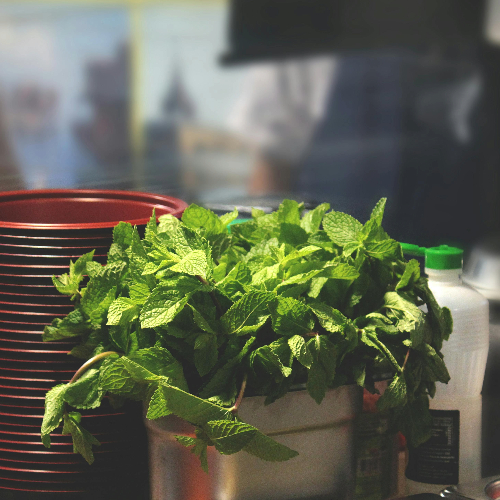
| Mint | Very easy | Moderate | Spreads fast; give it its own pot |
| Thyme | Easy | High | Let the soil dry slightly between waterings |
| Oregano | Easy | High | Likes to dry out a little |
| Basil | Moderate | High | Needs warmth and steady moisture |
| Cilantro (coriander) | Moderate | Moderate | Bolts quickly; sow small batches every few weeks |
| Rosemary | Harder | Very high | Prone to spider mites indoors |
Penn State Extension suggests chives, basil and cilantro as good choices for an indoor herb garden. Iowa State lists rosemary, sage, marjoram and bay as herbs to try once you have some experience, because they need more light and attract pests such as spider mites indoors.
Light: the key to success
Herbs without enough light grow thin and leggy, with small, pale leaves and less flavor. To get the light right:
- Choose the brightest window. In the Northern Hemisphere, a south-facing window is best, and a bright east or west window can also work. In the Southern Hemisphere, a north-facing window gets the most sun.
- Turn the pots every few days. Illinois Extension recommends rotating containers so plants don’t lean toward the glass.
- Add a grow light when days are short. Artificial light is weaker than sunlight, so it needs to run longer. Illinois Extension suggests about 2 hours of artificial light for every hour of natural light, which usually means 12 to 16 hours a day.
- Keep lights close. Iowa State advises placing lights 6 to 12 inches (15 to 30 cm) above the leaves, on a timer set for 12 to 16 hours a day. A plug-in LED light is enough for a few pots.
Pots, soil and water
- Use pots with drainage holes. Herbs hate sitting in water, and soggy soil leads to root rot.
- Use potting mix, not garden soil, which packs down in pots and can carry pests.
- Water when the top of the soil feels dry. Penn State notes that rosemary, thyme, oregano, sage and bay prefer to dry out slightly between waterings, while basil should never dry out completely.
- Empty the saucer 15 minutes after watering, so roots don’t stand in water.
- Repot when roots grow out of the drainage hole.
Temperature and humidity
Normal room temperatures suit most herbs. Penn State recommends at least 18 to 21°C (65 to 70°F) during the day and 13 to 16°C (55 to 60°F) at night. Basil is the most sensitive: it can’t cope with temperatures below about 10°C (50°F), so keep it off cold windowsills in winter.
Indoor air is often dry, especially with heating on. To raise humidity around your herbs, group the pots together, or stand them on a tray of moist pebbles.
Feeding
Herbs need less fertilizer than most houseplants, and too much can weaken their flavor. Iowa State suggests an all-purpose liquid fertilizer at half or quarter strength from spring through summer, and none in winter, when growth slows.
Harvesting without killing the plant
Regular picking keeps herbs bushy. Iowa State’s advice:
- Leafy annuals, such as basil and parsley, can be cut back hard.
- Perennials, such as chives, mint, oregano and thyme, should have no more than the top third removed at a time.
- Pinch basil above a pair of leaves. Two new shoots grow from that point.
- Remove flower buds on basil and mint to keep the leaves coming.
Annual herbs eventually run out of steam indoors. After several harvests, start new plants from seed or buy fresh ones.
Common problems
| Problem | Likely cause | Fix |
|---|---|---|
| Long, floppy stems | Not enough light | Move to a brighter spot or add a grow light |
| Yellow lower leaves | Overwatering | Let the soil dry more between waterings |
| Wilting with dry soil | Underwatering or a pot that’s too small | Water thoroughly; repot if roots are crowded |
| Tiny flies around the soil | Fungus gnats from wet soil | Let the soil dry out; use yellow sticky traps |
| Small insects on stems | Aphids | Cut off affected stems and rinse the plant |
| Fine webbing, speckled leaves | Spider mites | Rinse leaves; raise humidity; isolate the plant |
Because you’ll eat the leaves, avoid spraying pesticides. Penn State advises dealing with pests by hand and with good watering first, rather than sprays.
Using your herbs
- Soft herbs (basil, parsley, cilantro, mint, chives) are best added at the end of cooking or raw, in salads, sauces and dressings.
- Woody herbs (rosemary, thyme, oregano) can go in early, in roasts, soups and stews.
- Freeze extra herbs chopped in ice cube trays with a little water or oil, and use them in cooked dishes.
Our tomato basil soup and lemon roast chicken are good ways to use homegrown basil and thyme. Wash herbs before eating, even your own, and dry them gently in a clean towel.
A note for pet owners
Some kitchen herbs are harmful to pets. The ASPCA lists chives as toxic to dogs and cats, and oregano can upset their stomachs. Basil is listed as non-toxic. Keep pots out of reach if you have a curious cat or dog.
Common questions
Can I grow herbs from supermarket pots?
Yes. Supermarket pots are usually several seedlings crammed together. Split the clump into 3 or 4 smaller bunches and plant each in its own pot with fresh potting mix. They’ll last much longer.
Can herbs grow without a window?
Only with a grow light. Under a light running 14 to 16 hours a day, herbs such as basil, parsley and chives can grow in a kitchen corner or on a shelf.
Do indoor herbs need fertilizer?
A little, in spring and summer. Use a diluted liquid fertilizer every few weeks and stop in winter.
This article is general information, not medical advice. Talk to your doctor or a registered dietitian before making big changes to how you eat, especially if you have a health condition, take regular medication, or are pregnant or breastfeeding.