No single food will fix poor sleep, but what and when you eat can make it easier or harder to drop off. The best-supported habits are cutting caffeine in the afternoon and evening, limiting alcohol, and not eating a large meal late at night. The NHS advises not drinking tea, coffee or alcohol for at least 6 hours before bed. A few foods, including kiwifruit and tart cherry juice, have shown promise in small studies, and a light snack or a warm milky drink can help some people. Lasting sleep problems need more than diet, so talk to your doctor if poor sleep goes on for weeks.
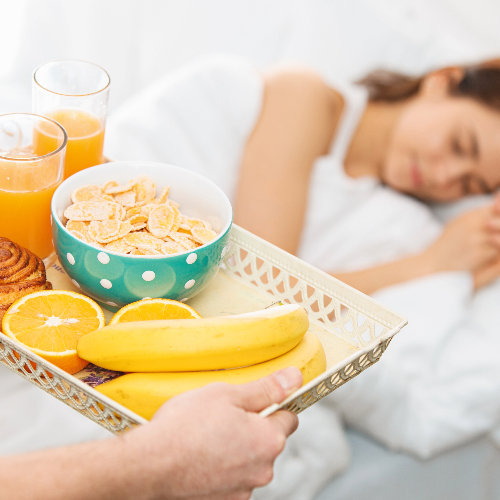
Foods and drinks that can disrupt sleep
Caffeine
Caffeine blocks a brain chemical that builds up through the day and makes you sleepy. Its effects can last for many hours, which is why the NHS suggests avoiding tea and coffee for at least 6 hours before bed. Caffeine is also in cola, energy drinks, chocolate and some medicines. The FDA gives 400 mg a day as an amount not usually linked with harm in healthy adults, but people vary, and some find even a morning coffee affects their sleep.
Alcohol
A nightcap may help you fall asleep, but alcohol disturbs sleep later in the night. The NHS’s Every Mind Matters advice is to avoid alcohol and nicotine for 1 to 2 hours before bed, because both can disrupt sleep. Alcohol also makes you more likely to wake up needing the toilet. Our guide to calories in alcohol covers its other effects.
Large, late meals
Eating a large meal close to bedtime can make it harder to fall asleep, according to the NHS. Rich, spicy or fatty food late in the evening can also trigger heartburn when you lie down. Try to finish your main meal 2 to 3 hours before bed.
Too much fluid late in the evening
A big drink just before bed can wake you up to use the toilet. Drink well through the day and taper off in the last hour or two.
Foods that may help
Kiwifruit
In a small 2011 study, 24 adults with sleep problems ate two kiwifruits an hour before bed every night for 4 weeks. They fell asleep about 35% faster, spent less time awake during the night, and slept about 13% longer. There was no comparison group, so the results need confirming, but kiwifruit is a healthy snack either way. Two kiwis provide more than a day’s vitamin C.
Tart cherry juice
Tart (sour) cherries naturally contain melatonin, the hormone that helps regulate the sleep cycle. In a small 2012 trial, 20 healthy adults who drank tart cherry juice concentrate for 7 days had higher melatonin levels and slept longer and more efficiently than when they took a placebo. It’s a small, short study, and the juice contains sugar, so it’s not a reason to drink large amounts.
A warm milky drink or herbal tea
The NHS suggests a warm milky drink or herbal tea instead of caffeinated drinks in the evening. There’s little proof that milk itself makes you sleepy, but a warm, caffeine-free drink can be part of a relaxing routine. Chamomile is a popular choice.
Balanced meals through the day
A 2016 review of diet and sleep found early evidence that overall eating patterns, as well as single foods, may affect sleep quality, but most of the research has been short-term. Eating regular meals with plenty of fiber, vegetables and protein, and fewer sugary and highly processed foods, is a sensible approach for sleep and health generally.
Is a bedtime snack a good idea?
If you’re genuinely hungry, a light snack is better than lying awake with a rumbling stomach. Good choices are small and easy to digest:
- A small pot of plain yogurt with a few berries
- A banana or two kiwifruits
- A small bowl of oats with milk
- A slice of whole grain toast with peanut butter
- A handful of nuts
Avoid large portions, sugary snacks and anything very spicy or fatty. Our list of healthy snack ideas has more options.
What about sleep supplements?
Melatonin, magnesium, valerian and other “sleep” supplements are widely sold. Rules on melatonin differ by country: in some, such as the UK, it’s a prescription medicine, while in others, such as the US, it’s sold as a supplement. Supplements can interact with medicines and aren’t suitable for everyone, especially in pregnancy and for children. Ask a pharmacist or doctor before taking them.
Other habits that matter more than food
The NHS advice for better sleep includes:
- Waking up and getting out of bed at the same time every day.
- Relaxing for at least an hour before bed, for example with a bath or a book.
- Keeping your bedroom dark and quiet, using curtains, blinds, an eye mask or ear plugs if needed.
- Exercising regularly during the day, but not in the 4 hours before bed.
When to see a doctor
The NHS advises seeing a GP if you’ve had trouble sleeping for months or if it’s affecting your daily life in a way that makes it hard to cope. Snoring or interrupted breathing during sleep can be a sign of sleep apnoea, which also needs checking. Some medicines, pain, heartburn, anxiety and low mood can all affect sleep, and treating the cause works better than changing your diet alone.
Common questions
Does turkey make you sleepy?
Turkey contains tryptophan, an amino acid the body uses to make serotonin and melatonin, but so do most protein foods. Feeling sleepy after a big holiday meal is more likely due to the size of the meal and alcohol.
Is it bad to eat late at night?
A light snack is fine. Large meals late in the evening are more likely to disturb sleep and cause heartburn.
Can decaf coffee affect sleep?
Decaf still contains a small amount of caffeine, but much less than regular coffee. Most people can drink it in the evening without problems.
This article is general information, not medical advice. Talk to your doctor or a registered dietitian before making big changes to how you eat, especially if you have a health condition, take regular medication, or are pregnant or breastfeeding.