For large eggs started in boiling water, cook them for about 6 minutes for a soft, runny yolk, 8 minutes for a jammy, just-set yolk, and 10 to 12 minutes for a firm, hard-boiled yolk, then cool them in cold water. Times depend on the size of the egg, how cold it is and how hard the water is boiling, so treat these as a starting point. If you’re pregnant, cooking for young children or older adults, or have a weakened immune system, the FDA advises cooking eggs until both the yolk and white are firm.
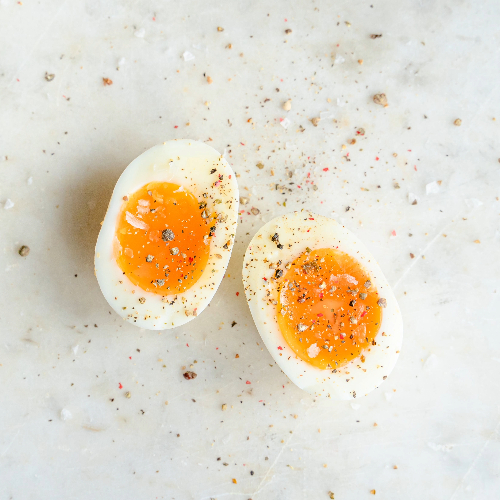
- Serves: 1 to 4 (allow 1 or 2 eggs per person)
- Prep time: 2 minutes
- Cook time: 6 to 12 minutes, depending on how you like them
- Total time: 10 to 15 minutes, including cooling
Ingredients
- Large eggs, straight from the fridge
- Water
- A bowl of cold water, or ice water
Boiled egg timing chart
For large eggs (about 50 g without the shell) from the fridge, lowered into gently boiling water:
| Time | Yolk | White | Good for |
|---|---|---|---|
| 6 minutes | Runny | Just set | Dipping toast, ramen, salads |
| 7 minutes | Soft and slightly runny in the middle | Set | Salads, grain bowls |
| 8 minutes | Jammy, just set | Firm | Snacks, salads |
| 10 minutes | Firm, slightly soft in the very center | Firm | Most uses |
| 12 minutes | Fully firm | Firm | Egg salad, deviled eggs, lunchboxes, people at higher risk |
Small eggs need about a minute less, and extra-large eggs about a minute more.
Method
- Bring a pan of water to a boil. Use enough water to cover the eggs by about 2 cm (1 in).
- Lower the eggs in gently with a spoon, so they don’t crack against the bottom.
- Turn the heat down to a steady, gentle boil.
- Set a timer for the time in the chart above.
- Cool immediately: lift the eggs into a bowl of cold or ice water for at least 2 minutes for soft eggs, or 5 minutes for hard-boiled eggs. This stops the cooking and makes them easier to peel.
- Peel: tap the egg all over on the counter, roll it gently, and peel under running water, starting at the wider end where the air pocket is.
The cold-water start method
You can also put eggs in a pan of cold water, bring it to a boil, then turn off the heat, cover the pan and leave them for 10 to 12 minutes for hard-boiled eggs. This method is gentler and less likely to crack the shells, but timings are less exact because stoves heat at different speeds.
Egg safety: who should eat eggs fully cooked
Raw and undercooked eggs can carry Salmonella bacteria. The FDA says children, older adults, pregnant women and people with weakened immune systems are at greater risk of severe illness, and advises cooking eggs until both the yolk and the white are firm.
Advice differs by country. In the UK, the NHS says pregnant women can eat raw or lightly cooked hen eggs that are British Lion or “Laid in Britain”, but should avoid other raw or partially cooked eggs, including duck, goose and quail eggs. Follow the guidance where you live, and if in doubt, cook eggs until firm.
How long do boiled eggs keep?
The FDA says to use hard-cooked eggs, in the shell or peeled, within 1 week of cooking, and not to leave cooked eggs out of the fridge for more than 2 hours (or 1 hour if it’s above 32°C, or 90°F). Soft-boiled eggs are best eaten straight away.
Store hard-boiled eggs in the fridge in a covered container. Unpeeled eggs keep their moisture better.
Why eggs crack, and how to stop it
- Sudden temperature change: eggs straight from the fridge can crack when they hit boiling water. Lower them in gently, or let them sit in warm tap water for a minute first.
- Too vigorous a boil: eggs knock against each other and the pan. Keep the water at a gentle boil.
- Overcrowding: use a pan large enough for the eggs to sit in one layer.
Why some boiled eggs are hard to peel
Very fresh eggs are often harder to peel. Eggs that have been in the fridge for a week or so usually peel more easily. Cooling the eggs quickly in cold water and peeling under running water also helps.
What about the green ring around the yolk?
A grey-green ring around a hard-boiled yolk is harmless. It forms when eggs are overcooked or cooled slowly. Cooking for no longer than 12 minutes and cooling them quickly in cold water helps prevent it.
Nutrition per egg (estimate)
One large hard-boiled egg, about 50 g without the shell, based on USDA FoodData Central values:
| Nutrient | Per egg |
|---|---|
| Calories | 78 kcal |
| Protein | 6 g |
| Carbohydrate | 0.6 g |
| Fiber | 0 g |
| Sugars | 0.6 g |
| Fat | 5 g |
| Saturated fat | 2 g |
| Sodium | 60 mg |
Eggs provide high-quality protein with almost no carbohydrate, which makes them useful on many eating plans, including lower-carb ones. Our keto breakfast ideas use them a lot.
Contains: egg.
Ways to use boiled eggs
- Halved on a salad or grain bowl.
- Mashed with a little yogurt or mayonnaise for egg salad sandwiches.
- As a quick, portable snack with a pinch of salt and pepper.
- Sliced on whole grain toast with avocado.
- Packed in a lunchbox, kept cold with an ice pack. Our guide to healthy lunchbox ideas has more.
This article is general information, not medical advice. Nutrition figures are estimates from USDA FoodData Central and will change with the brands and amounts you use. If you follow a diet for a medical reason, check the recipe with your doctor or dietitian.