A healthy lunchbox for kids includes a starchy food for energy (such as a whole grain sandwich or wrap), a protein (chicken, egg, cheese, hummus or beans), at least one vegetable and one fruit, and a drink of water or milk. Keep sweet treats small and occasional, and pack perishable foods with an ice pack: the USDA advises that perishable food shouldn’t sit at room temperature for more than 2 hours. Letting children help choose and pack their lunch makes it more likely they’ll eat it.
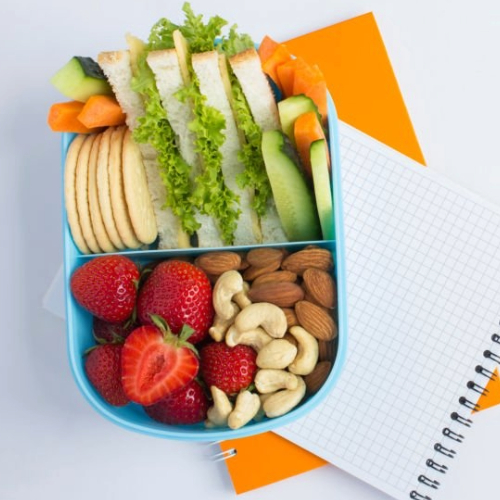
The 5-part lunchbox formula
| Part | Examples |
|---|---|
| Starchy food | Whole grain sandwich, wrap, pita, pasta salad, rice salad, crackers |
| Protein | Chicken, turkey, egg, tuna, cheese, hummus, beans, tofu |
| Vegetable | Carrot, cucumber, pepper or celery sticks, cherry tomatoes, sugar snap peas |
| Fruit | Apple slices, grapes (halved for young children), berries, banana, orange segments |
| Drink | Water or plain milk |
Rotate a few options in each group so lunches don’t get boring, and let your child choose between two healthy options to give them a sense of control.
10 lunchbox ideas
- Chicken, lettuce and tomato in a whole grain wrap, with cucumber sticks and grapes.
- Hummus and grated carrot sandwich, with cherry tomatoes and an apple.
- Pasta salad with tuna, sweetcorn and peppers, plus a satsuma.
- Cheese and crackers with pepper sticks, berries and a yogurt.
- Egg and cress sandwich, with sugar snap peas and a banana.
- Leftover vegetable fried rice with peas, plus melon cubes.
- Mini pitta pockets with falafel and salad, plus kiwi.
- Bean and cheese quesadilla wedges, with cucumber and strawberries.
- A thermos of tomato soup, a whole grain roll and an apple.
- Rice cakes with peanut butter (if your child’s school allows nuts), carrot sticks and a pear.
Our recipes for chicken salad wraps, vegetable fried rice and tomato basil soup all work as lunchbox fillers.
Keeping lunchboxes safe
Food poisoning bacteria grow fastest at room temperature. To keep perishable foods such as meat, eggs, dairy and cooked rice or pasta safe:
- Use an insulated lunch bag with an ice pack, or freeze a bottle of water to act as one.
- Pack lunches straight from the fridge, and keep them in the fridge overnight if you make them the evening before.
- Use a thermos for hot food: fill it with boiling water for a few minutes first, then add piping-hot soup or pasta.
- Throw away perishable leftovers that come home uneaten, rather than reusing them.
- Take extra care with rice: Food Standards Scotland advises cooling cooked rice quickly, keeping it in the fridge and eating it within 24 hours.
Choking risks for young children
For young children, cut round foods such as grapes and cherry tomatoes into quarters lengthwise, and avoid whole nuts. The NHS advises that whole nuts shouldn’t be given to children under 5 because of the choking risk. Many schools also ban nuts because of allergies, so check your school’s policy.
Keeping sugar in check
Lunchboxes are an easy place for sugar to creep in through juice drinks, flavored yogurts, cereal bars and sweets. The NHS recommends no more than 19 g of free sugars a day for children aged 4 to 6 and 24 g for children aged 7 to 10. A single carton of fruit juice drink or a chocolate bar can use up a large part of that.
Simple swaps:
| Instead of | Try |
|---|---|
| Juice drinks | Water or plain milk |
| Flavored yogurt tubes | Plain yogurt with fruit |
| Cereal bars | A small handful of plain popcorn or a homemade oat bar |
| Crisps every day | Crackers, rice cakes or vegetable sticks |
| Chocolate biscuits | Fruit, with an occasional treat |
Our guide to how much sugar per day explains the limits.
Tips for picky eaters
- Pack one familiar food your child always eats, alongside something new.
- Offer small amounts of new foods. It can take many tries, as our guide to getting kids to eat vegetables explains.
- Cut sandwiches into fun shapes, or use small containers so lunch looks appealing.
- Ask what they liked and didn’t, and adjust without making it a battle.
Making lunchbox prep easier
- Prep on Sunday: wash and cut vegetables, boil eggs and make a batch of pasta salad or hummus.
- Use leftovers: cook a little extra at dinner for the next day’s lunch.
- Keep a lunchbox shelf in the fridge and cupboard with ready-to-pack options.
- Freeze sandwiches made with fillings that freeze well, such as cheese or ham. They’ll thaw by lunchtime.
Common questions
How much should I pack?
Children’s appetites vary with age, growth and activity. Start with the 5-part formula in small portions, see what comes home, and adjust. It’s better for a lunchbox to come back with a little left than for a child to be hungry all afternoon.
My child only wants the same lunch every day. Is that okay?
It’s common and usually fine, as long as the lunch includes a mix of food groups. Try changing one small thing at a time, such as a different fruit or a new bread, rather than the whole meal.
Are cereal bars and fruit snacks healthy?
Many are high in sugar. Check the label: the NHS classes more than 22.5 g of total sugars per 100 g as high. Fresh fruit and plain crackers are usually better choices.
Can I pack leftovers from dinner?
Yes, and it saves time. Cool them quickly, keep them in the fridge overnight, pack them with an ice pack or in a hot thermos, and don’t send rice that’s more than a day old.
What about food allergies at school?
Many schools have rules on nuts, sesame or other allergens to protect children with severe allergies. Check your school’s policy before packing nut butters or nut-based snacks, and teach your child not to share food.
Is it okay to include a treat?
An occasional small treat is fine. Keep it small and make it the exception rather than a daily item.
This article is general information, not medical advice. Talk to your doctor or a registered dietitian before making big changes to how you eat, especially if you have a health condition, take regular medication, or are pregnant or breastfeeding.