The easiest way to cut a mango is to slice the two “cheeks” off either side of the large, flat stone, score the flesh of each cheek into a grid without cutting through the skin, then push the skin inside out and slice off the cubes. It takes about 2 minutes once you’ve done it a couple of times. Below is a step-by-step guide, how to tell when a mango is ripe, and five easy ways to use it, starting with a simple snack of mango with toasted almonds, lime and a hint of rosemary, like in our photo. Mango is a good source of vitamin C, but it’s one of the sweeter fruits, so a portion of about 80 to 150 g is plenty.
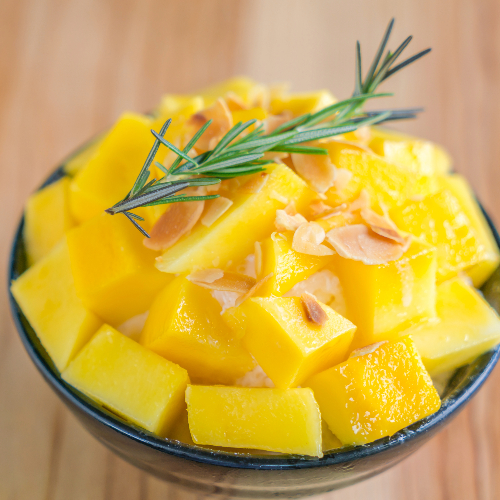
- Serves: 2 (mango with almonds, lime and rosemary)
- Prep time: 10 minutes
- Cook time: 3 minutes to toast the almonds
- Total time: about 15 minutes
Ingredients
Mango with almonds, lime and rosemary
- 1 large ripe mango (about 300 g of flesh)
- 20 g (about 15) almonds, roughly chopped
- 2 teaspoons lime juice, plus a little zest
- A few small fresh rosemary leaves, very finely chopped, or mint
Method
How to cut a mango
- Wash the mango under running water and dry it, so the knife doesn’t carry dirt from the skin into the flesh.
- Find the stone. Stand the mango on its narrow edge, stem side up. The stone is flat and runs through the middle, lined up with the stem.
- Cut off the cheeks. Slice down about 1 cm (½ inch) to one side of the center, following the curve of the stone. Repeat on the other side. You’ll have two oval cheeks and a middle piece with the stone.
- Score the flesh. Hold one cheek in a folded tea towel, skin side down. With a small knife, score the flesh in a crisscross grid, cutting down to the skin but not through it.
- Turn it inside out. Push the skin up from underneath so the cubes pop out like a hedgehog.
- Slice off the cubes with a knife, or scoop them out with a spoon.
- Use the middle. Cut the skin off the strip around the stone and slice off the remaining flesh, or eat it straight from the stone.
Make the snack
- Toast the chopped almonds in a dry frying pan over medium heat for 2 to 3 minutes until golden and fragrant.
- Put the mango cubes in a bowl and squeeze over the lime juice. Add the zest.
- Scatter with toasted almonds and a little finely chopped rosemary or torn mint, and serve.
How to choose a ripe mango
- Feel, don’t look. Color varies by variety, so a red blush doesn’t always mean ripe. A ripe mango gives slightly when gently squeezed, like a ripe avocado or peach.
- Smell the stem end. Ripe mangoes have a sweet, fruity smell.
- Avoid mangoes with large dark patches, wrinkles or a sour smell.
- Ripen at room temperature. Leave a firm mango on the counter for a few days, or in a paper bag with a banana to speed it up. Once ripe, keep it in the fridge for up to 5 days. Our guide on how to store fruit and vegetables explains more.
5 ways to use mango
- Mango with almonds, lime and rosemary, as above: a quick snack or dessert.
- Mango salsa: dice mango with red onion, red pepper, chili, coriander and lime. It’s excellent with grilled fish, chicken or tacos.
- Breakfast: add mango cubes to overnight oats or yogurt. Our overnight oats work well with tropical fruit.
- Fruit salad: combine with berries, kiwi and pineapple. Our fruit salad with lime and mint includes mango.
- Smoothies and frozen treats: freeze cubes on a tray, then blend with yogurt and a little milk for a quick frozen yogurt.
Nutrition per serving (estimate)
One serving is half the mango with almonds, lime and rosemary. These figures were calculated from USDA FoodData Central values for raw mango, almonds, lime juice and fresh rosemary.
| Nutrient | Per serving |
|---|---|
| Calories | 150 kcal |
| Protein | 3.5 g |
| Carbohydrate | 25 g |
| Fiber | 3.5 g |
| Sugars | 21 g (naturally present in the fruit) |
| Fat | 5.5 g |
| Saturated fat | 0.5 g |
| Sodium | 2 mg |
Mango is rich in vitamin C and provides beta carotene, which the body turns into vitamin A. Per 100 g it has about 14 g of natural sugar, more than berries or melon, so a portion of 80 to 150 g is a sensible amount. The sugar in whole fruit doesn’t count as free sugar, according to the NHS. Adding almonds provides protein, fiber and healthy fat, which make the snack more filling. Our guide to low-sugar fruits compares mango with other fruit.
Contains: tree nuts (almonds).
Mango allergy and skin irritation
Mango is related to poison ivy, and its skin and sap contain urushiol, a substance that can cause an itchy rash around the mouth or on the hands in sensitive people. If that happens to you, ask someone else to peel the mango, or wear gloves, and eat only the flesh. True mango allergy is uncommon but can be serious; avoid mango if you’ve had a reaction.
Common questions
Can you eat mango skin?
It’s technically edible but tough and bitter, and it’s the part most likely to irritate the skin. Most people peel it.
Is mango good for weight loss?
It can fit, in sensible portions. It’s higher in sugar than some fruits, so pair it with protein, such as yogurt or nuts, rather than eating a whole large mango on its own.
Can I freeze mango?
Yes. Freeze cubes in a single layer on a tray, then bag them. Use them within 6 months in smoothies or desserts.
This article is general information, not medical advice. Nutrition figures are estimates from USDA FoodData Central and will change with the brands and amounts you use. If you follow a diet for a medical reason, check the recipe with your doctor or dietitian.