To make fruit and vegetables last, store each kind where it keeps best. Most vegetables and berries belong in the fridge’s crisper drawer, while tomatoes, bananas, whole melons, avocados, onions, garlic, potatoes and winter squash keep better at cool room temperature. Keep ethylene-producing fruit, such as apples, bananas and ripe avocados, away from leafy greens and other vegetables, because the gas they release speeds up ripening and spoilage. Wash produce just before you eat it rather than before storing it, and keep your fridge at 4°C (40°F) or below, as the FDA advises.
Where to store common fruit and vegetables
| Store in the fridge | Store at room temperature | Ripen at room temperature, then refrigerate |
|---|---|---|
| Leafy greens, lettuce, herbs (except basil) | Tomatoes | Avocados |
| Berries, grapes, cherries | Bananas | Peaches, plums, nectarines |
| Broccoli, cauliflower, cabbage | Whole melons | Pears and kiwi |
| Carrots, beetroot, celery | Onions and garlic | Mangoes |
| Peppers, cucumbers, zucchini | Potatoes and sweet potatoes | Cut melon, always in the fridge |
| Mushrooms | Winter squash and pumpkins | |
| Apples and citrus, for the longest life | Basil, in water like flowers |
The FDA recommends refrigerating perishable produce such as strawberries, lettuce, herbs and mushrooms, and all produce bought pre-cut or packaged.
Understanding ethylene
Some fruits release ethylene, a natural gas that triggers ripening. That’s useful if you want to ripen an avocado quickly, but it shortens the life of vegetables stored nearby. UC Master Gardeners explain that many ripe fruits produce ethylene gas, which causes yellowing of green vegetables, russet spotting on lettuce, toughening of asparagus, sprouting of potatoes and a bitter taste in carrots.
- High ethylene producers: apples, bananas, ripe avocados, pears, peaches, plums, apricots, mangoes, melons and tomatoes.
- Most sensitive to ethylene: leafy greens, lettuce, broccoli, cabbage, cucumbers, carrots, asparagus, herbs and potatoes.
Keep the two groups apart: fruit in one crisper drawer and vegetables in the other, and apples and bananas away from the vegetable basket.
To ripen an avocado, pear or peach faster, put it in a paper bag with a banana or apple for a day or two.
Why some produce hates the fridge
Cold temperatures damage some fruits and vegetables, an effect called chilling injury.
- Tomatoes lose flavor and turn mealy in the fridge. Keep whole tomatoes on the counter, out of direct sun, and use ripe ones within a few days. Once cut, refrigerate them. If you need to keep very ripe tomatoes longer, the fridge is better than letting them spoil; bring them back to room temperature before eating.
- Bananas turn black in the fridge, though the inside is still fine to eat.
- Basil blackens in the cold. Stand it in a glass of water on the counter.
- Whole melons keep their flavor best at room temperature until cut.
- Winter squash and pumpkins keep for weeks or months in a cool, dry place.
Potatoes, onions and garlic
- Potatoes: store in a cool, dark, dry, airy place, such as a paper bag in a cupboard. Light turns them green: green parts contain solanine, so cut them away, and throw away potatoes that are very green or badly sprouted.
- Onions and garlic: keep in a cool, dry place with good air flow, such as a mesh bag or basket. Keep onions away from potatoes, as each makes the other spoil faster.
- Once cut, wrap onions and store them in the fridge for up to a week.
How to store produce in the fridge
- Keep the fridge at 4°C (40°F) or below. A cheap fridge thermometer tells you if it’s cold enough. The FDA recommends checking it regularly.
- Use the crisper drawers. They hold humidity, which helps vegetables stay crisp. If your drawers have vents, close them for leafy greens and open them for fruit.
- Leave some air. A packed fridge doesn’t cool evenly.
- Store produce away from raw meat. Keep raw meat, poultry and fish on the bottom shelf, in sealed containers, so juices can’t drip onto fruit and vegetables that will be eaten raw.
Specific tips for longer-lasting produce
- Leafy greens and salad: wrap unwashed leaves in a paper towel and store them in a container or loosely closed bag. The towel absorbs moisture that makes leaves slimy. Our guide on how to cook kale includes tips for sturdy greens.
- Herbs: stand parsley and coriander (cilantro) in a jar of water in the fridge, loosely covered with a bag. Wrap woody herbs, such as rosemary and thyme, in a damp paper towel.
- Berries: store unwashed in their container, and remove any moldy berries straight away. Wash just before eating.
- Carrots and celery: remove green tops from carrots, which draw out moisture. Wrap celery in foil or keep it in a container.
- Mushrooms: store in a paper bag, not plastic, so they don’t turn slimy.
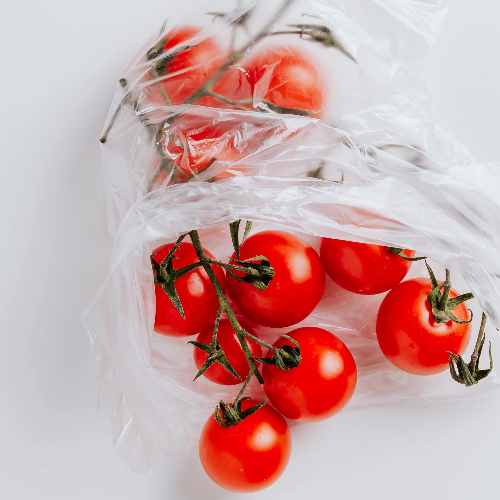
- Cherry tomatoes on the vine, like those in our photo, keep best out of their plastic bag, in a bowl on the counter.
- Asparagus: trim the ends and stand the spears in a little water in the fridge.
- Avocados: ripen at room temperature, then refrigerate ripe ones to slow them down for a few days.
Wash just before eating
Washing produce before storing it adds moisture, which encourages mold and rot. Instead, wash fruit and vegetables under running water just before you eat or cook them. The FDA advises against using soap or produce washes. Pre-washed bagged salads don’t need washing again. Our guide on how to wash vegetables explains more.
Cut produce
Once cut or peeled, all fruit and vegetables should go in the fridge in a covered container. Don’t leave cut produce at room temperature for more than 2 hours, or 1 hour on a very hot day. Squeeze lemon juice over cut apples, pears and avocados to slow browning.
Use your freezer
If you can’t eat produce in time, freeze it:
- Bananas: peel, slice and freeze for smoothies and baking.
- Berries and grapes: freeze in a single layer on a tray, then bag them.
- Herbs: chop and freeze in ice cube trays with a little water or oil.
- Spinach and kale: blanch briefly, or freeze raw for smoothies and cooking.
- Peppers and onions: chop and freeze for cooking; no blanching needed.
Frozen vegetables and fruit are often just as nutritious as fresh. Our guide on how to reduce food waste at home has more ways to use up produce, and our healthy grocery list helps you buy the right amounts.
How long does produce last?
| Produce | Where | Typical life |
|---|---|---|
| Leafy greens and salad | Fridge | 3 to 7 days |
| Berries | Fridge | 2 to 5 days |
| Broccoli, cauliflower | Fridge | 5 to 7 days |
| Carrots | Fridge | 3 to 4 weeks |
| Apples | Fridge | 1 to 2 months |
| Citrus | Fridge | 2 to 4 weeks |
| Tomatoes | Counter | 3 to 7 days, depending on ripeness |
| Bananas | Counter | 3 to 7 days |
| Onions | Cool, dry place | 1 to 2 months |
| Potatoes | Cool, dark place | 2 to 4 weeks or longer |
These are rough guides: freshness at purchase and your storage conditions make a big difference.
Common questions
Should I store apples in the fridge?
They’ll keep for a week or so on the counter, but much longer in the fridge, away from vegetables.
Why do my vegetables go slimy so quickly?
Usually because of too much moisture or because they were stored next to ethylene-producing fruit. Store them dry, with a paper towel, and keep fruit separate.
Is it safe to eat produce with a little mold?
For soft produce such as berries, tomatoes and peaches, throw away any moldy items, as mold can spread below the surface. For firm vegetables such as carrots, cabbage and peppers, you can cut away at least 2.5 cm (1 inch) around and below a small moldy spot.
This article is general information, not medical advice. Talk to your doctor or a registered dietitian before making big changes to how you eat, especially if you have a health condition, take regular medication, or are pregnant or breastfeeding.