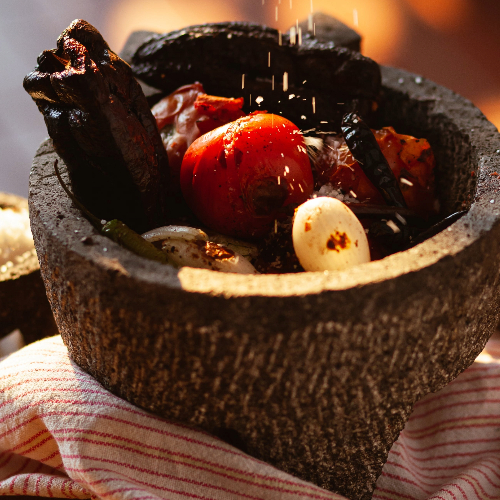
This roasted tomato salsa is ripe tomatoes, onion, garlic and jalapeño roasted until blistered and soft, then crushed with lime juice and fresh coriander (cilantro). Roasting gives it a deeper, smoky-sweet flavor than fresh salsa. It takes about 35 minutes and makes about 500 g (2 cups), enough for 8 servings, each with only about 35 calories. Crush it in a mortar and pestle, as in our photo, for a rustic texture, or pulse it in a food processor.
- Makes: about 500 g (2 cups)
- Serves: 8 (about ¼ cup each)
- Prep time: 10 minutes
- Cook time: 20 to 25 minutes
- Total time: about 35 minutes
Ingredients
- 700 g (1½ lb) ripe tomatoes, such as plum or vine tomatoes, halved
- 1 medium onion (about 100 g), cut into thick wedges
- 3 garlic cloves, unpeeled
- 1 to 2 jalapeño peppers (about 30 g), or to taste
- 2 teaspoons olive oil
- 1½ tablespoons (20 ml) lime juice
- A small bunch of coriander (cilantro), about 10 g, chopped
- ½ teaspoon salt
Method
- Heat the oven to 220°C (425°F), or 200°C (400°F) for a fan oven. Or heat the grill (broiler) to high.
- Put the tomatoes cut side up on a baking tray with the onion wedges, garlic and whole jalapeños. Drizzle with olive oil.
- Roast for 20 to 25 minutes, or grill for 10 to 15 minutes, until the tomato skins are blistered and charred in places and the onion is soft. Turn the jalapeños halfway.
- Leave to cool for 10 minutes. Squeeze the garlic out of its skin. Remove the stems from the jalapeños, and scrape out the seeds for a milder salsa.
- Crush the garlic, jalapeño and salt in a mortar and pestle. Add the onion and tomatoes a few at a time and crush to a chunky salsa. Or pulse everything in a food processor a few times, stopping before it turns smooth.
- Stir in the lime juice and coriander. Taste and add more salt, lime or chili if needed.
- Serve warm or at room temperature, or chill for a cold salsa.
Tips
- Use ripe tomatoes. Roasting brings out sweetness, but it can’t fix bland tomatoes.
- Char, don’t burn. A few blackened spots add smoky flavor, but too much makes the salsa bitter.
- Handle chilies carefully. Wear gloves or wash your hands well after handling jalapeños, and don’t touch your eyes.
- Control the heat with the seeds and membranes. Add a little at a time and taste as you go.
- Season at the end. Lime and salt bring the flavors together.
Swaps and variations
- Smoky: add a chipotle chili in adobo, or a pinch of smoked paprika.
- Tomatillo salsa verde: use husked tomatillos instead of tomatoes.
- Hotter: use serrano chilies, or leave all the seeds in.
- Milder: use half a jalapeño, or a mild green pepper.
- Fruity: stir in diced mango or pineapple after crushing.
- Canned: use 2 cans of fire-roasted tomatoes, drained, when fresh tomatoes are out of season.
Nutrition per serving (estimate)
One serving is about ¼ cup, an eighth of the recipe. These figures were calculated from USDA FoodData Central values for raw tomatoes, onion, garlic, jalapeño, olive oil, lime juice, coriander leaves and salt.
| Nutrient | Per serving |
|---|---|
| Calories | 35 kcal |
| Protein | 1 g |
| Carbohydrate | 5.5 g |
| Fiber | 1.5 g |
| Sugars | 3 g |
| Fat | 1.5 g |
| Saturated fat | 0.2 g |
| Sodium | 150 mg |
Homemade salsa is a low-calorie way to add flavor to meals. Tomatoes provide vitamin C, potassium and lycopene, a red pigment that’s better absorbed from cooked tomatoes and with a little oil. Many jarred salsas are salty, so making your own lets you choose how much salt to add. Our guide to heart-healthy eating explains why cutting salt matters, and our list of vitamin C foods includes tomatoes and peppers.
Contains: no major allergens.
Storage
Store salsa in a clean, covered jar in the fridge and eat it within 4 to 5 days. Always use a clean spoon. It also freezes well for up to 3 months, though the texture becomes softer when thawed. Homemade salsa isn’t suitable for long-term storage at room temperature unless you follow a tested canning recipe, because low-acid ingredients such as onion and garlic can let harmful bacteria grow. The US National Center for Home Food Preservation has tested methods.
Ways to use it
- With tortilla chips or raw vegetables, such as carrot, cucumber and pepper sticks.
- On our chicken tacos.
- Spooned over eggs, grilled fish or chicken.
- In burritos, quesadillas and rice bowls.
- With our homemade burgers.
Common questions
Is salsa healthy?
Yes. It’s mostly vegetables and herbs, low in calories and fat, and adds flavor without much salt or sugar if you make it yourself.
Can I make it without an oven?
Yes. Char the tomatoes, onion, garlic and chilies in a dry, heavy frying pan or on a grill pan over high heat, turning them, for 10 to 15 minutes.
Is salsa keto?
Yes, in normal portions. One serving has about 4 g of net carbs. Check jarred salsas, as some contain added sugar.
This article is general information, not medical advice. Nutrition figures are estimates from USDA FoodData Central and will change with the brands and amounts you use. If you follow a diet for a medical reason, check the recipe with your doctor or dietitian.