The most reliable way to get a picky eater to eat vegetables is repeated, low-pressure tasting: offer a small amount of the same vegetable many times, eat it yourself, and never force, bribe or punish. The American Academy of Pediatrics says it can take 10 or more tastes before a toddler accepts a new food. Most fussy eating is a normal stage, but poor growth, weight loss or extreme distress around food are reasons to see a doctor.
Why so many children refuse vegetables
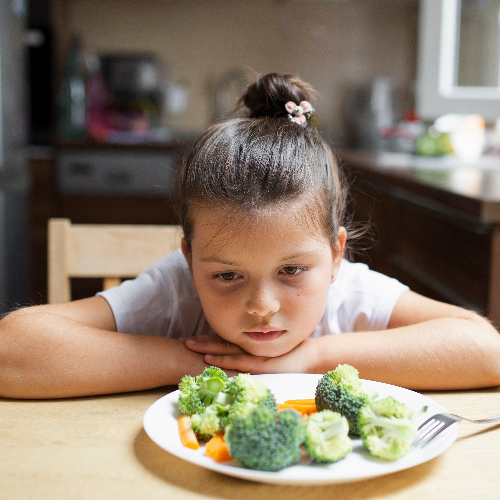
Refusing new or bitter-tasting foods is common in young children, and many vegetables, especially green ones, have a bitter edge. That doesn’t mean your child will never eat broccoli. It means acceptance usually comes slowly, through familiarity rather than persuasion.
The NHS advice for parents puts it simply: it may take lots of attempts before your child accepts some foods.
What the research shows: repeated tasting works
The best-known study tested exactly this. In a randomized trial of 156 families with children aged 2 to 6, parents in one group gave their child a small taste of a vegetable the child disliked, every day for 14 days. Other families got nutrition advice and a leaflet, or nothing extra. Only the daily-tasting group showed clear increases in how much children liked, ranked and ate the vegetable afterwards.
The lesson for parents: small, frequent, pressure-free tastes beat lectures about why vegetables are good for you.
10 strategies that help
- Offer a tiny portion often. One or two pieces of a new vegetable on the plate is enough. The AAP suggests offering new foods in small amounts to cut down on waste and pressure.
- Serve it next to a food your child already likes. A safe food on the plate means the meal doesn’t depend on the new one.
- Eat together, and eat the vegetable yourself. Children copy what adults eat, as the NHS points out. Family meals without screens make that copying easier.
- Don’t force, bribe or punish. The AAP warns that pressuring children to eat, or punishing them if they don’t, can make them actively dislike foods they might otherwise like. Bribes such as “eat your peas and you can have dessert” also backfire, because they make dessert the prize and the vegetable the chore.
- Praise trying, not finishing. “You tasted the carrot” is enough. Praise for eating even a little is part of the NHS advice.
- Take refused food away without comment, and offer it again another day.
- Change the form. A child who rejects boiled broccoli may eat it roasted until crispy, raw with a dip, grated into a sauce or blended into soup. Roasting brings out sweetness in vegetables such as carrots, peppers and cauliflower.
- Let them help. The AAP suggests letting toddlers choose a fruit or vegetable to cook and help with simple kitchen tasks. Washing, tearing lettuce and stirring all count.
- Limit snacks and juice between meals. A child who arrives at the table hungry is more willing to try things. The NHS suggests two healthy snacks a day is enough.
- Keep it calm and short. Don’t leave meals until your child is overtired, and don’t turn the table into a battle. If the meal is over, it’s over.
Easy ways to serve vegetables kids may try
- Dips: carrot, cucumber and pepper sticks with hummus or yogurt dip. Our guide to whether hummus is healthy has a simple homemade version.
- Hidden but not secret: grated zucchini or carrot in pasta sauce, spinach blended into a fruit smoothie. Mixing vegetables into foods is fine, but serve some visible vegetables too, so your child keeps getting familiar with them.
- Fun shapes and names: “trees” for broccoli, cucumber stars, a “rainbow” of colored peppers.
- Frozen peas and corn, which many children find sweeter and easier than leafy greens.
- Roasted vegetable “fries” made from carrots, sweet potato or zucchini.
- Build-your-own meals such as tacos, wraps or pizzas, where children add their own toppings from a few vegetable choices.
A one-week plan for one new vegetable
Pick one vegetable your child doesn’t like yet, such as cucumber, and give it two weeks:
| Day | What to do |
|---|---|
| 1 to 3 | Put 1 or 2 small pieces on the plate next to familiar foods. Eat some yourself. Say nothing about it. |
| 4 to 7 | Invite your child to touch, smell or lick a piece. Praise any attempt. |
| 8 to 14 | Offer a small taste every day, in the same form. Try a dip if they’re hesitant. |
This follows the daily-tasting approach used in the 2003 trial. If your child still refuses after two weeks, move on to another vegetable and come back to this one later.
What to avoid
- The “clean plate” rule. Children need to learn to notice when they’re full.
- Making separate meals every night. Offer the family meal with at least one food your child usually eats.
- Using sweets as rewards. The NHS suggests rewarding with something like a trip to the park or a game instead, so sweets don’t seem more desirable than vegetables.
- Giving up too soon. One or two refusals tell you almost nothing.
When picky eating needs a doctor
Most picky eaters grow and develop normally. Talk to your child’s doctor, health visitor or pediatrician if:
- your child is losing weight, not growing as expected or seems unwell
- your child gags, chokes or vomits often when eating
- your child eats a very small number of foods and the list is shrinking
- mealtimes cause intense fear, panic or distress, for your child or the whole family
These can be signs of a feeding problem that needs specialist help. One such condition is avoidant/restrictive food intake disorder (ARFID), in which people avoid foods because of their smell or texture, fear after a bad experience such as choking, or low interest in eating. This NHS mental health trust page explains the signs and advises seeing a doctor urgently if a child is losing weight quickly.
This article is general information, not medical advice. Talk to your doctor or a registered dietitian before making big changes to how you eat, especially if you have a health condition, take regular medication, or are pregnant or breastfeeding.