Yes, hummus is a healthy food for most people, in sensible portions. It’s made mainly from chickpeas, tahini (sesame paste), lemon juice and olive oil, so it supplies fiber, plant protein and mostly unsaturated fats. A 2-tablespoon (30 g) serving of store-bought hummus has about 71 calories, 2 g of protein and 1.6 g of fiber, based on USDA FoodData Central. The things to watch are portion size, the salt in some brands, and sesame if you have an allergy.
Hummus nutrition facts
Here’s the nutrition in store-bought hummus, using USDA values for “hummus, commercial”:
| Nutrient | Per 100 g | Per 2 tablespoons (30 g) |
|---|---|---|
| Calories | 237 kcal | 71 kcal |
| Protein | 7.8 g | 2.3 g |
| Fat | 17.8 g | 5.3 g |
| Saturated fat | 2.6 g | 0.8 g |
| Carbohydrate | 15.0 g | 4.5 g |
| Fiber | 5.5 g | 1.6 g |
| Sodium | 426 mg | 128 mg |
Source: USDA FoodData Central. Brands vary, so check the label on the one you buy.
What makes hummus a good choice
Fiber and plant protein. Chickpeas are a legume, and legumes are a good source of both. Per 100 g, canned chickpeas have about 6.4 g of fiber and 7 g of protein (USDA).
Mostly unsaturated fat. Of the 17.8 g of fat in 100 g of hummus, only about 2.6 g is saturated. The rest comes mainly from tahini and olive oil. The NHS explains that replacing saturated fats with some unsaturated fats can help lower cholesterol, so hummus is a better spread than butter or creamy cheese dips.
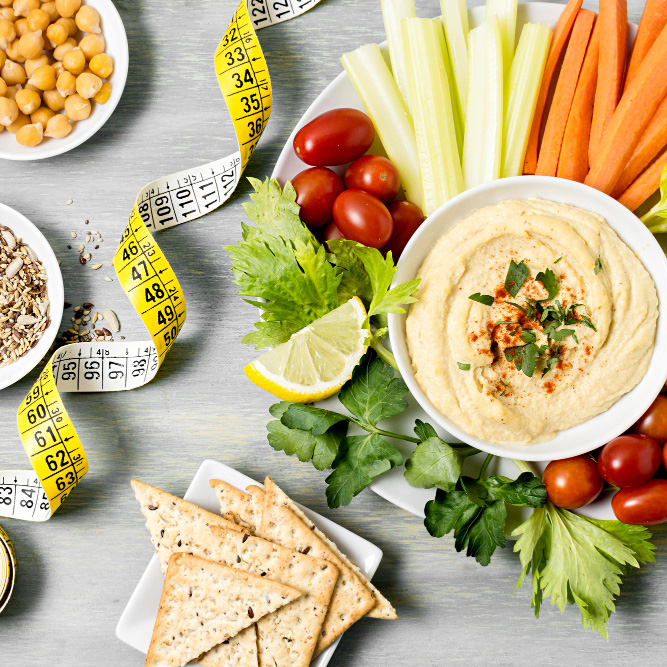
It helps you eat more vegetables. Hummus is a natural partner for carrot, cucumber, pepper and celery sticks. That’s useful for adults and for picky eaters alike. Our guide to getting kids to eat vegetables suggests dips as an easy way in.
It fits several eating patterns. Chickpeas, olive oil and tahini are all staples of the Mediterranean diet, and hummus is suitable for vegetarians and vegans.
What to watch out for
Portion size. Hummus is fairly high in calories for a dip, at 237 per 100 g. It’s easy to eat half a tub with crackers or pita. If you’re watching your weight, spoon a portion into a bowl rather than eating from the tub.
Salt. Store-bought hummus has about 426 mg of sodium per 100 g. That’s fine in a normal portion, but it adds up if you eat a lot. The World Health Organization recommends adults keep sodium under 2 g a day. Making your own lets you control the salt.
Sesame allergy. Tahini is made from sesame, which is one of the major food allergens listed by the US Food and Drug Administration. If you’re allergic to sesame, avoid hummus unless it’s specifically made without tahini, and check the label every time.
What you eat it with. Hummus with vegetable sticks or whole grain pita is a different snack from hummus with large piles of chips.
Store-bought vs homemade
Homemade hummus is cheap, takes 10 minutes and lets you choose how much salt and oil go in. Using the recipe below, a 2-tablespoon (30 g) serving works out at about 67 calories, 2 g of protein, 1.5 g of fiber and 125 mg of sodium, calculated from USDA FoodData Central values. Most of the difference from store-bought hummus is less oil and a little less salt.
Easy homemade hummus
Makes: about 420 g (14 servings of 2 tablespoons). Time: 10 minutes.
- 1 can (400 g / 14 oz) chickpeas, drained and rinsed (about 240 g drained)
- 4 tablespoons (60 g) tahini
- 3 tablespoons lemon juice
- 1 small garlic clove
- 2 tablespoons olive oil
- ½ teaspoon salt
- 3 to 4 tablespoons ice-cold water
- Optional: ½ teaspoon ground cumin, paprika to serve
- Blend the tahini and lemon juice in a food processor for 1 minute until thick and pale.
- Add the garlic, olive oil, salt and cumin (if using) and blend again.
- Add the chickpeas and blend for 2 to 3 minutes, scraping down the sides.
- With the motor running, add the cold water a tablespoon at a time until the hummus is smooth and creamy.
- Taste and add more lemon or salt if needed. Serve drizzled with a little olive oil and a pinch of paprika.
For extra-smooth hummus, rub the skins off the chickpeas before blending. It takes a few minutes but makes a noticeable difference.
Storage: keep homemade hummus covered in the fridge and eat it within 3 to 4 days, in line with the USDA’s guidance on leftovers.
Ways to eat hummus
- With raw vegetable sticks: carrot, cucumber, pepper, celery, sugar snap peas.
- Spread in a wrap or sandwich instead of butter or mayonnaise.
- Spooned onto a grain bowl or salad as a creamy dressing, thinned with lemon juice.
- Under roasted vegetables or grilled chicken on a plate.
- On whole grain toast with sliced tomato and a pinch of chili flakes.
Like chickpeas? Our easy chickpea curry is another quick way to eat them.
Common questions
Is hummus good for weight loss?
Hummus can fit into a weight-loss plan, because its fiber and protein help a snack feel more filling than chips or cookies. But at 237 calories per 100 g (USDA), portions matter. Two to three tablespoons with vegetable sticks is a sensible snack.
Can you eat hummus every day?
Yes, for most people, in normal portions. Keep an eye on the salt in store-bought brands, and vary what you eat it with. If you’re allergic to sesame, avoid hummus made with tahini.
Is hummus keto?
Not really. Per 100 g, store-bought hummus has 15.0 g of carbohydrate and 5.5 g of fiber, so about 9.5 g of net carbs, based on USDA FoodData Central. A 2-tablespoon portion has about 3 g of net carbs, which can fit a looser low-carb plan but uses up a lot of a strict keto allowance. Our keto food list has lower-carb dip ideas.
Is hummus good for kids?
Yes, for most children, and it’s a useful way to get them dipping vegetables. Introduce it carefully if sesame allergy runs in your family, and talk to your child’s doctor if you’re unsure.
This article is general information, not medical advice. Talk to your doctor or a registered dietitian before making big changes to how you eat, especially if you have a health condition, take regular medication, or are pregnant or breastfeeding.