The World Health Organization recommends keeping free sugars below 10% of your daily calories, and ideally below 5%, which is roughly 25 g (6 teaspoons) a day. The UK’s NHS sets a limit of 30 g of free sugars a day for adults. This applies to sugar added to food and drinks, plus honey, syrups and fruit juice. It doesn’t apply to the natural sugar in whole fruit, vegetables or plain milk.

Daily sugar limits at a glance
| Source | Who | Daily limit |
|---|---|---|
| World Health Organization | Adults and children | Less than 10% of calories from free sugars, ideally less than 5% (about 25 g) |
| NHS (UK) | Adults | 30 g of free sugars |
| NHS (UK) | Children aged 7 to 10 | 24 g |
| NHS (UK) | Children aged 4 to 6 | 19 g |
| American Heart Association | Women | About 25 g (6 teaspoons) of added sugars |
| American Heart Association | Men | About 37.5 g (9 teaspoons) of added sugars |
| US Daily Value on food labels | Adults (2,000 calorie diet) | 50 g of added sugars |
Sources: WHO, NHS, the American Heart Association’s 2009 statement and the US Food and Drug Administration.
The NHS also says children aged 2 to 3 should have no more than 14 g a day, and that sugar shouldn’t be added to food or drinks for babies under 1.
Why the numbers differ
The figures look different, but they point the same way. On a 2,000 calorie diet:
- 10% of calories = 200 calories = 50 g of sugar (sugar has 4 calories per gram). That’s where the US Daily Value comes from.
- 5% of calories = 100 calories = 25 g, the WHO’s ideal target and the AHA’s limit for women.
The NHS figure of 30 g sits in between. If you want one simple number to aim for, 25 to 30 g a day of free or added sugar is a reasonable target for most adults.
What counts as “free” or “added” sugar?
Free sugars, the WHO’s term, are sugars added to foods and drinks by the manufacturer, cook or consumer, plus the sugars naturally present in honey, syrups, fruit juices and fruit juice concentrates (WHO).
Added sugars, the US term, are similar: sugars added during processing, table sugar, syrups and honey, and concentrated fruit or vegetable juices (FDA).
What doesn’t count: the sugar found naturally in whole fruit, vegetables and plain milk. The NHS explains that these sugars still appear in the “total sugars” figure on labels, but they don’t count toward your free sugar limit.
So an apple doesn’t count, but apple juice does. Plain yogurt doesn’t, but the sugar added to a flavored yogurt does.
How sugar adds up in a normal day
Sugar adds up faster than most people expect. The WHO notes that a single can of sugar-sweetened soda can contain up to 40 g (around 10 teaspoons) of free sugars. That’s more than the whole daily limit in one drink.
Here’s a hypothetical day to show how quickly it happens (check the labels of what you actually eat, because brands vary a lot):
| Food or drink | Free sugars (example) |
|---|---|
| Sweetened breakfast cereal | 10 g |
| Flavored yogurt | 12 g |
| Glass of orange juice | 15 g |
| Two cookies | 10 g |
| Can of soda | 35 g |
| Total | 82 g |
That example day is close to three times the NHS limit of 30 g, without any desserts.
How to read sugar on food labels
- Grams to teaspoons: divide by 4. A product with 20 g of sugar contains about 5 teaspoons.
- Use the per 100 g column to compare. The NHS says more than 22.5 g of total sugars per 100 g is high, and 5 g or less per 100 g is low.
- US labels show “Added Sugars” separately, with a % Daily Value based on 50 g. Use that line, rather than total sugars, to see how much has been added (FDA).
- Labels in the EU and UK show only total sugars (listed as “of which sugars”), which includes the natural sugar from milk or fruit. Check the ingredients list for added sugars.
- Sugar has many names: sucrose, glucose, fructose, dextrose, maltose, corn syrup, glucose-fructose syrup, honey, agave, molasses and fruit juice concentrate. The higher up the ingredients list they appear, the more the product contains.
8 easy ways to cut back
- Swap sugary drinks for water, sparkling water, or unsweetened tea or coffee. This is usually the biggest single change.
- Keep fruit juice to one small glass, 150 ml at most, with a meal, as the NHS suggests.
- Choose plain yogurt and add your own fruit.
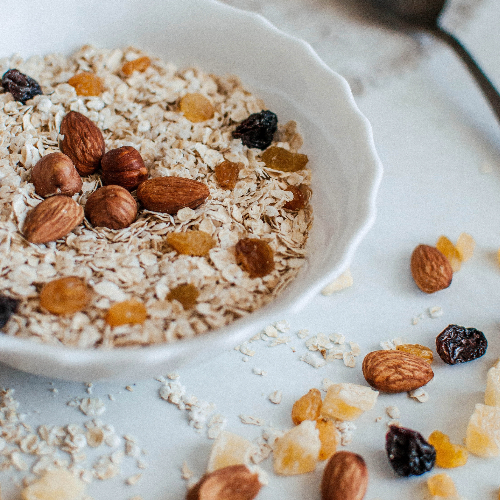
- Pick breakfast cereals with less than 5 g of sugar per 100 g, or switch to plain oats.
- Halve the sugar you add to tea, coffee or cereal, then halve it again a few weeks later.
- Use fruit for sweetness in baking and on porridge.
- Check sauces: ketchup, barbecue sauce and some pasta sauces contain added sugar.
- Keep sweets and cakes as treats, not daily habits.
Eating more whole foods makes all of this easier. Our guide to whole foods explains how to start.
Is sugar from fruit bad for you?
No. Whole fruit doesn’t count toward your free sugar limit, and it comes with fiber, vitamins and water. The WHO recommends at least 400 g of fruit and vegetables a day for everyone over 10 (WHO). Dried fruit is more concentrated, so a small handful is a sensible portion.
What about sweeteners?
Low- and no-calorie sweeteners don’t count as sugar, and swapping a sugary soft drink for a diet version cuts sugar quickly. Over time, getting used to less sweetness overall, by drinking mostly water and unsweetened drinks, is the most sustainable approach.
If you have diabetes, talk to your doctor or diabetes team about how sugar and sweeteners fit into your own eating plan.
This article is general information, not medical advice. Talk to your doctor or a registered dietitian before making big changes to how you eat, especially if you have a health condition, take regular medication, or are pregnant or breastfeeding.