Orange juice can be part of a healthy diet in small amounts, but it isn’t as healthy as eating a whole orange. A 150 ml glass gives you more than a day’s vitamin C, plus potassium and folate, but it also has about 13 g of sugar and almost none of the fiber, based on USDA FoodData Central values. The NHS suggests no more than 150 ml of fruit juice and smoothies a day, ideally with a meal. A glass with breakfast is fine for most people. Several large glasses a day is a lot of sugar.
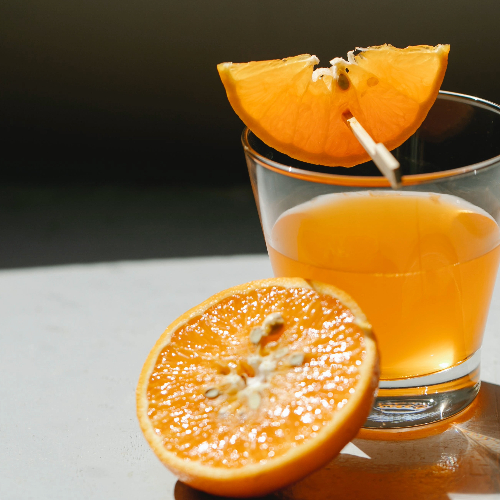
Orange juice vs a whole orange
Calculated from USDA FoodData Central values:
| Nutrient | Fresh orange juice, 150 ml | Medium orange (131 g) |
|---|---|---|
| Calories | 70 kcal | 62 kcal |
| Carbohydrate | 16 g | 15.5 g |
| Sugars | 13 g | 12 g |
| Fiber | 0.3 g | 3.1 g |
| Vitamin C | 78 mg | 70 mg |
| Potassium | 312 mg | 237 mg |
| Folate | 47 mcg | 39 mcg |
| Calcium | 17 mg | 52 mg |
The sugar and vitamin C are similar. The big difference is fiber: juicing leaves most of it behind, so the juice is quicker to drink, less filling, and its sugar reaches your blood faster. Most people would also drink a large glass more easily than they’d eat two or three oranges.
What orange juice has going for it
- Vitamin C. A 150 ml glass of fresh juice covers the 75 to 90 mg a day most adults need. Juice from concentrate usually has less, about 50 mg in the same glass, unless vitamin C is added.
- Potassium, which helps balance the effects of salt on blood pressure.
- Folate, a B vitamin needed for healthy cells.
- Fortified versions can add calcium and vitamin D, which is useful if you don’t drink milk.
- It counts toward your 5 A Day, but only as one portion, however much you drink, according to the NHS.
Our list of vitamin C foods shows that peppers, kiwifruit, strawberries and broccoli are also excellent sources, with more fiber and less sugar.
The downsides
It’s a source of free sugars
The World Health Organization counts sugars in fruit juice as free sugars, the same category as sugar added to food. Its guideline is to keep free sugars under 10% of energy, ideally under 5%, which is about 25 g a day. A large 250 ml glass of orange juice has about 22 g, nearly all of that ideal limit.
Juice and whole fruit affect health differently
In a large BMJ study of about 187,000 US health professionals, eating more whole fruit, especially blueberries, grapes and apples, was linked with a lower risk of type 2 diabetes. Drinking more fruit juice was linked with a higher risk: three extra glasses a week went with an 8% increase. The study was observational, but it’s one reason guidelines favor whole fruit.
It’s hard on teeth
Orange juice is both sugary and acidic. The Oral Health Foundation explains that acidic drinks soften tooth enamel for a while, and sipping them often keeps it soft for longer. Drinking juice with a meal, rather than sipping it through the day, and waiting at least an hour before brushing your teeth, both help.
It can interact with some medicines
Grapefruit juice is famous for interacting with medicines, and the FDA notes that Seville oranges, often used for marmalade, may have the same effect. Regular orange juice can also reduce how well the allergy medicine fexofenadine works, which is why its label says not to take it with fruit juices. If you take regular medicine, check the leaflet or ask a pharmacist.
Orange juice for children
The American Academy of Pediatrics recommends no fruit juice for babies under 12 months. For children aged 1 to 6, it advises no more than 4 to 6 ounces (120 to 180 ml) a day, served with a meal, and no juice at bedtime. Whole fruit is the better choice, and water or milk should be the main drinks. Our guide to healthy lunchbox ideas has drink suggestions for school.
Fresh, not-from-concentrate or from concentrate?
| Type | What it is | Notes |
|---|---|---|
| Freshly squeezed | Squeezed and served straight away | Highest vitamin C; drink it fresh |
| Not from concentrate | Squeezed, pasteurized and packed | Similar nutrition to fresh |
| From concentrate | Water removed, then added back | Usually a little less vitamin C unless fortified |
| Juice drink or nectar | Juice mixed with water and often sugar | Check the label: may contain much less fruit and added sugar |
Nutritionally, the first three are close. Avoid “juice drinks” with added sugar.
Unpasteurized juice is sold at some juice bars and markets. The FDA warns that children, older adults, pregnant women and people with weakened immune systems can become seriously ill from untreated juice, so they should choose pasteurized juice.
When orange juice is useful
- Treating a hypo. For people with diabetes, a small glass of fruit juice is one of the quick fixes the NHS lists for low blood sugar, precisely because its sugar is absorbed fast.
- Iron absorption. Vitamin C helps your body absorb iron from plant foods, so a small glass with an iron-rich breakfast, such as fortified cereal, can help. Our guide to iron-rich foods explains more.
- When appetite is low. Juice can provide some energy and vitamins when someone isn’t eating well.
Healthier ways to enjoy it
- Use a small glass of about 150 ml.
- Drink it with a meal.
- Dilute it with water or sparkling water.
- Eat the whole fruit more often than you drink the juice.
- Choose 100% juice with no added sugar.
Common questions
Does orange juice help with colds?
Not much. A Cochrane review of vitamin C trials found that taking vitamin C regularly didn’t prevent colds in the general population, though it slightly shortened them. You can get the same vitamin C from whole fruit and vegetables.
Is orange juice better than soda?
It has vitamins and minerals that soda lacks, but a similar amount of sugar per glass. Neither is a good everyday drink in large amounts.
Can people with diabetes drink orange juice?
A small glass with a meal can fit, but juice raises blood sugar quickly. A whole orange is usually the better choice. Ask your diabetes team for advice that fits your plan.
This article is general information, not medical advice. Talk to your doctor or a registered dietitian before making big changes to how you eat, especially if you have a health condition, take regular medication, or are pregnant or breastfeeding.

