Rhubarb stalks are safe to eat, raw or cooked, but the leaves are not. Rhubarb leaves contain large amounts of oxalic acid, and University of Illinois Extension advises that the leaf blades should not be eaten; trim them off and discard them before cooking or storing the stalks. The stalks also contain oxalate, though much less, so people who’ve had calcium oxalate kidney stones may be advised to limit rhubarb. Otherwise, rhubarb is a low-calorie, tart vegetable that’s usually treated as a fruit. The main nutritional catch is the sugar most recipes add to make it palatable.
Which parts of rhubarb are safe?
| Part | Safe to eat? | Notes |
|---|---|---|
| Stalks (red, pink or green) | Yes | Eat raw in small amounts, or cooked |
| Leaves | No | High in oxalic acid; discard and compost them |
| Roots | No, not as food | Used in some traditional medicines, but not for home use |
Rhubarb leaves appear on the US Poison Control list of poisonous plants. Serious poisoning in people is rare, because the leaves taste unpleasant and you’d need to eat a lot, but they can cause mouth and throat irritation, stomach pain, vomiting and diarrhea, and they’re more dangerous for children and pets. If someone has eaten rhubarb leaves and feels unwell, contact your local poison center or emergency services.
Rhubarb leaves are also toxic to dogs, cats and other animals, so keep them away from pets and don’t feed them to chickens.
What is oxalate?
Oxalate, also called oxalic acid, is a natural compound found in many plants, including rhubarb, spinach, beetroot, nuts and tea. In the body, it can bind to calcium, and in some people it contributes to calcium oxalate kidney stones, the most common type.
For most people, eating rhubarb stalks in normal amounts is fine. If you’ve had calcium oxalate stones, the US National Institute of Diabetes and Digestive and Kidney Diseases says you may want to avoid high-oxalate foods to reduce the amount of oxalate in your urine, and to talk with a health professional about how much oxalate is right for you. The NHS also advises drinking 2.5 to 3 liters of water a day if you’re prone to kidney stones, getting enough calcium, and not eating too much salt.
Rhubarb nutrition
Per 100 g (3½ oz), from USDA FoodData Central:
| Nutrient | Raw rhubarb | Cooked rhubarb with sugar |
|---|---|---|
| Calories | 21 kcal | 116 kcal |
| Carbohydrate | 4.5 g | 31.2 g |
| Fiber | 1.8 g | 2 g |
| Sugars | 1.1 g | 28.7 g |
| Calcium | 86 mg | 145 mg |
| Potassium | 288 mg | 96 mg |
| Vitamin K | 29.3 mcg | 21.1 mcg |
| Vitamin C | 8 mg | 3.3 mg |
Raw rhubarb is very low in calories and sugar, which is why it’s so sour. Once it’s stewed with sugar, as in many pies and crumbles, it can contain more sugar than most fruit. Rhubarb looks like a good source of calcium, but much of that calcium is bound up with oxalate, so your body absorbs less of it than the numbers suggest. Dairy, fortified plant milks and calcium-set tofu are more reliable sources.
Rhubarb is also a good source of vitamin K, so if you take warfarin, keep your intake fairly steady.
How to prepare rhubarb
- Cut off the leaves completely, along with the pale base of each stalk, and discard them.
- Wash the stalks under running water.
- Trim and slice into 2 to 3 cm (1 inch) pieces. Very thick or stringy outer stalks can be peeled.
- Cook gently: stew, roast or bake until soft.
Pick stalks that are firm and crisp. Early “forced” rhubarb, grown in the dark, is pink, tender and slightly sweeter.
Lower-sugar strawberry and rhubarb compote
Strawberries add natural sweetness, so this compote needs much less sugar than stewed rhubarb on its own.
- 400 g (14 oz) rhubarb stalks, cut into 2 cm pieces
- 200 g (7 oz) strawberries, halved
- 2 tablespoons honey or maple syrup, or to taste
- The zest and juice of half an orange
- 1 to 2 tablespoons water
- Put the rhubarb, orange zest, juice and water in a pan.
- Cover and simmer gently for 6 to 8 minutes, until the rhubarb starts to soften.
- Add the strawberries and honey and cook for another 2 to 3 minutes.
- Taste and add a little more honey only if needed.
- Cool and keep in the fridge for up to 4 days.
Serve with plain yogurt, on porridge, or with a crumble topping made with oats and nuts. Our Greek yogurt parfait works well with it.
Rhubarb, strawberries and grapefruit
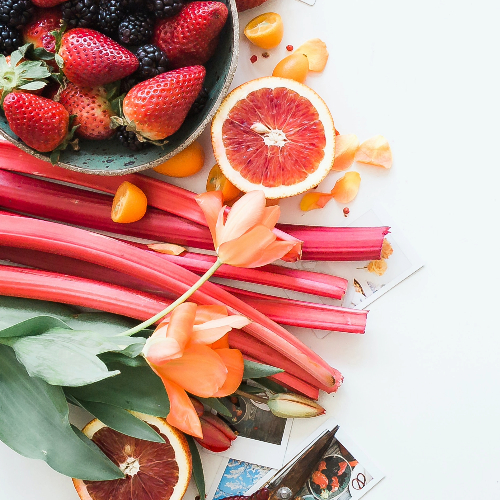
Rhubarb is often paired with strawberries, oranges and grapefruit, like the fruit in our photo. One word of caution about grapefruit: it can interact with several common medicines. The FDA lists some statins, such as simvastatin and atorvastatin, and some blood pressure medicines among the drugs affected, and advises checking with your pharmacist or the information that comes with your medicine. Our guide to grapefruit benefits explains more.
Growing rhubarb safely
Rhubarb is an easy perennial that comes back every spring. Harvest stalks by pulling them gently from the base rather than cutting, and don’t take more than about a third of the stalks at a time, so the plant stays healthy. Compost the leaves rather than leaving them where children or pets could chew them.
Common questions
Can you eat rhubarb raw?
Yes, the stalks are safe raw, though very sour. Try thin slices dipped in a little sugar or added to salads in small amounts.
Is rhubarb safe in pregnancy?
Rhubarb stalks in normal food amounts are generally considered safe. Avoid the leaves, and don’t take rhubarb root supplements or herbal remedies without medical advice.
Can rhubarb help with constipation?
Rhubarb contains fiber, which helps keep you regular. Rhubarb root is used in some traditional medicines as a laxative, but it isn’t safe to use at home without advice.
This article is general information, not medical advice. Talk to your doctor or a registered dietitian before making big changes to how you eat, especially if you have a health condition, take regular medication, or are pregnant or breastfeeding.