The best food sources of omega-3 fats are oily fish such as salmon, mackerel, sardines, herring and trout, which provide the long-chain omega-3s EPA and DHA. Plant foods such as flaxseed, chia seeds, walnuts and canola (rapeseed) oil provide ALA, a different omega-3 that the body converts to EPA and DHA only in small amounts. The NHS recommends at least 2 portions of fish a week, including 1 of oily fish, with a portion of about 140 g.
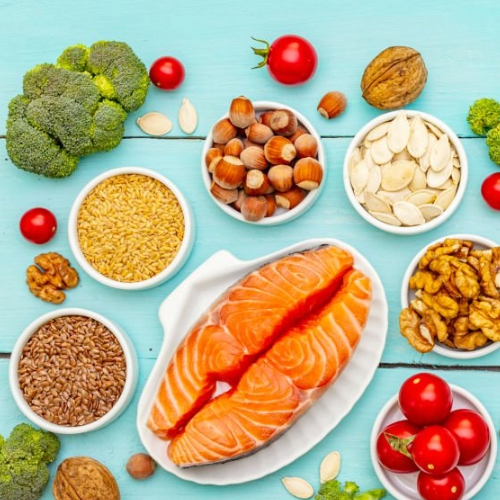
The three main omega-3 fats
- EPA (eicosapentaenoic acid) and DHA (docosahexaenoic acid): found mainly in fish and seafood. These are the omega-3s studied most for heart health, as the NCCIH explains.
- ALA (alpha-linolenic acid): found in plant foods such as flaxseed, chia seeds, walnuts, hemp seeds and canola oil. It’s an essential fat, meaning your body can’t make it, so it has to come from food.
The US adequate intake for ALA is 1.6 g a day for men and 1.1 g for women, according to the NIH Office of Dietary Supplements. There’s no official daily amount for EPA and DHA, which is why most advice is given in portions of fish per week.
Best fish sources of EPA and DHA
Per 100 g, raw or as canned, from USDA FoodData Central:
| Fish (100 g) | EPA | DHA | EPA + DHA |
|---|---|---|---|
| Atlantic mackerel | 0.90 g | 1.40 g | 2.30 g |
| Atlantic salmon, farmed | 0.86 g | 1.10 g | 1.96 g |
| Atlantic salmon, wild | 0.32 g | 1.12 g | 1.44 g |
| Sardines, canned in oil, drained | 0.47 g | 0.51 g | 0.98 g |
| Rainbow trout, farmed | 0.22 g | 0.52 g | 0.73 g |
| Light tuna, canned in water | 0.05 g | 0.22 g | 0.27 g |
Oily fish such as mackerel and salmon are far richer than canned tuna. The NHS notes that fresh and canned tuna don’t count as oily fish.
Best plant sources of ALA
Per 100 g, from USDA FoodData Central:
| Food (100 g) | ALA | In a typical portion |
|---|---|---|
| Flaxseed | 22.8 g | 1 tablespoon ground (about 7 g): 1.6 g |
| Chia seeds | 17.8 g | 1 tablespoon (about 12 g): 2.1 g |
| Canola (rapeseed) oil | 9.1 g | 1 tablespoon (about 14 g): 1.3 g |
| Walnuts | 9.1 g | A small handful (about 28 g): 2.5 g |
A tablespoon of chia or ground flaxseed, or a handful of walnuts, meets the daily ALA target on its own. Grind flaxseed before eating it, because whole seeds can pass through undigested.
How much fish to eat
- NHS (UK): at least 2 portions a week, including 1 of oily fish, with a portion of about 140 g (NHS).
- FDA (US): at least 8 ounces (about 225 g) of seafood a week for adults on a 2,000 calorie diet, choosing lower-mercury fish (FDA).
If you’re pregnant, breastfeeding or may become pregnant
The FDA advises 8 to 12 ounces of lower-mercury seafood a week from its “best choices” list, which includes salmon, sardines, shrimp and canned light tuna. The NHS advises girls and women who may become pregnant to have no more than 2 portions of oily fish a week, and to avoid shark, swordfish and marlin when pregnant or trying to get pregnant, because they can contain more mercury.
Fish to limit because of mercury
The FDA lists king mackerel, marlin, orange roughy, shark, swordfish, Gulf of Mexico tilefish and bigeye tuna as the highest-mercury fish. Atlantic mackerel, as in the table above, is a different, lower-mercury species.
What the research shows
Eating fish has stronger evidence behind it than taking supplements. The US National Center for Complementary and Integrative Health says the evidence for benefits from seafood is stronger than the evidence for omega-3 supplements for some conditions, partly because fish contains other nutrients and fish eaters often have healthier lifestyles overall.
On supplements, the NCCIH summarizes a 2020 review of 86 studies in which more EPA and DHA slightly reduced the risk of coronary events and coronary death, and an analysis of 23 studies in which EPA and DHA lowered triglycerides by about 15%.
Should you take an omega-3 supplement?
Most people who eat oily fish once or twice a week don’t need one. If you don’t eat fish, ALA from plant foods is easy to get, and algae-based omega-3 supplements provide EPA and DHA without fish.
Side effects of omega-3 supplements are usually mild, according to the NCCIH, and include bad breath, an unpleasant taste, headache, heartburn, nausea and diarrhea. Talk to your doctor or pharmacist before taking one if you take blood-thinning medicines, have a bleeding disorder, are having surgery or are pregnant. Prescription omega-3 products are different from shop-bought supplements, so follow your doctor’s advice on those.
Easy ways to eat more omega-3
- Have salmon or mackerel once a week. Our baked salmon with potatoes is a one-tray dinner.
- Keep canned sardines or mackerel in the cupboard for quick toast toppings, salads and pasta.
- Sprinkle ground flaxseed or chia on porridge, yogurt or cereal.
- Snack on walnuts a few times a week.
- Use canola (rapeseed) oil for cooking and dressings.
Omega-3 on keto and vegan diets
Oily fish fits keto easily, with no carbohydrate. Our guide to healthy fats on keto explains more. On a vegan diet, the NHS suggests eating omega-3-rich nuts and seeds every day.
Common questions
Is canned salmon as good as fresh?
Yes. Canned salmon and canned sardines are affordable, keep for months, and still provide omega-3 fats. Sardines and canned salmon with soft bones also add calcium.
Do omega-3 eggs or fortified foods help?
Some eggs, milks and spreads are enriched with omega-3s, usually from added fish oil, algae or flax in the hens’ feed. They can add a little, but the amounts are usually much smaller than in a portion of oily fish. Check the label.
This article is general information, not medical advice. Talk to your doctor or a registered dietitian before making big changes to how you eat, especially if you have a health condition, take regular medication, or are pregnant or breastfeeding.