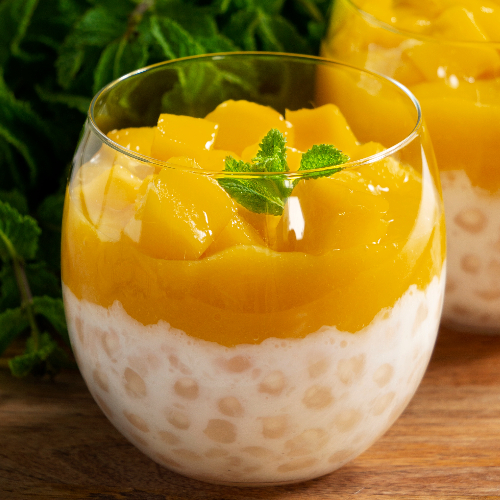
This mango coconut chia pudding takes 10 minutes to make the night before: chia seeds soak in coconut milk and milk until thick and creamy, then get layered with fresh mango purée and diced mango. It’s naturally sweet, needs no cooking, and serves 4. Make it in jars and you have breakfast or dessert ready for the next few days.
- Serves: 4
- Prep time: 10 minutes, plus at least 4 hours chilling
- Cook time: none
- Total time: about 4 hours 10 minutes, mostly waiting
Ingredients
Chia pudding
- 70 g (6 tablespoons) chia seeds
- 250 ml (1 cup) canned coconut milk, well shaken
- 250 ml (1 cup) milk of your choice, dairy or unsweetened plant milk
- 1 tablespoon maple syrup or honey (optional)
- ½ teaspoon vanilla extract
Mango layer
- 1 large ripe mango, about 300 g (10.5 oz) of flesh
- 1 to 2 teaspoons lime juice
Optional toppings
- Toasted coconut flakes
- Fresh mint leaves
- Grated lime zest
Method
- In a bowl or large jug, whisk together the coconut milk, milk, maple syrup (if using) and vanilla.
- Stir in the chia seeds and whisk well.
- Leave for 10 minutes, then whisk again to break up any clumps. This second whisk is what stops the pudding setting lumpy.
- Cover and chill for at least 4 hours, or overnight, until thick and spoonable.
- Peel the mango and cut the flesh away from the stone. Purée half of it with the lime juice in a blender, or mash it well with a fork. Dice the other half.
- Stir the pudding. If it’s too thick, loosen it with a splash of milk.
- Layer in 4 glasses or jars: a spoonful of mango purée, the chia pudding, then the diced mango. Finish with toasted coconut, mint or lime zest.
Tips for the best result
- Shake the can of coconut milk well before opening, because the cream separates from the liquid.
- Use a ripe mango. It should give slightly when pressed and smell sweet at the stem end. An underripe mango tastes sour and fibrous.
- Always soak chia seeds before eating them. Dry seeds absorb liquid and swell, which is what thickens the pudding.
- Taste before sweetening. A ripe mango is often sweet enough on its own.
- Make a smoother pudding by blending the soaked chia mixture before chilling it again.
Swaps and variations
- Lighter version: replace half the coconut milk with extra milk. The pudding will be less rich and lower in saturated fat.
- Dairy-free and vegan: use an unsweetened plant milk such as soy or oat, and maple syrup instead of honey.
- Frozen mango: thaw frozen mango chunks overnight in the fridge and use them the same way.
- Other fruit: pineapple, passion fruit, berries or peach all work in place of mango.
- More protein: stir a few spoonfuls of plain Greek yogurt into the pudding before layering.
If you’re serving this to young children, leave out the honey for babies under 12 months. The NHS advises not giving honey to babies under 1 year old.
Storage
Without the mango, the chia pudding keeps in a covered container in the fridge for up to 3 to 4 days, in line with the USDA’s guidance for leftovers. Add the mango on the day you eat it so it stays fresh. The pudding thickens as it sits, so stir in a splash of milk before serving.
Nutrition per serving (estimate)
One serving is a quarter of the recipe, with 1 tablespoon of maple syrup and 1% milk. These figures are estimates calculated from USDA FoodData Central values and don’t include toppings.
| Nutrient | Per serving |
|---|---|
| Calories | 290 kcal |
| Protein | 7 g |
| Carbohydrate | 27 g |
| Fiber | 7 g |
| Sugars | 17 g |
| Fat | 20 g |
| Saturated fat | 13 g |
| Sodium | 40 mg |
Most of the fiber comes from the chia seeds, and most of the fat and saturated fat comes from the coconut milk. The sugars are mostly from the mango and milk, with about 3 g per serving from the tablespoon of maple syrup if you use it. The lighter version above cuts the saturated fat considerably.
Contains: coconut, and milk if you use dairy milk. Check the labels on packaged ingredients if you’re cooking for someone with an allergy.
Ways to serve it
- As a make-ahead breakfast, with a handful of nuts or seeds for crunch.
- As a dessert after a curry or stir-fry. It goes well after our easy chickpea curry.
- As a snack in a small jar, for days when you need something ready to grab.
For more ideas, browse our food and recipes section.
This article is general information, not medical advice. Nutrition figures are estimates from USDA FoodData Central and will change with the brands and amounts you use. If you follow a diet for a medical reason, check the recipe with your doctor or dietitian.