Raw salmon can be safe to eat for most healthy adults if it’s bought as fish intended for raw eating, has been handled and frozen correctly to kill parasites, is kept very cold and is eaten fresh. Wild salmon can carry parasites such as Anisakis, a roundworm whose larvae can cause stomach pain and vomiting if eaten alive, so fish for sushi and sashimi is normally frozen at very low temperatures before serving. Raw fish can also carry bacteria such as Listeria. For that reason, pregnant women, young children, older adults and people with weakened immune systems are advised to avoid raw and cold-smoked fish. The NHS advises pregnant women to avoid sushi made with raw fish, even if it has been frozen. Below we explain the risks and share a simple sashimi plate.
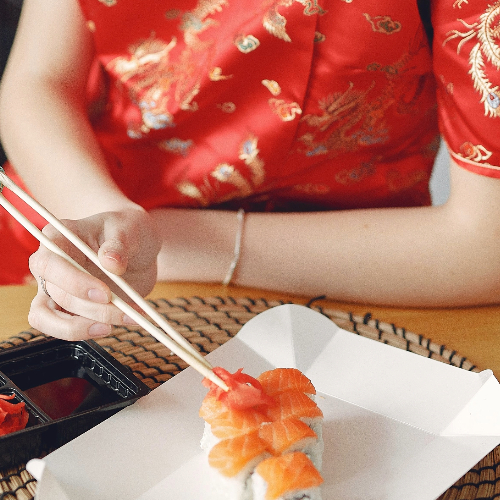
The risks of eating raw salmon
Parasites
Salmon, especially wild salmon, can contain parasite larvae, mainly Anisakis. If you eat live larvae, they can cause anisakiasis, with sudden stomach pain, nausea and vomiting, and sometimes allergic reactions. Freezing kills them. That’s why fish sold for raw eating in many countries must be frozen first, at temperatures such as −20°C (−4°F) or below for at least 24 hours, or lower temperatures for shorter times, depending on local rules. Home freezers usually run at about −18°C, which may not be cold enough for long enough, so it’s safer to buy fish that has already been frozen by the supplier for raw consumption. Farmed Atlantic salmon raised on processed feed has a much lower parasite risk than wild salmon, but freezing is still standard practice.
Bacteria
Raw fish can carry bacteria such as Listeria, Salmonella and Vibrio. Freezing does not kill bacteria, so freshness, cold storage and hygiene matter. The NHS lists smoked and cured fish, including in sushi, among foods that can carry Listeria. Listeria is rare but dangerous in pregnancy, for newborns, older adults and people with weakened immune systems.
Spoilage
Fish spoils quickly. The US Food and Drug Administration advises buying fish that smells fresh and mild, not fishy or sour, with firm, shiny flesh, and keeping it cold.
Who should avoid raw salmon
- Pregnant women: avoid raw fish and cold-smoked or cured fish, such as smoked salmon and gravlax, unless it’s cooked until steaming hot.
- Babies and young children.
- Older adults, especially those over 65.
- People with weakened immune systems, such as during chemotherapy, after an organ transplant or with poorly controlled diabetes, liver disease or HIV.
For these groups, cooked salmon is a safe and healthy alternative. Cook it to 63°C (145°F); our guide on how to cook salmon shows four easy methods.
How to buy and handle salmon for raw eating
- Buy from a trusted fishmonger or supermarket counter and ask specifically for salmon suitable for sushi or sashimi.
- Check it has been frozen to the right standard for raw consumption.
- Look, smell and touch: bright color, firm flesh, a fresh sea smell and no slime.
- Keep it cold. Take a cool bag when shopping, refrigerate it at 0 to 4°C straight away, and eat it the same day.
- Use clean equipment: a clean board and a very sharp knife, separate from raw meat.
- Don’t leave it out: prepare it just before serving.
Simple salmon sashimi plate
- Serves: 2
- Prep time: 15 minutes
- Cook time: none
- Total time: 15 minutes
Ingredients
- 250 g (9 oz) skinless salmon fillet, sold as suitable for raw eating, well chilled
- ½ cucumber (about 150 g), very thinly sliced
- 2 teaspoons rice vinegar
- 1 tablespoon reduced-salt soy sauce or tamari
- 1 teaspoon sesame seeds, toasted
- 1 spring onion, finely sliced
- Pickled ginger and a little wasabi, to serve (optional)
Method
- Make the cucumber salad. Toss the cucumber with the rice vinegar and a pinch of salt and leave for 5 minutes. Squeeze out excess liquid.
- Slice the salmon. Using a very sharp knife, slice the chilled salmon against the grain into slices about 5 mm thick. Use long, single strokes rather than sawing.
- Arrange. Lay the salmon slices on chilled plates with the cucumber salad.
- Garnish. Sprinkle with sesame seeds and spring onion, and serve with soy sauce for dipping, plus pickled ginger and wasabi if you like.
- Eat straight away. Don’t leave sashimi at room temperature.
Nutrition per serving (estimate)
One serving is half the recipe. These figures were calculated from USDA FoodData Central values for raw farmed Atlantic salmon, cucumber, rice vinegar, low-sodium soy sauce, sesame seeds and spring onion.
| Nutrient | Per serving |
|---|---|
| Calories | 290 kcal |
| Protein | 27 g |
| Carbohydrate | 4 g |
| Fiber | 1 g |
| Sugars | 1.5 g |
| Fat | 18 g |
| Saturated fat | 4 g |
| Sodium | 365 mg |
Salmon is rich in protein and the long-chain omega-3 fats EPA and DHA. The NHS recommends at least one portion of oily fish a week. Most of the sodium comes from the soy sauce, so dip lightly.
Contains: fish (salmon), soy and wheat (gluten, in soy sauce) and sesame. Use tamari for a gluten-free version.
Smoked salmon: is it raw?
Cold-smoked salmon, such as most sliced smoked salmon, isn’t cooked; it’s cured and smoked at low temperatures. It’s safe for most people but carries a Listeria risk, so pregnant women should cook it until steaming hot. Hot-smoked salmon is cooked during smoking. Our smoked salmon bruschetta and article on whether smoked salmon is healthy explain more.
Common questions
Can I eat supermarket salmon raw?
Only if it’s labeled as suitable for raw eating, sushi or sashimi. Otherwise, cook it.
Does freezing salmon at home make it safe to eat raw?
Home freezers may not reach low enough temperatures for long enough to kill all parasites. Buy fish that has already been frozen for raw consumption.
Is raw salmon healthier than cooked?
Not meaningfully. Both are rich in protein and omega-3. Cooking reduces some vitamins slightly but removes the risk of parasites and most bacteria.
This article is general information, not medical advice. Nutrition figures are estimates from USDA FoodData Central and will change with the brands and amounts you use. If you follow a diet for a medical reason, check the recipe with your doctor or dietitian.