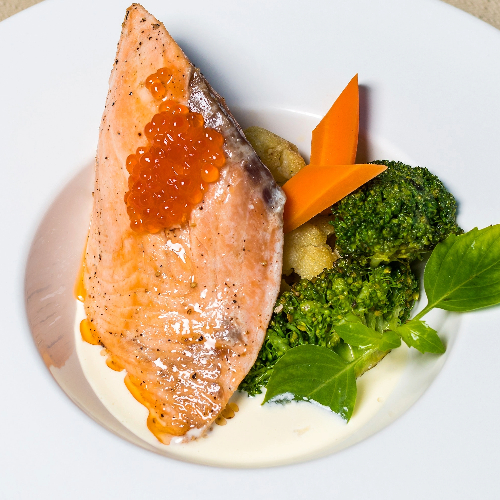
This steamed salmon with ginger and soy is one of the gentlest, quickest ways to cook fish: salmon fillets are steamed over simmering water with fresh ginger and garlic, then finished with a sizzle of hot sesame oil poured over spring onions, chili and a splash of reduced-salt soy sauce. Broccoli and carrots steam in the same basket, so dinner is ready in about 20 minutes. It serves 2, with about 35 g of protein per plate, and steaming keeps the fish moist without any added fat in the cooking.
- Serves: 2
- Prep time: 10 minutes
- Cook time: 10 minutes
- Total time: about 20 minutes
Ingredients
- 2 salmon fillets, about 150 g (5 oz) each, skin on or off
- A thumb-sized piece of ginger (about 10 g), cut into thin matchsticks
- 2 garlic cloves, thinly sliced
- 200 g (7 oz) broccoli, cut into small florets
- 1 medium carrot (about 100 g), thinly sliced on the diagonal
- 3 spring onions (about 30 g), cut into thin strips
- ½ red chili, thinly sliced (optional)
- 4 teaspoons (20 ml) reduced-salt soy sauce or tamari
- 1 teaspoon toasted sesame oil
- Coriander (cilantro) leaves, to serve
- Cooked rice or noodles, to serve (optional)
Method
- Set up a steamer. Bring 5 cm (2 inches) of water to a simmer in a wok or large pan, and set a bamboo or metal steamer basket over it. Or use a heatproof plate on a rack in a covered wok.
- Prepare the fish. Put the salmon on a heatproof plate that fits inside the steamer, or on a piece of baking paper. Scatter half the ginger and all the garlic over the top.
- Steam the carrots first. Add the carrot slices to the steamer for 2 minutes, as they take longest.
- Add the fish and broccoli. Put the plate of salmon and the broccoli in the steamer, cover with a lid, and steam for 7 to 9 minutes, depending on thickness. The fish is ready when it’s opaque and flakes easily. Fish should reach 63°C (145°F), as the FDA recommends.
- Plate up. Lift the salmon and vegetables onto warm plates, discarding any milky liquid from the plate. Drizzle the soy sauce over the fish and top with the spring onions, remaining ginger and chili.
- Sizzle the oil. Heat the sesame oil in a small pan until very hot but not smoking, then carefully spoon it over the spring onions and ginger. It will sizzle and release their aroma.
- Scatter with coriander and serve with rice or noodles, if you like.
Tips
- Don’t let the water touch the fish. Steam, not boiling water, should cook it.
- Keep the lid on while steaming, and check the water level, adding more boiling water if needed.
- Cut ginger into fine matchsticks so it flavors the fish without being too strong to eat.
- Use thick, even fillets for even cooking.
- Choose a heatproof plate with a rim to catch the juices.
Swaps and variations
- Other fish: cod, sea bass, haddock or tilapia all steam well. White fish may need 1 to 2 minutes less.
- Vegetables: bok choy, snap peas, green beans or asparagus.
- Citrus: add a few slices of lime or orange zest before steaming.
- Spicier: add a little chili oil or sliced bird’s eye chili.
- Without a steamer: wrap the salmon and vegetables in a foil parcel and bake at 200°C (400°F) for 12 to 15 minutes.
- Lower salt: use half the soy sauce and add extra lime juice and ginger.
Nutrition per serving (estimate)
One serving is one salmon fillet with half the vegetables, without rice. These figures were calculated from USDA FoodData Central values for raw farmed Atlantic salmon, ginger, garlic, spring onions, reduced-sodium soy sauce, sesame oil, broccoli, carrots and red chili. A 150 g serving of cooked white rice adds about 195 calories.
| Nutrient | Per serving |
|---|---|
| Calories | 410 kcal |
| Protein | 35.5 g |
| Carbohydrate | 15 g |
| Fiber | 4.5 g |
| Sugars | 4.5 g |
| Fat | 23 g |
| Saturated fat | 5 g |
| Sodium | 520 mg |
Salmon is one of the richest sources of the omega-3 fats EPA and DHA, and it provides vitamin D and vitamin B12. The NHS recommends at least 2 portions of fish a week, one of them oily. Steaming is one of the healthiest ways to cook vegetables, because it keeps more water-soluble vitamins, such as vitamin C, than boiling. Most of the sodium comes from the soy sauce. Our guide to omega-3 foods compares salmon with other fish.
Contains: fish, soy, sesame, and wheat (gluten) in soy sauce unless you use tamari.
Storage
Steamed salmon is best eaten freshly cooked. Cool leftovers quickly, refrigerate within 2 hours and eat within 2 days, cold or gently reheated until hot all the way through. Flaked leftover salmon is good in rice bowls, salads and omelets.
What to serve with it
- Steamed brown or jasmine rice, or soba noodles.
- Our cauliflower fried rice for a lower-carb meal.
- A cucumber salad with rice vinegar and sesame seeds.
Common questions
Is steamed salmon healthy?
Yes. Steaming needs no added fat, keeps the fish moist, and preserves its nutrients.
Can I steam frozen salmon?
Yes. Thaw it in the fridge overnight for best results, or steam it from frozen for 12 to 15 minutes, checking that it’s cooked through.
How do I know when steamed salmon is done?
It turns from translucent to opaque pink and flakes easily when pressed with a fork. For safety, the thickest part should reach 63°C (145°F) on a food thermometer.
This article is general information, not medical advice. Nutrition figures are estimates from USDA FoodData Central and will change with the brands and amounts you use. If you follow a diet for a medical reason, check the recipe with your doctor or dietitian.