This summer berry compote is a quick sauce of strawberries, raspberries, blueberries and red currants simmered for 10 minutes with a spoonful of honey, lemon juice and vanilla until the fruit softens and releases its juices. It uses much less sweetener than most compotes and jams, because ripe summer berries are already sweet, and the red currants add a bright, tart edge. Spoon it over yogurt, porridge, pancakes or ice cream. Each 60 g serving has about 45 calories, 3 g of fiber and only about 2.5 g of added sugar. It also works with frozen berries, so you can make it all year round, and it keeps in the fridge for up to 5 days.
- Serves: 8 (makes about 500 g)
- Prep time: 5 minutes
- Cook time: 10 to 12 minutes
- Total time: about 15 minutes, plus cooling
Ingredients
- 200 g (about 1⅓ cups) strawberries, hulled and halved or quartered
- 150 g (about 1¼ cups) raspberries
- 150 g (1 cup) blueberries
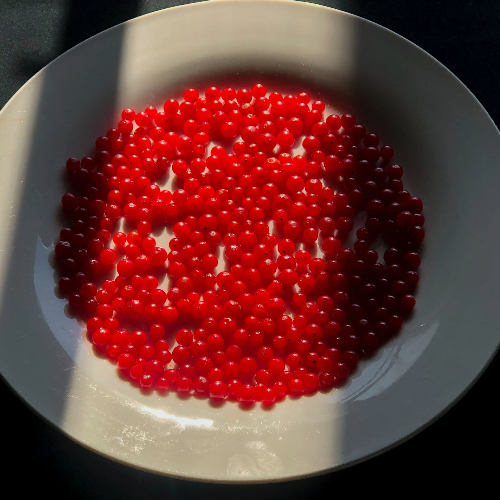
- 100 g (about 1 cup) red currants, stripped from their stalks
- 1 tablespoon honey or maple syrup, plus more to taste
- 2 teaspoons lemon juice
- ½ teaspoon vanilla extract
- 2 tablespoons water (only if using fresh fruit)
Method
- Prepare the fruit. Rinse the berries gently. To strip red currants, run a fork down each stalk so the berries fall off.
- Start with the firmer fruit. Put the blueberries, red currants, strawberries, honey and water in a medium saucepan over medium heat.
- Simmer. Once the fruit starts to bubble, lower the heat and simmer for 5 minutes, stirring now and then, until the blueberries begin to burst and the strawberries soften.
- Add the raspberries. Stir in the raspberries and simmer for 3 to 5 minutes more, until the juices are syrupy. Raspberries break down quickly, so adding them later keeps some texture.
- Finish. Take off the heat and stir in the lemon juice and vanilla. Taste, and add a little more honey only if the berries were very tart.
- Cool. The compote thickens as it cools. Serve warm or chilled.
Tips
- Don’t overcook. Five to ten minutes keeps a fresh, fruity flavor. Long cooking turns it jammy.
- For a thicker sauce, mix 1 teaspoon of cornstarch with 1 tablespoon of cold water and stir it in for the last minute, or add 1 tablespoon of chia seeds after cooking and leave for 10 minutes.
- For a smooth sauce, blend it and push it through a sieve to remove seeds.
- Taste your berries first. Very ripe summer fruit may need no sweetener at all.
- Use what you have. Any mix of berries works, plus cherries, plums or rhubarb.
Using frozen berries
Frozen mixed berries work well and are usually cheaper. Use 600 g straight from frozen, skip the water, and simmer for 10 to 12 minutes, as frozen fruit releases more liquid. Our comparison of frozen vs fresh produce explains why frozen berries are just as nutritious.
Swaps and variations
- No added sugar: leave out the honey and add a mashed ripe banana or a few chopped dates for sweetness.
- Spiced: add a cinnamon stick, a few cardamom pods or a strip of orange zest while it simmers.
- Herby: stir in torn mint or basil at the end.
- Black currants: use instead of red currants for a deeper flavor; they’re more tart, so taste before sweetening.
- Keto-friendly: use mostly raspberries and strawberries, skip the blueberries, and sweeten with a little allulose or erythritol. Our guide to low-carb fruits compares berries.
Nutrition per serving (estimate)
One serving is about 60 g, an eighth of the recipe. These figures were calculated from USDA FoodData Central values for raw strawberries, raspberries, blueberries, red currants, honey, lemon juice and vanilla.
| Nutrient | Per serving |
|---|---|
| Calories | 45 kcal |
| Protein | 0.5 g |
| Carbohydrate | 11 g |
| Fiber | 2.5 g |
| Sugars | 7 g, of which about 2.5 g from honey |
| Fat | 0.5 g |
| Saturated fat | 0 g |
| Sodium | under 5 mg |
Most of the sugar comes from the fruit itself. Berries are rich in fiber and vitamin C, and red currants have about 41 mg of vitamin C per 100 g. Some vitamin C is lost with heat, so a short simmer helps. The honey counts as free sugar, the type the NHS advises limiting to 30 g a day for adults, but a serving contains only about 2.5 g. If you blend the compote smooth, it becomes closer to a purée, and the NHS counts the sugars in fruit purées as free sugars too. Our guide to sugar in jam compares compote with jam.
Contains: no common allergens.
Ways to use berry compote
- Breakfast: on porridge, overnight oats or banana pancakes.
- Yogurt parfait: layer with Greek yogurt and granola, as in our Greek yogurt parfait.
- Dessert: with vanilla ice cream, rice pudding or cheesecake.
- Drinks: stir a spoonful into sparkling water.
- Baking: swirl into muffin batter before baking.
Storage and freezing
Cool the compote, then keep it in a clean, sealed jar in the fridge for up to 5 days. It freezes well for up to 3 months; freeze in small portions or an ice cube tray so you can thaw just what you need. Because it contains much less sugar than jam, it won’t keep at room temperature.
Common questions
What’s the difference between compote and jam?
Compote is fruit cooked briefly with a little sweetener, keeping pieces of fruit, and it’s stored in the fridge. Jam is cooked longer with much more sugar so it sets and keeps in the cupboard.
Can I make it without sweetener?
Yes. It will be more tart, especially with red currants, but ripe summer berries are often sweet enough.
Are red currants safe to eat raw?
Yes. They’re very tart, so most people prefer them cooked or sweetened.
This article is general information, not medical advice. Nutrition figures are estimates from USDA FoodData Central and will change with the brands and amounts you use. If you follow a diet for a medical reason, check the recipe with your doctor or dietitian.