The lowest-carb fruits are avocado, tomatoes, raspberries, blackberries and strawberries, with about 2 to 6 g of net carbs per 100 g, according to USDA FoodData Central. Watermelon, cantaloupe, lemons, limes and papaya come next, at about 6 to 9 g. Bananas, grapes, mangoes, cherries and dried fruit are the highest, so on strict keto they’re usually limited to a few bites, if any. Berries are the easiest fruit to fit into a keto diet, and small portions of others can fit a more moderate low-carb plan.
Fruit ranked by net carbs
Per typical portion, calculated from USDA FoodData Central values. Net carbs are total carbohydrate minus fiber.
| Fruit | Portion | Net carbs | Fiber |
|---|---|---|---|
| Avocado | 100 g (half) | 1.8 g | 6.7 g |
| Tomatoes | 100 g (1 medium) | 2.7 g | 1.2 g |
| Blackberries | 80 g (a handful) | 3.4 g | 4.2 g |
| Raspberries | 80 g (a handful) | 4.3 g | 5.2 g |
| Strawberries | 80 g (about 6 to 7) | 4.5 g | 1.6 g |
| Blueberries | 50 g (a small handful) | 6.1 g | 1.2 g |
| Watermelon | 100 g | 7.2 g | 0.4 g |
| Cantaloupe melon | 100 g | 7.3 g | 0.9 g |
| Kiwifruit | 1 (69 g) | 8.1 g | 2.1 g |
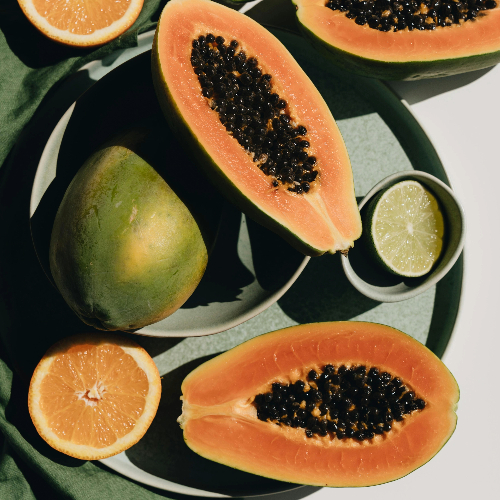
| Papaya | 100 g | 9.1 g | 1.7 g |
| Cherries | 80 g | 11.1 g | 1.7 g |
| Peach | 1 medium (150 g) | 12.0 g | 2.3 g |
| Orange | 1 medium (131 g) | 12.3 g | 3.1 g |
| Grapes | 80 g | 13.8 g | 0.7 g |
| Mango | 100 g | 13.4 g | 1.6 g |
| Apple | 1 medium (182 g) | 20.4 g | 4.4 g |
| Banana | 1 medium (118 g) | 23.8 g | 3.1 g |
Lemons and limes have about 6.5 to 7.7 g of net carbs per 100 g, but you usually use a squeeze for flavor, which adds well under 1 g.
How much fruit fits on keto?
On a strict keto diet of about 20 g of net carbs a day, fruit has to share the allowance with vegetables, nuts, dairy and everything else. In practice:
- Strict keto (20 g a day): a small handful of berries a few times a week, plus avocado and tomatoes.
- Moderate keto or low carb (30 to 50 g): a daily portion of berries, or occasionally a few slices of melon or a kiwi.
- Liberal low carb (50 to 100 g): most whole fruits in normal portions, still going easy on bananas, grapes and dried fruit.
Our guide to keto macros explains how to set your limit.
Why it’s worth keeping some fruit
Cutting out fruit completely can leave gaps. In the Keto-Med trial, people on a keto diet ate less fiber, folate, vitamin C and magnesium than on a Mediterranean diet. Berries help fill those gaps: 80 g of raspberries gives you about 5 g of fiber, and the same amount of strawberries provides about 47 mg of vitamin C, over half of an adult’s daily needs.
Whole fruit also has a good track record. A large BMJ study linked eating more whole fruit, especially blueberries, grapes and apples, with a lower risk of type 2 diabetes. Fruit juice was linked with a higher risk.
Best ways to eat fruit on keto
- Berries with cream or Greek yogurt. The fat and protein make a small portion more satisfying. Our article on whether strawberries are keto compares berries in more detail.
- In smoothies, a few frozen berries blended with unsweetened almond milk and a spoonful of nut butter.
- On salads: a few raspberries or slices of strawberry with greens, goat cheese and walnuts.
- Lemon and lime in water, dressings and marinades.
- Avocado and tomato at any meal. Our guide to whether avocado is keto has portion sizes.
- Frozen berries as a cold dessert in summer.
Fruits to limit on keto
- Bananas, grapes, mangoes and cherries: high in sugar for their size.
- Dried fruit: raisins, dates, dried apricots and figs are very concentrated. A 30 g handful of raisins has about 22 g of net carbs.
- Fruit juice and smoothies: the fiber is gone, and a 250 ml glass of orange juice has about 22 g of sugar.
- Canned fruit in syrup: the syrup adds a lot of sugar.
- “Fruit” snacks and bars: often mostly sugar.
What about papaya?
Papaya is moderate in carbs, at about 9 g of net carbs per 100 g, and very high in vitamin C: 100 g provides about 61 mg. A few cubes fit a moderate low-carb plan, but on strict keto, berries give you more fiber for the carbs.
Watch for hidden fruit sugar
Some keto-labeled products use fruit purées or fruit juice concentrates as sweeteners. Check ingredient lists for “fruit juice concentrate,” “date paste” or “apple purée.” Our guide to net carbs explains how to read labels.
Common questions
Is any fruit completely carb-free?
No. All fruit contains some carbohydrate. Avocado and tomatoes, which are botanically fruits, are the closest.
Are berries keto?
Yes, in small portions. Raspberries and blackberries are the best choices because they’re high in fiber.
Can I eat a banana on keto?
A whole medium banana has about 24 g of net carbs, more than a strict daily limit. A few slices may fit a moderate low-carb plan.
Is fruit sugar bad for you?
The sugar in whole fruit comes with fiber, water, vitamins and plant compounds, and whole fruit is linked with better health. The concern is mainly with juices, dried fruit and added sugars.
Are frozen berries as good as fresh?
Yes. Frozen berries are picked ripe and frozen quickly, and they’re often cheaper than fresh out of season. Check that there’s no added sugar, and measure a portion rather than pouring from the bag.
Can I drink smoothies on keto?
Only small, carefully made ones. A smoothie with a few frozen berries, unsweetened almond milk, a spoonful of nut butter and some spinach can fit. Fruit-based smoothies made with bananas, mango or juice are too high in sugar for keto.
Safety note: Keto isn’t suitable for everyone. If you have diabetes, kidney or liver disease, take regular medication, or are pregnant or breastfeeding, talk to your doctor before cutting carbs this far (why it matters).
This article is general information, not medical advice. Talk to your doctor or a registered dietitian before making big changes to how you eat, especially if you have a health condition, take regular medication, or are pregnant or breastfeeding.