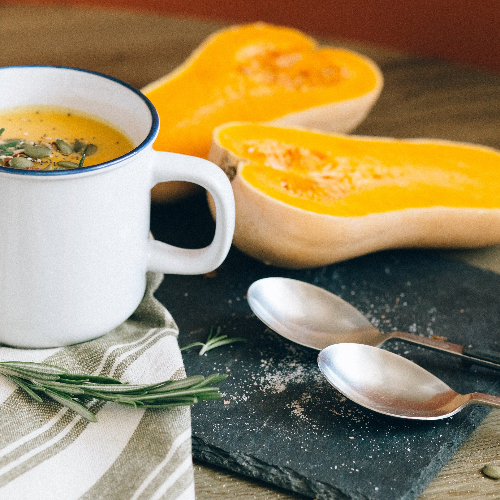
This butternut squash soup is roasted butternut squash, carrot, onion and garlic blended with stock and a little cumin into a thick, naturally sweet and velvety soup, without any cream. A spoonful of Greek yogurt and some toasted pumpkin seeds on top add creaminess and crunch. It takes about 55 minutes, mostly in the oven, serves 4, and has about 200 calories and 6 g of fiber per bowl. Served in a mug, as in our photo, it’s a warming lunch, and it freezes well for busy days.
- Serves: 4
- Prep time: 15 minutes
- Cook time: about 40 minutes
- Total time: about 55 minutes
Ingredients
- 1 medium butternut squash (about 900 g of flesh once peeled and deseeded), cut into chunks
- 1 medium carrot (about 100 g), sliced
- 1 large onion (about 150 g), cut into wedges
- 2 garlic cloves, unpeeled
- 1 tablespoon (15 ml) olive oil
- ½ teaspoon ground cumin, plus a pinch of chili flakes (optional)
- About 800 ml (3⅓ cups) low-salt vegetable or chicken stock
- ¼ teaspoon salt and black pepper
- 4 tablespoons (60 g) plain Greek yogurt, to serve
- 20 g (2 tablespoons) pumpkin seeds, toasted, to serve
- A few sage leaves or some parsley, to serve (optional)
Method
- Heat the oven to 200°C (400°F), or 180°C (350°F) with the fan on.
- Roast the vegetables. Toss the squash, carrot, onion and garlic with the oil, cumin, chili, salt and pepper on a large baking tray. Spread them out in a single layer and roast for 30 to 35 minutes, turning once, until soft and caramelized at the edges.
- Toast the seeds. While the vegetables roast, toast the pumpkin seeds in a dry pan for 2 to 3 minutes until they start to pop.
- Blend. Squeeze the garlic out of its skin. Put all the roasted vegetables in a large pan with the stock and bring to a simmer for 5 minutes. Blend until smooth with a stick blender, or in batches in a blender, leaving a gap for steam to escape.
- Adjust the texture with more stock or water until it’s as thick or thin as you like.
- Taste and season.
- Serve in bowls or mugs, topped with a spoonful of yogurt, toasted pumpkin seeds and herbs.
Tips
- Roasting is the key to a deep, sweet flavor. Boiling the squash gives a milder soup.
- Peel squash safely: cut off the top and bottom, halve it where the neck meets the bulb, then peel each piece with a sturdy vegetable peeler.
- Keep the seeds: squash seeds can be cleaned, tossed with oil and roasted like pumpkin seeds.
- Use a good stock; low-salt stock lets you control the seasoning.
- Add acidity: a squeeze of lemon or lime just before serving brightens the flavor.
Swaps and variations
- Spiced: add a teaspoon of curry powder or a little grated ginger.
- Apple: roast a chopped apple with the squash for a sweeter soup.
- Sweet potato or pumpkin work instead of squash.
- More protein: stir in a can of drained white beans or red lentils before blending.
- Vegan: use vegetable stock and a plant-based yogurt.
- Thai-style: for a coconut version with lime and chili, see our Thai pumpkin soup.
Nutrition per serving (estimate)
One serving is a quarter of the recipe, about 400 ml. These figures were calculated from USDA FoodData Central values for raw butternut squash, onion, carrot, garlic, olive oil, cumin, low-fat Greek yogurt, dried pumpkin seeds and salt. Stock isn’t included, so sodium will be higher with regular stock.
| Nutrient | Per serving |
|---|---|
| Calories | 205 kcal |
| Protein | 6 g |
| Carbohydrate | 34 g |
| Fiber | 6 g |
| Sugars | 8.5 g |
| Fat | 7 g |
| Saturated fat | 1 g |
| Sodium | about 230 mg |
Butternut squash is an excellent source of beta carotene, which your body turns into vitamin A, as our guide to vitamin A explains. It also provides vitamin C, potassium and fiber. Each bowl contains more than 250 g of vegetables, which counts toward your 5 a day; the NHS counts 80 g of vegetables as a portion. With no cream, it’s low in saturated fat.
Contains: milk (yogurt). Check your stock for celery.
Storage and freezing
Cool quickly and refrigerate within 2 hours. It keeps for 3 to 4 days in the fridge, as the USDA advises for leftovers. Reheat until steaming hot. Freeze without the toppings for up to 3 months, and thaw overnight in the fridge.
What to serve with it
- Whole grain bread or a cheese toastie.
- A green salad with walnuts.
- Our mushroom and walnut pâté on toast.
Roasting vs boiling
Roasting the squash before blending gives a deeper, sweeter flavor because the edges caramelize in the oven. If you’re short of time, you can simmer the raw chunks with the onion, carrot and garlic in the stock for 20 to 25 minutes until soft instead. The soup will taste lighter, so add a little extra cumin, a squeeze of lemon or a spoonful of the yogurt to balance it. Cutting the squash into even pieces, about 3 cm across, helps everything cook at the same rate either way.
How to cut a butternut squash safely
Butternut squash is hard and can slip, so start by cutting off both ends to give it flat surfaces. Stand it upright and cut it in half where the narrow neck meets the round base. Peel each piece with a sturdy vegetable peeler, cut the base in half and scoop out the seeds with a spoon, then cut the flesh into chunks. If it’s very hard, microwave the whole squash for 2 to 3 minutes first to soften the skin slightly. Many supermarkets also sell ready-cut squash, which saves time.
Common questions
Do I have to peel butternut squash?
For soup, yes, for the smoothest texture. If you roast squash as a side dish, the skin softens and can be eaten.
Is butternut squash soup good for weight loss?
It’s filling, high in fiber and relatively low in calories, so it can be a helpful part of a weight loss plan, especially with a protein on the side.
Can I make it without an oven?
Yes. Sauté the onion, carrot and garlic, add the squash and stock, and simmer for 20 to 25 minutes until soft before blending.
This article is general information, not medical advice. Nutrition figures are estimates from USDA FoodData Central and will change with the brands and amounts you use. If you follow a diet for a medical reason, check the recipe with your doctor or dietitian.