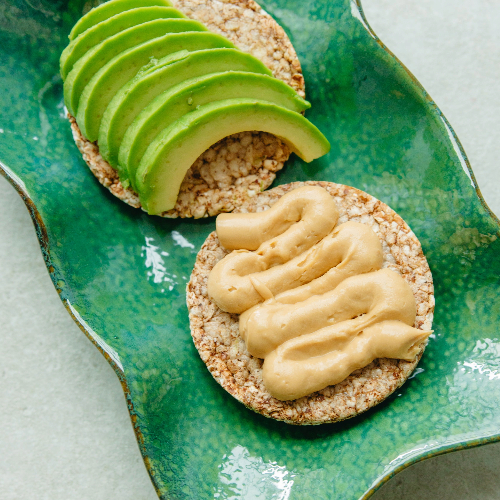
Plain rice cakes are low in calories per cake but also low in fiber and protein, so on their own they’re not very filling. Per 100 g, plain brown rice cakes have 387 calories, 81.5 g of carbohydrate, 4.2 g of fiber and 8.2 g of protein, according to USDA FoodData Central. A single cake of about 9 g has roughly 35 calories. They become a healthy snack when you top them with something that adds protein, fiber or healthy fat, such as hummus, avocado, peanut butter or cottage cheese.
Rice cake nutrition
Here’s the nutrition in plain, unsalted brown rice cakes, from USDA FoodData Central:
| Nutrient | Per 100 g | Per cake (about 9 g) |
|---|---|---|
| Calories | 387 kcal | 35 kcal |
| Protein | 8.2 g | 0.7 g |
| Carbohydrate | 81.5 g | 7.3 g |
| Fiber | 4.2 g | 0.4 g |
| Fat | 2.8 g | 0.3 g |
| Sodium | 26 mg | 2 mg |
Weights vary by brand, so check the pack. Flavored rice cakes, such as cheese, chocolate or caramel, often add salt, sugar or fat.
Are rice cakes healthy?
They’re a reasonable choice, with some limits:
What’s good about them:
- Low in calories per cake, so they’re easy to fit into a meal or snack.
- Plain versions are very low in fat, sugar and salt.
- Naturally gluten-free, though you should check the label if you have coeliac disease, because some are made on shared equipment.
- A crunchy base for toppings, like a lighter cracker.
The drawbacks:
- Very little fiber or protein per cake, the two things that help a snack keep you full.
- Gram for gram, they’re energy-dense: 387 calories per 100 g, compared with about 252 for whole wheat bread, according to USDA FoodData Central. The low figure per cake comes from how light they are.
- Easy to eat several without noticing, especially flavored ones.
Better rice cake toppings
Here’s how two plain rice cakes (about 18 g) compare with different toppings, using USDA values:
| Two rice cakes with | Calories | Protein | Fiber |
|---|---|---|---|
| Nothing | 70 | 1.5 g | 0.8 g |
| 2 tablespoons (30 g) hummus | 141 | 3.8 g | 2.4 g |
| 1 tablespoon (16 g) peanut butter | 165 | 5.0 g | 1.6 g |
| 50 g cottage cheese and tomato | 110 | 6.7 g | 0.8 g |
| 30 g avocado and a pinch of chili | 118 | 2.1 g | 2.8 g |
Adding a protein or fiber-rich topping roughly doubles the calories but makes a much more filling snack. Our guide to whether hummus is healthy has an easy homemade version.
8 topping ideas
- Hummus and cucumber, with a pinch of paprika.
- Smashed avocado and tomato, with lemon and black pepper.
- Peanut or almond butter and sliced banana.
- Cottage cheese and cherry tomatoes, with fresh basil.
- Smoked salmon and cream cheese, with dill.
- Mashed egg and spring onion.
- Ricotta and berries, with a little honey.
- Tuna and sweetcorn mixed with a spoonful of yogurt.
Rice cakes vs other snacks
| Snack | Why choose it |
|---|---|
| Rice cakes with topping | Light, crunchy, gluten-free base |
| Whole grain crackers | Usually more fiber per serving |
| Air-popped popcorn | Much more fiber: about 14.5 g per 100 g (USDA) |
| Fruit with nuts | Fiber, vitamins and healthy fats together |
| Plain yogurt | Protein and calcium |
Our guide to healthy snack ideas has more options.
Rice cakes for children
Rice cakes are a popular snack for toddlers and young children. Rice naturally takes up more inorganic arsenic from the soil than many other crops, and the US Food and Drug Administration monitors arsenic levels in rice products and advises parents to feed children a variety of grains. That doesn’t mean avoiding rice cakes, just not relying on them as the main daily snack. Rotate them with oatcakes, whole grain crackers, fruit and yogurt.
Are rice cakes good for weight loss?
They can help if they replace higher-calorie snacks such as crisps or biscuits, and if you add a filling topping. On their own, two plain rice cakes are unlikely to keep you full for long, which can lead to eating more later. Pairing them with protein or fiber is the key.
Are rice cakes keto?
No. Each cake has about 7 g of carbohydrate, almost all of it starch, so a couple would use up a large share of a strict keto allowance. Our keto food list has low-carb alternatives.
How to make rice cakes part of a balanced snack
Think of a rice cake as a plate rather than a snack in itself. Build each one with:
- A protein: hummus, cottage cheese, egg, tuna, smoked salmon or peanut butter.
- A vegetable or fruit: cucumber, tomato, spinach, avocado, apple or berries.
- Something for flavor: herbs, lemon, chili flakes, black pepper or a little cheese.
This turns a light, crunchy base into a snack that holds you over until your next meal.
Rice cakes and salt
Plain unsalted rice cakes have only about 26 mg of sodium per 100 g, according to USDA FoodData Central. Salted and flavored versions can have much more. The NHS classes more than 1.5 g of salt per 100 g as high and 0.3 g or less as low, so compare the labels if you buy flavored ones.
Common questions
Are rice cakes healthier than bread?
Not necessarily. Whole grain bread usually has more fiber per serving, and both make a good base for healthy toppings. Rice cakes are lighter per piece, so they suit people who want a smaller snack.
Are rice cakes gluten-free?
Plain rice cakes are made from rice, which is naturally gluten-free. Some contain other grains, and some are made in factories that also handle wheat, so choose ones labelled gluten-free if you have coeliac disease.
Can I eat rice cakes every day?
Yes, if you enjoy them and they’re part of a varied diet. Choose plain ones most of the time, add a filling topping, and swap in other whole grains such as oatcakes or whole grain bread on some days, which also follows the FDA’s advice to vary grains.
This article is general information, not medical advice. Talk to your doctor or a registered dietitian before making big changes to how you eat, especially if you have a health condition, take regular medication, or are pregnant or breastfeeding.