The quickest ways to cook kale are to sauté it in olive oil with garlic for 3 to 5 minutes, or to massage it raw with oil, lemon and salt for a salad. You can also roast it into crisp kale chips, simmer it in soups and stews, or blend it into smoothies. Always strip out the tough stems first. Kale is rich in vitamin K and vitamin C, though boiling cuts the vitamin C a lot: per 100 g, raw kale has about 93 mg, and boiled kale about 18 mg, according to USDA FoodData Central.
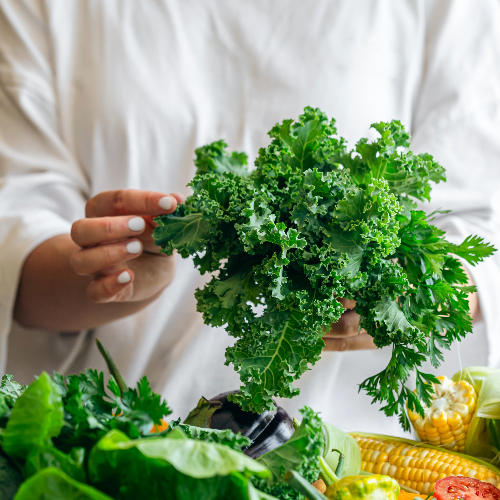
How to prepare kale
- Wash it. Rinse the leaves well in a bowl of cold water, lifting them out so grit stays at the bottom.
- Remove the stems. Hold the base of the stem in one hand and pull the leaf away with the other, or cut along each side of the stem with a knife. The thick stems are tough. You can slice them thinly and cook them a few minutes longer, or save them for stock.
- Dry the leaves. A salad spinner or clean towel works. Wet leaves steam instead of crisping, and dressings won’t stick.
- Tear or chop the leaves into bite-sized pieces.
Curly kale, Tuscan kale (cavolo nero or lacinato) and red Russian kale can all be cooked the same way. Tuscan kale is more tender, so it cooks a little faster.
1. Sautéed kale with garlic (5 minutes)
- 1 bunch of kale (about 250 g / 9 oz), stems removed, chopped
- 1 tablespoon olive oil
- 2 garlic cloves, sliced
- A pinch of chili flakes, salt and a squeeze of lemon
Heat the oil in a large frying pan over medium heat. Add the garlic and chili and cook for 30 seconds. Add the kale with a splash of water, toss, and cook for 3 to 5 minutes, stirring, until wilted and bright green. Season with salt and lemon. Serves 2 as a side.
2. Massaged kale salad (no cooking)
Raw kale is tough, but massaging softens it. Put the chopped leaves in a bowl with a teaspoon of olive oil, a squeeze of lemon juice and a pinch of salt. Rub and squeeze the leaves with your hands for 2 to 3 minutes, until they darken and soften. Add toppings such as sliced apple, toasted nuts, grated parmesan, avocado or chickpeas, and a little more dressing.
3. Crispy baked kale chips
- Heat the oven to 150°C (300°F), or 130°C (270°F) for a fan oven.
- Tear 1 bunch of dry kale leaves into large pieces and toss with 1 tablespoon of olive oil and a pinch of salt.
- Spread in a single layer on two baking trays, without overlapping.
- Bake for 15 to 20 minutes, turning the trays halfway, until crisp but still green. Watch closely in the last few minutes, because they burn quickly.
- Let them cool on the trays, where they’ll crisp up further. Eat the same day.
Try them with smoked paprika, garlic powder or a little grated parmesan.
4. Kale in soups and stews
Stir chopped kale into soups, stews, curries and pasta sauces for the last 5 to 10 minutes of cooking. It holds its shape better than spinach. It’s especially good with white beans, lentils, sausage or potatoes. Because the liquid is eaten, you keep more of the water-soluble vitamins that leach out during cooking.
5. Kale smoothies
Blend a small handful of kale leaves (stems removed) with frozen fruit such as banana, mango or pineapple and milk or a plant drink. Start with a little kale, because the flavor is stronger than spinach. Baby kale is milder.
Kale nutrition: raw vs cooked
Per 100 g, from USDA FoodData Central:
| Nutrient | Raw kale | Boiled kale |
|---|---|---|
| Calories | 35 | 36 |
| Fiber | 4.1 g | 4.0 g |
| Vitamin C | 93 mg | 18 mg |
| Vitamin K | 390 mcg | 418 mcg |
| Calcium | 254 mg | 150 mg |
| Potassium | 348 mg | 144 mg |
Boiling loses much of the vitamin C and potassium into the water, which is why quick sautéing, steaming, raw salads or cooking kale in a soup are better ways to keep more of them. Vitamin K stays high either way.
For comparison with other greens, see our green foods list, and our guide to leafy greens and inflammation.
How to store kale
Keep unwashed kale wrapped loosely in a paper towel inside a bag in the fridge, and use it within about 5 days. If it wilts, revive it in a bowl of cold water for 10 minutes. You can also blanch kale for 2 minutes, cool it in iced water, squeeze it dry and freeze it in portions for soups and smoothies.
A safety note on vitamin K
Kale is one of the richest sources of vitamin K. If you take warfarin, the NIH Office of Dietary Supplements says it’s very important to keep your vitamin K intake about the same each day. That doesn’t mean avoiding kale, just eating a steady amount and talking to your doctor before making a big change.
Common questions
Why is my kale bitter?
Older, larger leaves are more bitter. Massaging raw kale, cooking it with garlic and lemon, or adding something sweet such as apple or raisins balances the bitterness. Baby kale is milder.
Can you eat kale stems?
Yes, but they’re tough. Slice them thinly and sauté them for a few minutes before adding the leaves, or blend them into smoothies.
Common questions
Is it better to eat kale raw or cooked?
Both are good. Raw kale keeps more of its vitamin C, as the table above shows, while cooked kale is softer and easier to eat in larger amounts. A mix of both through the week works well. The World Health Organization recommends at least 400 g of fruit and vegetables a day, and kale can make up part of that.
This article is general information, not medical advice. Talk to your doctor or a registered dietitian before making big changes to how you eat, especially if you have a health condition, take regular medication, or are pregnant or breastfeeding.