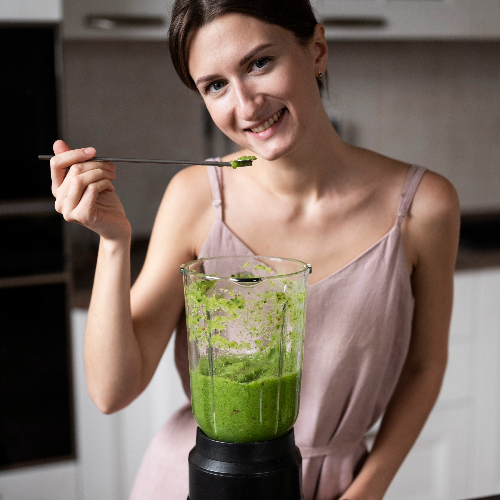
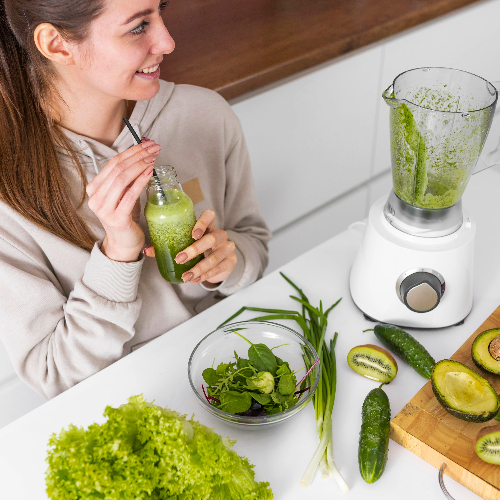
Green juice can be part of a healthy diet, but it isn’t a substitute for eating whole vegetables and fruit, and it doesn’t do anything special for your liver or “clean out” your body. Juicing removes most of the fiber, and any fruit in the juice counts as free sugar: the World Health Organization includes the sugars in fruit juice in its free sugar limit. The NHS suggests keeping juices and smoothies to one small glass (150 ml) a day.
What’s in green juice?
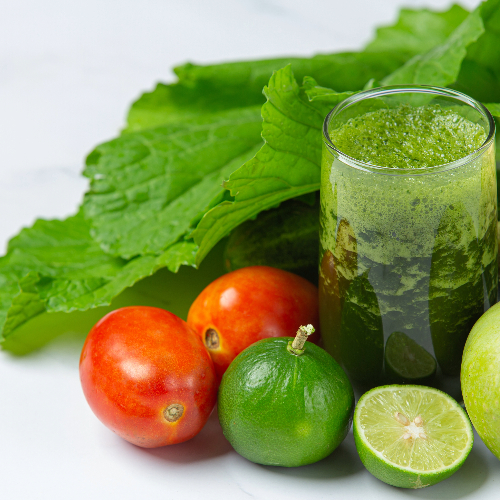
Green juices are usually made from leafy greens such as spinach, kale or celery, often with cucumber, lemon, ginger and some fruit such as apple or pineapple to make them taste better. The nutrition depends entirely on the recipe. A juice that’s mostly greens and cucumber is low in sugar. One that’s mostly apple and pineapple is closer to fruit juice with a green color.
What you lose when you juice
The biggest loss is fiber. Compare a whole orange with orange juice, using values per 100 g from USDA FoodData Central:
| Per 100 g | Whole orange | Orange juice |
|---|---|---|
| Calories | 47 | 45 |
| Sugars | 9.4 g | 8.4 g |
| Fiber | 2.4 g | 0.2 g |
| Vitamin C | 53 mg | 50 mg |
The juice keeps most of the vitamin C and sugar but loses almost all the fiber. Green juices follow the same pattern: the juicer separates the liquid from the fibrous pulp. And you’d rarely eat three apples in one sitting, but it’s easy to drink the juice of three.
What about “detox” claims?
Your liver and kidneys clear waste from your body on their own. The US National Center for Complementary and Integrative Health says studies of detox and cleanse programs have been of low quality, and that a 2017 review found juicing and detox diets cause initial weight loss that’s usually followed by weight regain. Juice-only diets also leave out protein and fat, and can leave you hungry and short of energy. If you want to support your health, eating more whole vegetables and fruit, drinking water and cutting down on alcohol are far better uses of your effort and money.
Who should be careful with green juice
- If you take warfarin: leafy greens such as kale and spinach are very high in vitamin K, which affects how warfarin works. The NIH Office of Dietary Supplements advises keeping your vitamin K intake steady. A daily green juice habit can change it a lot, so talk to your doctor first.
- If you’ve had kidney stones: spinach is high in oxalate, and juicing concentrates a lot of spinach into one glass. The NIDDK says people who form calcium oxalate stones may want to limit high-oxalate foods such as spinach.
- If you have kidney disease: green juices can be high in potassium. Follow your kidney team’s advice.
- If you have diabetes: juices with fruit can raise blood sugar quickly. Check with your diabetes team.
- Unpasteurized juice: fresh, unpasteurized juices from shops and juice bars can make people sick, and the FDA warns this can be serious for pregnant people, young children, older adults and anyone with a weakened immune system. Choose pasteurized juice, or make your own with well-washed produce and drink it straight away.
How to make a better green juice or smoothie
If you enjoy green drinks, these tips make them a better choice:
- Make it mostly vegetables. Use cucumber, celery, spinach and lettuce as the base, with a little lemon or ginger for flavor.
- Limit fruit to a small apple or a few chunks of pineapple per glass.
- Blend instead of juicing. A smoothie keeps the fiber. Our green foods list has ideas for what to add.
- Add protein such as Greek yogurt or a spoonful of nut butter if it’s replacing a meal.
- Keep portions small, around 150 ml for juice.
A simple green smoothie
Blend until smooth: a large handful of spinach (about 30 g), half a banana, 100 g of frozen pineapple or mango, a 5 cm piece of cucumber, a squeeze of lime and 200 ml of milk or unsweetened soy drink. Add a few ice cubes if you like it cold. Because it’s blended rather than juiced, the fiber stays in.
Green juice vs eating your greens
| Green juice | Whole vegetables | |
|---|---|---|
| Fiber | Mostly removed | All kept |
| Fullness | Low | Higher |
| Sugar | Concentrated if fruit is added | Spread through the food |
| Convenience | Quick to drink | Needs cooking or chopping |
The WHO recommends at least 400 g of fruit and vegetables a day (WHO), and whole vegetables are the better way to get there. Our guide to how to cook kale has easy ways to eat more greens.
Common questions
Is it okay to drink green juice every day?
A small glass of mostly-vegetable juice is fine for most people, as long as it doesn’t replace whole vegetables. Be careful if any of the situations above apply to you.
Is celery juice good for you?
Celery juice is low in calories, but it’s still juice: eating whole celery keeps the fiber, and the NCCIH notes that people prone to kidney stones should be careful with juices made from high-oxalate vegetables.
Common questions
Are bottled green juices healthy?
Check the label. Many bottled green juices are mostly apple or pineapple juice, so they’re high in sugar. Look for ones where vegetables are listed first and sugar is low, and keep portions to about 150 ml.
Can green juice help me lose weight?
Juice cleanses can cause initial weight loss that’s usually followed by regain, according to the NCCIH review mentioned above. Eating more whole vegetables and fewer high-calorie foods is a more lasting approach.
What’s the best time to drink green juice?
There’s no best time. If you have one, drinking it with a meal rather than on its own may help it feel more filling.
This article is general information, not medical advice. Talk to your doctor or a registered dietitian before making big changes to how you eat, especially if you have a health condition, take regular medication, or are pregnant or breastfeeding.