Kiwi fruit is one of the richest common sources of vitamin C: one green kiwi (about 69 g) has around 64 mg, most of an adult’s daily needs, plus fiber, vitamin K, vitamin E and potassium, for only about 42 calories, according to USDA FoodData Central. Kiwis are also well studied for constipation: in a 2021 trial, eating two green kiwis a day worked about as well as prunes or psyllium, with fewer side effects. You can eat the skin too, which adds extra fiber.
Kiwi nutrition
Values for raw green kiwi, from USDA FoodData Central:
| Nutrient | 1 kiwi (69 g) | 2 kiwis (138 g) |
|---|---|---|
| Calories | 42 kcal | 84 kcal |
| Carbohydrate | 10.1 g | 20.3 g |
| Sugars | 6.2 g | 12.4 g |
| Fiber | 2.1 g | 4.1 g |
| Vitamin C | 64 mg | 128 mg |
| Vitamin K | 28 mcg | 56 mcg |
| Vitamin E | 1.0 mg | 2.0 mg |
| Potassium | 215 mg | 431 mg |
| Folate | 17 mcg | 35 mcg |
Two kiwis provide more vitamin C than the 75 to 90 mg most adults need in a day, and more than an orange. Our list of vitamin C foods shows how kiwi compares with other fruit and vegetables. Gold kiwi varieties are sweeter, with smooth, hairless skin, and are also very high in vitamin C.
Health benefits of kiwi
Constipation
Kiwi has some of the best evidence of any fruit for constipation. In the 2021 US trial, 79 adults with chronic constipation ate either two green kiwis a day, 100 g of prunes, or 12 g of psyllium fiber for 4 weeks. All three increased the number of complete bowel movements a week by a similar amount. Kiwi also improved stool consistency, straining and bloating, caused the fewest side effects, and left fewer people dissatisfied than the other treatments.
The effect may come from kiwi’s water-holding fiber together with an enzyme called actinidin. Our high-fiber foods list has more foods that help.
Vitamin C and iron absorption
Vitamin C helps your body absorb iron from plant foods. A kiwi with a breakfast of fortified cereal or oats, or after a bean or lentil meal, can help. Our guide to iron-rich foods explains how to combine them.
Sleep
In a small 2011 study, 24 adults with sleep problems ate two kiwis an hour before bed for 4 weeks and fell asleep faster and slept longer. There was no comparison group, so the result needs confirming, but kiwi is a light and healthy evening snack. Our guide to foods that help you sleep covers more.
Low calorie and filling
At about 42 calories each, kiwis are an easy way to add fruit to your day. An 80 g portion, a little more than one kiwi, counts as one of your 5 A Day, using the NHS portion size for fresh fruit.
Kiwi compared with other fruit
Per typical portion, calculated from USDA FoodData Central values:
| Fruit | Portion | Vitamin C | Fiber | Calories |
|---|---|---|---|---|
| Kiwi | 1 (69 g) | 64 mg | 2.1 g | 42 kcal |
| Orange | 1 medium (131 g) | 70 mg | 3.1 g | 62 kcal |
| Strawberries | 80 g | 47 mg | 1.6 g | 26 kcal |
| Apple | 1 medium (182 g) | about 8 mg | 4.4 g | 104 kcal |
| Banana | 1 medium (118 g) | 10 mg | 3.1 g | 105 kcal |
Weight for weight, kiwi has more vitamin C than an orange, about 93 mg per 100 g compared with 53 mg.
Can you eat kiwi skin?
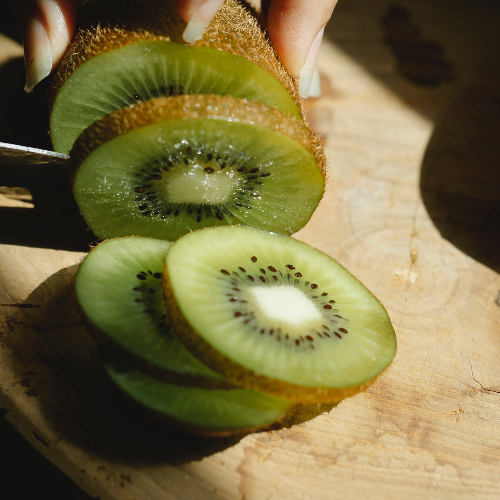
Yes. The fuzzy skin of green kiwi is edible once washed, and it adds extra fiber. Some people dislike the texture, so try slicing the kiwi thinly with the skin on. Gold kiwi skin is smooth and easier to eat. Rub green kiwis with a clean cloth under running water to remove some of the fuzz.
Kiwi allergy
Kiwi is a known food allergen. Allergy UK explains that in adults, most reactions are caused by pollen food syndrome and are mild, such as an itchy mouth, but that kiwi allergy can sometimes cause anaphylaxis. If you or your child react to kiwi, talk to your doctor.
Cooking tips
Kiwi contains actinidin, an enzyme that breaks down proteins. This means:
- It tenderizes meat. A little mashed kiwi in a marinade softens tough cuts, but don’t leave it too long or the meat turns mushy.
- It stops gelatin from setting, so raw kiwi doesn’t work in jelly or gelatin desserts.
- It can make dairy taste bitter if left mixed with yogurt or cream for a long time. Add it just before serving.
How to choose, ripen and store kiwi
- Ripe kiwis yield slightly when pressed gently, like a ripe peach.
- To ripen, leave firm kiwis at room temperature for a few days, or in a paper bag with an apple or banana to speed it up.
- Once ripe, keep them in the fridge, where they last for 1 to 2 weeks.
- Avoid kiwis that are very soft, wrinkled or bruised.
Easy ways to eat kiwi
- Halve and scoop with a spoon.
- On breakfast: sliced over yogurt or porridge. Our Greek yogurt parfait works well with kiwi instead of berries.
- In smoothies: with spinach and banana.
- In salads: with mango, cucumber and chili, or in a fruit salad.
- With fish or chicken: in a kiwi and cilantro salsa.
- For lunchboxes: whole kiwis travel well. Pack a spoon.
Common questions
How many kiwis should I eat a day?
One or two is a sensible amount. Two a day is the amount used in the constipation trial and the sleep study above.
Are kiwis good for people with diabetes?
Yes, in normal portions. A kiwi has about 6 g of sugar and some fiber, and whole fruit is a better choice than juice.
Is kiwi keto?
One kiwi has about 8 g of net carbs, so it can fit a moderate low-carb plan but uses a lot of a strict keto allowance. Our guide to low-carb fruits compares it with berries.
Is kiwi good for children?
Yes. Kiwi is a good fruit for children, cut into small pieces for young children. If your child has a reaction, such as an itchy mouth or a rash, stop giving it and talk to your doctor.
This article is general information, not medical advice. Talk to your doctor or a registered dietitian before making big changes to how you eat, especially if you have a health condition, take regular medication, or are pregnant or breastfeeding.