Pomegranates are a healthy fruit: half a cup of the juicy seeds (arils, about 87 g) has around 72 calories, 3.5 g of fiber, vitamin K, folate and potassium, according to USDA FoodData Central, plus plant compounds called polyphenols. Pomegranate juice has been studied most for blood pressure: a meta-analysis of 8 trials found it lowered systolic blood pressure by about 5 mm Hg. The whole seeds are the better everyday choice, because juice loses the fiber and is high in sugar. Below: the nutrition, what the evidence shows, and the easy way to get the seeds out.
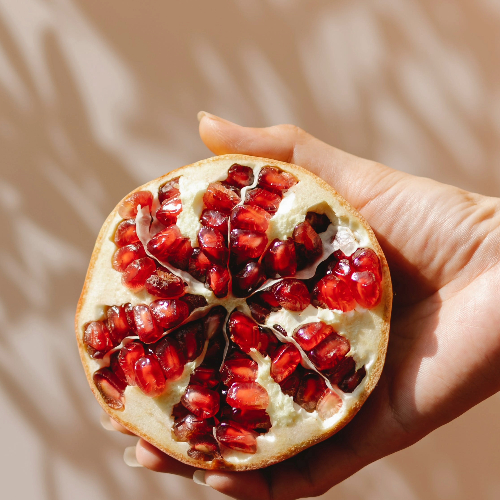
Pomegranate nutrition
Calculated from USDA FoodData Central values:
| Nutrient | ½ cup arils (87 g) | Seeds of a whole fruit (282 g) | Juice, 150 ml |
|---|---|---|---|
| Calories | 72 kcal | 234 kcal | 84 kcal |
| Carbohydrate | 16 g | 53 g | 20 g |
| Sugars | 12 g | 39 g | 20 g |
| Fiber | 3.5 g | 11.3 g | 0.2 g |
| Vitamin C | 9 mg | 29 mg | 0 mg |
| Vitamin K | 14 mcg | 46 mcg | 16 mcg |
| Folate | 33 mcg | 107 mcg | 37 mcg |
| Potassium | 205 mg | 666 mg | 334 mg |
The crunchy seed inside each aril is edible and provides most of the fiber. An 80 g portion of arils counts as one of your 5 A Day, using the NHS 80 g portion size for fresh fruit.
Possible health benefits
Blood pressure
In the 2017 meta-analysis, drinking pomegranate juice lowered systolic blood pressure by about 5 mm Hg and diastolic pressure by about 2 mm Hg on average, across 8 randomized trials. The effect on systolic pressure held regardless of how long the trials lasted or how much juice was used. The trials were small, so it’s a promising rather than definitive result, and juice is also a source of free sugars.
Polyphenols
Pomegranates are rich in polyphenols, especially punicalagins and anthocyanins, which give the arils their deep red color. These act as antioxidants in the laboratory. How much they do in the body is less clear, partly because they’re broken down and transformed by gut bacteria. As with other fruit, it’s best to see pomegranate as part of a varied, colorful diet rather than a source of any single compound.
Fiber
The seeds of a whole pomegranate provide over 11 g of fiber, more than a third of the 30 g a day the NHS recommends for adults. Our high-fiber foods list shows how that compares with other fruit.
Whole seeds or juice?
The arils are the better everyday choice:
- Fiber: juice keeps almost none of it.
- Sugar: a 150 ml glass of juice has about 20 g of sugar, which counts as free sugar. The NHS suggests no more than 150 ml of fruit juice and smoothies a day.
- Fullness: chewing seeds is far more filling than drinking juice.
If you enjoy the juice, choose 100% juice with no added sugar, and keep to a small glass with a meal. Our article on whether orange juice is healthy explains the trade-offs of fruit juice in more detail.
Things to be aware of
- Vitamin K and warfarin. The seeds of a whole pomegranate provide about 46 mcg of vitamin K. If you take warfarin, the NIH Office of Dietary Supplements advises keeping your vitamin K intake steady from day to day, rather than avoiding it. Ask your doctor or pharmacist if you plan to eat a lot of pomegranate.
- Medicines in general. If you take regular medicines and plan to drink pomegranate juice daily, check with a pharmacist, as with any fruit juice.
- Potassium. Pomegranate and its juice contain potassium. If you’ve been told to limit potassium, for example because of kidney disease, ask your doctor how much is right for you.
- Stains. Pomegranate juice stains clothes and wooden boards. Wear an apron.
How to get the seeds out
The water method is the least messy:
- Cut off the crown end of the pomegranate, then score the skin from top to bottom along the ridges, into 4 to 6 sections. Don’t cut deep into the seeds.
- Hold the fruit over a large bowl of cold water and pull it apart into sections.
- Working under the water, push the arils away from the skin and white pith with your fingers.
- The arils sink and the pith floats. Skim off the pith, drain the arils in a sieve, and pat them dry.
Another method: halve the fruit across the middle, hold one half cut side down over a bowl, and tap the back firmly with a wooden spoon until the arils fall out.
Choosing and storing pomegranates
- Choose fruit that feels heavy for its size, with firm, unbroken skin. Color isn’t a reliable guide to ripeness.
- Store whole pomegranates in a cool place for a week or two, or in the fridge for longer.
- Keep loose arils covered in the fridge for a few days, or freeze them in a single layer, then transfer them to a bag.
Ways to eat pomegranate
- On yogurt or porridge for breakfast. Our guide to yogurt explains how to choose a healthy one.
- In salads, with greens, feta, walnuts and a lemon dressing, or in tabbouleh.
- With grains: scattered over couscous, quinoa or rice dishes.
- With meat and fish: over roast chicken, lamb or salmon.
- On their own as a snack, by the spoonful.
- In drinks: a spoonful of arils in sparkling water.
Common questions
Can you eat pomegranate seeds whole?
Yes. The seed inside each aril is edible and contains most of the fiber. Some people spit them out, but there’s no need to.
Is pomegranate good for weight loss?
It’s a fruit with fiber and moderate calories, so it can fit a weight loss plan. No fruit causes weight loss on its own.
Can people with diabetes eat pomegranate?
Yes, in normal fruit portions. Whole arils are a better choice than juice, which raises blood sugar faster. Our guide to the type 2 diabetes diet explains how fruit fits in.
This article is general information, not medical advice. Talk to your doctor or a registered dietitian before making big changes to how you eat, especially if you have a health condition, take regular medication, or are pregnant or breastfeeding.



