The four easiest ways to cook salmon are baking it in the oven, pan-searing it on the stove, grilling it, and poaching it gently in liquid. All four take 10 to 15 minutes for a fillet about 2.5 cm (1 inch) thick. Baking at 200°C (400°F) is the most hands-off; pan-searing gives the crispiest skin; grilling adds smoky flavor; and poaching keeps it moist and delicate. Whichever method you use, salmon is cooked when it flakes easily and reaches 63°C (145°F) in the thickest part, the temperature recommended by the USDA. A simple seasoning of olive oil, salt, pepper, lemon and dill is all it needs.
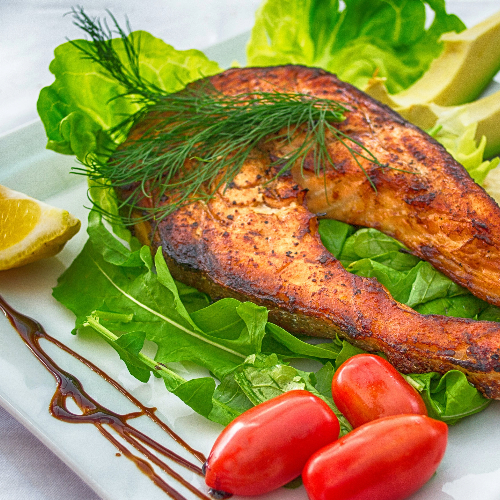
- Serves: 4
- Prep time: 5 minutes
- Cook time: 10 to 15 minutes, depending on the method
- Total time: about 20 minutes
Ingredients
- 4 salmon fillets (about 140 g or 5 oz each), skin on or off
- 1 tablespoon olive oil
- ¼ teaspoon salt
- Black pepper
- 1 lemon, half juiced and half cut into wedges
- A few sprigs of dill or parsley, chopped
Method 1: Baked salmon
- Heat the oven to 200°C (180°C fan, 400°F) and line a baking tray with baking paper.
- Season. Pat the fillets dry, place them skin side down on the tray, brush with the oil and season with salt and pepper.
- Bake for 12 to 15 minutes, until the salmon flakes easily and is opaque in the center.
- Finish with lemon juice and dill.
Baking is the best method for cooking several fillets at once. You can add vegetables such as asparagus or cherry tomatoes to the tray, as in our baked salmon with tomatoes.
Method 2: Pan-seared salmon
- Dry the fish well. Moisture stops it from browning. Season both sides.
- Heat the oil in a heavy or non-stick frying pan over medium-high heat until shimmering.
- Cook skin side down for 4 to 5 minutes without moving it, pressing gently with a spatula for the first 10 seconds so the skin stays flat. The flesh will turn opaque about two-thirds of the way up.
- Turn and cook for 1 to 3 minutes more, depending on thickness.
- Rest for 2 minutes, then add lemon juice and dill.
This gives the crispiest skin. Our creamy Tuscan salmon starts with the same technique.
Method 3: Grilled salmon
- Heat a barbecue or griddle pan to medium-high and oil the grates well.
- Season the fillets and brush with oil.
- Grill skin side down for 5 to 6 minutes, then turn carefully and cook for 2 to 4 minutes more.
- Finish with lemon and herbs.
Thicker, skin-on fillets hold together best on the grill. Cooking in a foil parcel is a no-stick option; see our salmon foil packets.
Method 4: Poached salmon
- Choose a wide pan and add enough water or stock to cover the fillets, with a few slices of lemon, a bay leaf, some peppercorns and a pinch of salt.
- Bring to a bare simmer, with small bubbles just breaking the surface.
- Lower in the salmon and cook gently for 8 to 10 minutes, without boiling, until just opaque.
- Lift out with a slotted spatula and serve warm or chilled.
Poached salmon is very tender and good cold in salads. Steaming works in a similar way; our steamed salmon shows how.
Cooking times at a glance
| Method | Temperature or heat | Time for a 2.5 cm (1 inch) fillet |
|---|---|---|
| Baked | 200°C (400°F) | 12 to 15 minutes |
| Pan-seared | Medium-high | 6 to 8 minutes total |
| Grilled | Medium-high | 7 to 10 minutes total |
| Poached | Bare simmer | 8 to 10 minutes |
Add or subtract about 2 minutes for every 0.5 cm of thickness. Frozen fillets can be baked straight from frozen for 20 to 25 minutes.
How to tell when salmon is done
- Use a thermometer: 63°C (145°F) in the thickest part for fully cooked salmon.
- Look at the color: the flesh turns from translucent to opaque pink.
- Check the flakes: press with a fork; it should separate easily.
- White beads on the surface are a protein called albumin, a sign it’s starting to overcook. Cooking more gently helps.
Tips
- Bring the fish out of the fridge 10 minutes before cooking for more even cooking, but no longer.
- Leave the skin on while cooking to protect the flesh; remove it afterward if you prefer.
- Don’t overcook. Salmon keeps cooking for a minute or two after you take it off the heat.
- Remove pin bones by running your fingers along the fillet and pulling any bones out with tweezers.
Nutrition per serving (estimate)
One serving is one 140 g raw fillet cooked with a quarter of the oil and seasoning. These figures were calculated from USDA FoodData Central values for raw farmed Atlantic salmon, olive oil, lemon juice, salt, black pepper and dill.
| Nutrient | Per serving |
|---|---|
| Calories | 325 kcal |
| Protein | 28.5 g |
| Carbohydrate | 0.5 g |
| Fiber | 0 g |
| Sugars | 0 g |
| Fat | 22.5 g |
| Saturated fat | 5 g |
| Sodium | 230 mg |
Farmed salmon is higher in fat than wild salmon, and most of that fat is unsaturated, including the long-chain omega-3 fats EPA and DHA. The NHS recommends at least two portions of fish a week, including one of oily fish such as salmon. Our guide to omega-3 foods explains why they matter.
Contains: fish (salmon).
Storage
Keep cooked salmon covered in the fridge and eat within 2 days. It’s good cold in salads or flaked into pasta. Reheat gently, covered, at a low temperature to avoid drying it out.
Common questions
Should I cook salmon skin side up or down?
Skin side down for most methods. The skin protects the flesh and crisps up in a pan.
Is it safe to eat salmon pink in the middle?
Many restaurants serve salmon slightly translucent in the center. For fully cooked salmon, especially for pregnant women, children, older adults and anyone with a weakened immune system, cook it to 63°C (145°F).
Is wild or farmed salmon better?
Both are healthy choices. Farmed salmon usually has more fat, including omega-3, and wild salmon is leaner. The US Food and Drug Administration lists salmon among its “Best Choices” for low mercury.
This article is general information, not medical advice. Nutrition figures are estimates from USDA FoodData Central and will change with the brands and amounts you use. If you follow a diet for a medical reason, check the recipe with your doctor or dietitian.