Smoked salmon can be part of a healthy diet. It’s high in protein, low in calories and a good source of vitamin D, vitamin B12 and selenium, with some omega-3 fats. The two downsides are salt and food safety. Smoked salmon is much saltier than fresh salmon: USDA figures show about 670 mg of sodium per 100 g of smoked salmon, and 2,000 mg for salt-cured lox. And because cold-smoked salmon isn’t cooked, it can carry Listeria, so people who are pregnant, over 65 or have a weakened immune system should eat it only when cooked until steaming hot. For most people, a modest portion a few times a week is fine.
Smoked salmon nutrition
Per 100 g (3½ oz), from USDA FoodData Central:
| Nutrient | Smoked salmon | Lox (salt-cured) | Fresh farmed salmon, cooked |
|---|---|---|---|
| Calories | 117 kcal | 117 kcal | 206 kcal |
| Protein | 18.3 g | 18.3 g | 22.1 g |
| Fat | 4.3 g | 4.3 g | 12.4 g |
| Saturated fat | 0.9 g | 0.9 g | 2.4 g |
| Sodium | 672 mg | 2,000 mg | 61 mg |
| EPA and DHA (omega-3) | 0.45 g | 0.45 g | 2.15 g |
| Vitamin D | 17.1 mcg | not listed | 13.1 mcg |
| Vitamin B12 | 3.3 mcg | 3.3 mcg | 2.8 mcg |
| Selenium | 32 mcg | 38 mcg | 41 mcg |
The USDA smoked salmon entries are based on chinook salmon, a leaner fish, so they show less fat and omega-3 than fresh farmed Atlantic salmon. Much of the smoked salmon sold today is farmed Atlantic salmon, which is fattier, so check the label: the fat content gives a rough idea of how much omega-3 it contains.
A typical portion is 50 to 60 g, about 2 or 3 slices. That provides around 70 calories, 10 g of protein, and 335 to 400 mg of sodium for regular smoked salmon.
Benefits of smoked salmon
High-quality protein
Smoked salmon is almost pure protein and fat, with no carbohydrate. A small portion makes a breakfast or lunch more filling. Our list of high-protein breakfast ideas includes it.
Vitamin D
Few foods contain much vitamin D, and oily fish is one of the best. According to the USDA data, 100 g of smoked salmon provides 17 mcg, close to the US Daily Value of 20 mcg. Our guide to vitamin D sources explains who needs a supplement.
Omega-3 fats
Salmon is an oily fish, and the NHS recommends at least 2 portions of fish a week, one of which should be oily. Fresh, canned or frozen salmon provides more omega-3 for less salt than smoked salmon, so it’s worth varying the types you eat. Our guide to omega-3 foods compares the best sources.
Low in mercury
Salmon is among the fish lowest in mercury. The FDA’s fish advice lists it in its “best choices” group.
Downsides of smoked salmon
Salt
Salt is used to cure salmon before smoking, so smoked salmon is much saltier than fresh. Adults are advised to have no more than 6 g of salt a day, about 2.4 g of sodium, according to the NHS. A 60 g portion of lox can provide around half of that, and a bagel with cream cheese, capers and lox adds more. If you have high blood pressure, enjoy it occasionally, keep portions small, and compare labels: some brands are less salty than others.
Listeria and pregnancy
Cold-smoked salmon is cured and smoked at low temperatures but not cooked, so any bacteria present aren’t killed. The NHS lists smoked and cured fish, including in sushi, among the chilled, ready-to-eat foods that most often cause listeriosis. Listeria can grow even in the fridge.
The FDA considers pregnant women and their babies, adults over 65, and people with weakened immune systems to be at high risk of serious illness from listeriosis. For these groups:
- In pregnancy, the NHS advises that cold-smoked and cured fish, like smoked salmon, must be cooked until steaming hot.
- Older adults and people with weakened immune systems should follow the same advice.
- Hot-smoked salmon, which is cooked during smoking and flakes like baked fish, is lower risk, but it’s still a chilled, ready-to-eat food, so keep it cold and eat it by the date on the pack.
Good ideas for cooked smoked salmon include stirring it into scrambled eggs, pasta or a frittata, or baking it in a quiche, as long as it’s piping hot all the way through.
Smoked foods and cancer
Smoke contains compounds called polycyclic aromatic hydrocarbons (PAHs), and small amounts can end up on smoked foods. Commercial smokehouses control their smoking conditions, but as with any salty, preserved food, smoked salmon is best enjoyed as part of a varied diet rather than every day.
How to store smoked salmon
- Keep it in the fridge at 4°C (40°F) or below, and follow the use-by date.
- Once opened, eat within the time on the pack, usually 2 to 3 days.
- Freeze it on or before its use-by date if you won’t eat it in time. Thaw it in the fridge.
- Don’t leave it out for more than 2 hours, or 1 hour on a hot day.
Healthy ways to eat smoked salmon
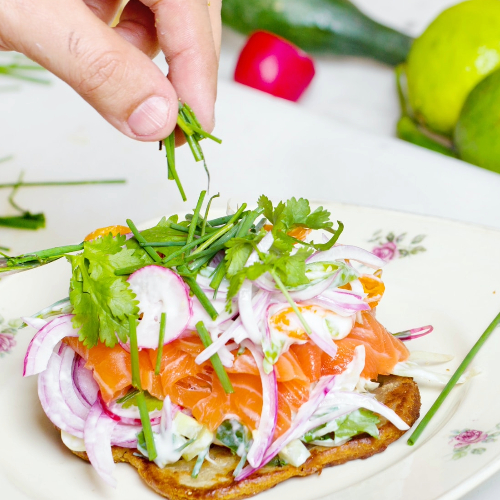
- Open sandwich: whole grain rye or sourdough with a thin layer of cream cheese or avocado, smoked salmon, red onion, capers and dill, like the one in our photo.
- Scrambled eggs: stir in strips of smoked salmon at the end, with chives.
- Salad: with mixed leaves, cucumber, new potatoes and a lemon dressing. Our filling salad ideas have more.
- Pasta: toss with peas, lemon, crème fraîche and spinach.
- Sushi and rice bowls, if you’re not in a high-risk group. Our article on whether sushi is healthy covers the safety points.
To keep salt in check, skip extra salt in the rest of the meal, go easy on capers, and pair smoked salmon with vegetables, salad and whole grains.
Common questions
Is smoked salmon raw?
Cold-smoked salmon is effectively raw: it’s cured and smoked at low temperatures and not cooked. Hot-smoked salmon is cooked.
Is smoked salmon keto?
Yes. It contains no carbohydrate, so it fits well on keto and low-carb diets. Watch the salt.
How often can I eat smoked salmon?
For most healthy adults, a small portion a few times a week is fine, as part of eating a variety of fish. Choose fresh or canned salmon some of the time for more omega-3 and less salt.
This article is general information, not medical advice. Talk to your doctor or a registered dietitian before making big changes to how you eat, especially if you have a health condition, take regular medication, or are pregnant or breastfeeding.