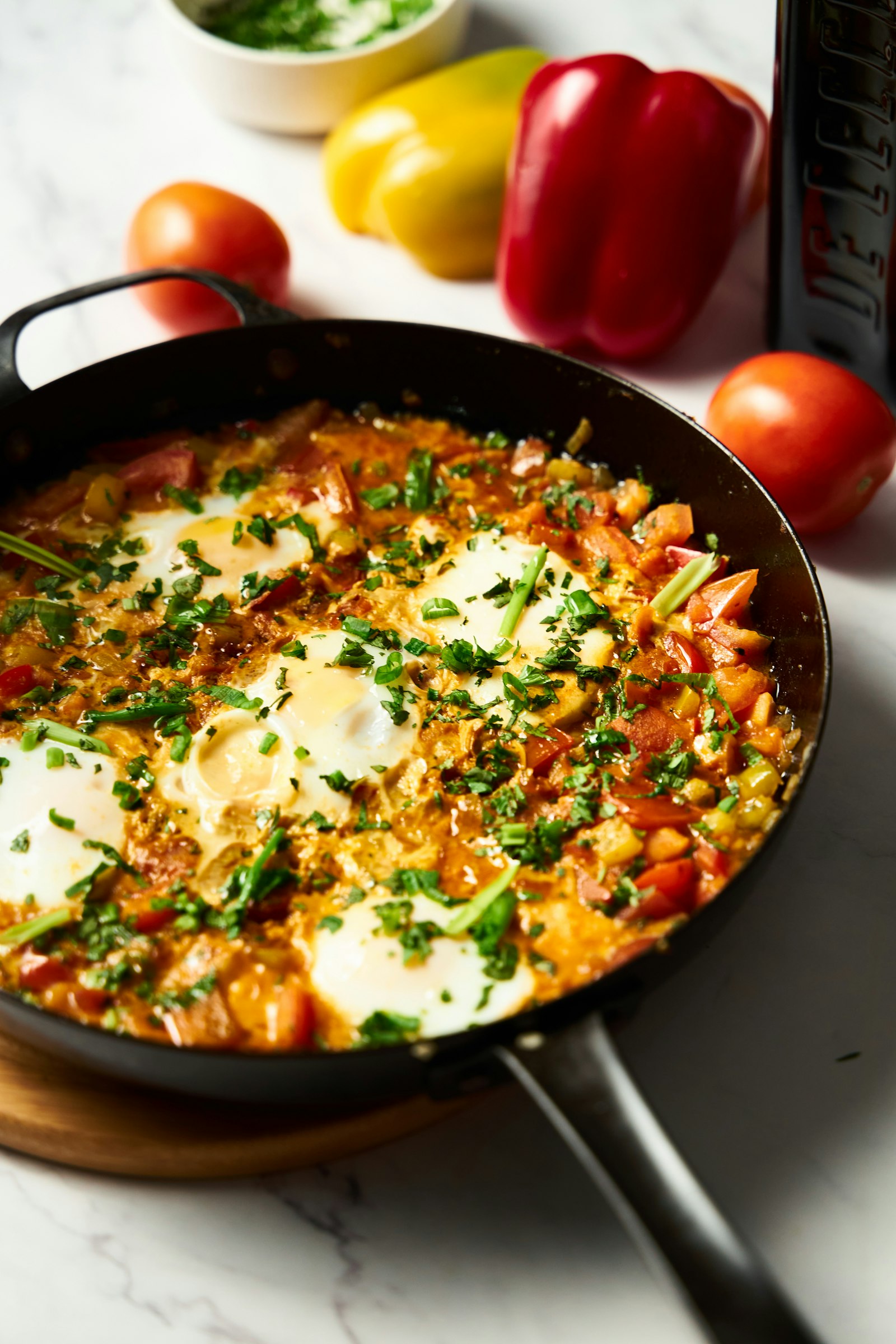
A pan sauce is a quick sauce made in the same pan you’ve just used to sear chicken, pork, steak or fish. The browned bits left on the bottom of the pan, called the fond, carry a lot of flavor. You soften a shallot and garlic in the pan, pour in wine or stock to lift those bits, simmer until the liquid has reduced, then finish with mustard, lemon and a little cold butter for a glossy sauce. It takes about 5 minutes once the meat is resting, uses one pan, and makes enough for 4 people at about 75 calories per serving. Once you know the method, you can change the flavors endlessly.

- Serves: 4 (enough for 4 chicken breasts, pork chops or steaks)
- Prep time: 5 minutes
- Cook time: 5 to 7 minutes, after the meat is cooked
- Total time: about 10 minutes
Ingredients
- The pan you’ve just used to sear 4 portions of chicken, pork, steak or fish, with the meat resting on a plate
- 1 small shallot (about 30 g), finely chopped, or 2 spring onions
- 1 garlic clove, finely chopped
- 120 ml (½ cup) dry white wine, or extra stock
- 200 ml (a generous ¾ cup) low-salt chicken or vegetable stock
- 1 teaspoon Dijon mustard
- 1 tablespoon lemon juice
- 20 g (1½ tablespoons) cold butter, cut into cubes
- 1 tablespoon chopped parsley, thyme or tarragon
- A pinch of salt and black pepper
Method
- Cook the meat first. Sear your chicken, pork, steak or fish in a little oil in a stainless steel or cast iron pan, until cooked through. Move it to a warm plate to rest and cover loosely with foil.
- Check the pan. Pour off all but about 1 teaspoon of fat. If the browned bits on the base look black and burnt rather than brown, wipe the pan out and start with fresh oil, as burnt bits make a bitter sauce.
- Soften the aromatics. Put the pan over medium heat. Add the shallot and cook for 1 to 2 minutes, stirring, until soft. Add the garlic for 30 seconds.
- Deglaze. Pour in the wine. It will bubble up. Scrape the base of the pan with a wooden spoon to lift all the browned bits into the liquid.
- Reduce. Simmer until the wine has reduced by about half, 1 to 2 minutes. Add the stock and simmer until reduced to about 120 ml (½ cup), 3 to 4 minutes. It should coat the back of a spoon lightly.
- Season. Stir in the mustard, lemon juice and any juices that have collected under the resting meat.
- Finish with butter. Take the pan off the heat and swirl in the cold butter a few cubes at a time until the sauce is glossy and slightly thickened. Stir in the herbs, then taste and add pepper and a little salt only if needed.
- Serve. Spoon the sauce over the sliced meat straight away.
The basic formula
| Step | What to use | Why |
|---|---|---|
| Fat | 1 teaspoon of drippings or oil left in the pan | Cooks the aromatics |
| Aromatics | Shallot, onion, garlic, ginger, mushrooms | Base flavor |
| Deglazing liquid | Wine, stock, cider, vinegar mixed with stock, or water | Lifts the fond |
| Reduce | Simmer until about half the volume | Concentrates flavor |
| Flavor | Mustard, lemon, herbs, capers, soy sauce, spices | Balance and character |
| Finish | Cold butter, a spoonful of cream, crème fraîche or yogurt (off the heat) | Body and gloss |
Tips
- Use the right pan. Stainless steel and cast iron build up fond; non-stick pans don’t, so the sauce will be lighter in flavor.
- Cook the meat properly first. Use a thermometer: the USDA recommends 74°C (165°F) for chicken, and 63°C (145°F) with a 3-minute rest for pork, beef and lamb steaks and chops.
- Keep the butter cold and add it off the heat. Hot pans melt butter into a greasy layer instead of a smooth sauce.
- Taste before salting. Stock, drippings and mustard all add salt as the sauce reduces.
- Reduce rather than thicken. If the sauce is thin, simmer a little longer. For a thicker sauce, whisk ½ teaspoon of cornstarch into a tablespoon of cold water and stir it in.
Flavor variations
- Red wine sauce for steak: use red wine and beef stock, a sprig of thyme, and finish with butter and black pepper.
- Mushroom sauce: cook 150 g of sliced mushrooms with the shallot until golden, deglaze with stock, and finish with a spoonful of crème fraîche.
- Lemon caper sauce for fish or chicken: use white wine or stock, add 1 tablespoon of capers and plenty of lemon, and finish with parsley.
- Apple and mustard sauce for pork: use cider instead of wine and wholegrain mustard instead of Dijon.
- Balsamic sauce: deglaze with 2 tablespoons of balsamic vinegar and stock, and finish with rosemary.
- Asian-style: use ginger and garlic, deglaze with stock, add a teaspoon of reduced-salt soy sauce and a few drops of sesame oil, and skip the butter.
- Lighter: skip the butter, and stir in a spoonful of plain yogurt off the heat instead, or simply reduce the stock a little further.
Our chicken in mustard cream sauce and creamy garlic chicken show richer versions of the same idea.
Cooking with wine
Wine adds acidity and depth, but not all the alcohol cooks off in a quick sauce, so some remains. Use extra stock with a splash of lemon juice or vinegar instead if you’re cooking for children, pregnant women or anyone who avoids alcohol. Our guide to calories in alcohol covers wine more broadly.
Nutrition per serving (estimate)
One serving is a quarter of the sauce, not including the meat or the fat left from searing it. These figures were calculated from USDA FoodData Central values for shallot, garlic, dry white wine, low-sodium canned chicken broth, mustard, lemon juice, unsalted butter, parsley and salt, assuming all the wine is still in the sauce.
| Nutrient | Per serving |
|---|---|
| Calories | 75 kcal |
| Protein | 1.5 g |
| Carbohydrate | 3.5 g |
| Fiber | under 0.5 g |
| Sugars | 1 g |
| Fat | 4.5 g |
| Saturated fat | 2.5 g |
| Sodium | 80 mg |
A pan sauce adds a lot of flavor for relatively few calories, especially compared with jarred creamy sauces, which can be high in salt and fat. Using low-salt stock keeps the sodium down; regular stock cubes can add several hundred milligrams per serving. The NHS advises adults to have no more than 6 g of salt a day.
Contains: milk (butter), mustard and sulfites (wine). Check the stock label for celery.
What to serve it with
- Seared chicken breasts or thighs, sliced, with green vegetables and potatoes or rice. Our guide on how to cook rice covers the side.
- Pork chops with roasted apples and greens.
- Steak with a salad and oven-baked fries.
- Pan-fried salmon or white fish with the lemon caper version.
Common questions
Can I make a pan sauce without wine?
Yes. Use all stock, plus a tablespoon of lemon juice or vinegar for acidity.
Can I make a pan sauce in a non-stick pan?
Yes, but there’s little fond to lift, so the flavor is milder. Add a teaspoon of tomato paste or a few mushrooms to the shallot for more depth.
Why did my sauce split?
The pan was too hot when you added the butter, or the cream boiled. Take the pan off the heat and whisk in a splash of cold stock to bring it back together.
Can I make it ahead?
It’s best fresh, but you can reduce the stock ahead and reheat it, then finish with mustard, lemon and butter just before serving.
This article is general information, not medical advice. Nutrition figures are estimates from USDA FoodData Central and will change with the brands and amounts you use. If you follow a diet for a medical reason, check the recipe with your doctor or dietitian.