To cook rice perfectly, rinse it until the water runs almost clear, use the right amount of water for the type of rice, simmer it covered on the lowest heat without lifting the lid, then let it rest off the heat for 10 minutes before fluffing with a fork. For long-grain white rice such as basmati, that’s about 1½ cups of water for every cup of rice and 10 to 12 minutes of cooking. Just as important is what happens afterward. Cooked rice can carry spores of a bacterium that survive cooking, so leftovers should be cooled quickly, ideally within an hour, kept in the fridge for no more than a day, and reheated only once until steaming hot, as UK government advice recommends.
- Serves: 4
- Prep time: 5 minutes, including rinsing
- Cook time: 12 minutes, plus 10 minutes resting
- Total time: about 30 minutes
Ingredients
- 250 g (about 1¼ cups) long-grain white rice, such as basmati
- 450 ml (about 1¾ cups plus 2 tablespoons) cold water
- ¼ teaspoon salt (optional)
- 1 teaspoon butter or oil (optional)
Method
- Rinse. Put the rice in a sieve and rinse under cold running water, swirling with your fingers, for 1 to 2 minutes, until the water runs almost clear. This washes off loose starch, which makes rice sticky. Drain well.
- Soak (optional). For extra-long, separate basmati grains, soak the rinsed rice in cold water for 20 to 30 minutes, then drain. Reduce the cooking water by about 50 ml if you soak it.
- Combine. Put the rice, water, salt and butter or oil in a medium saucepan with a tight-fitting lid.
- Bring to the boil. Heat uncovered over medium-high heat until the water boils.
- Simmer covered. Stir once, put the lid on, and turn the heat down to the lowest setting. Cook for 10 to 12 minutes without lifting the lid, until the water is absorbed and small holes appear on the surface.
- Rest. Take the pan off the heat and leave it covered for 10 minutes. The grains finish cooking in the steam and firm up.
- Fluff. Fluff gently with a fork and serve. If you’re keeping some for later, spread it out on a tray to cool straight away (see below).
Water and timing by type of rice
| Rice | Water per cup of rice (by volume) | Cooking time | Rest |
|---|---|---|---|
| Basmati (white) | 1½ cups | 10 to 12 minutes | 10 minutes |
| Jasmine (white) | 1¼ cups | 12 to 15 minutes | 10 minutes |
| Long-grain white (American style) | 1¾ to 2 cups | 15 to 18 minutes | 5 to 10 minutes |
| Short-grain or sushi rice | 1 to 1¼ cups | 15 minutes | 10 minutes |
| Brown long-grain or brown basmati | 2 to 2¼ cups | 35 to 45 minutes | 10 minutes |
| Wild rice | 3 cups, then drain | 40 to 50 minutes | 5 minutes |
These are starting points. Rice varies by brand and age, and older rice can need a little more water. Use the same cup for rice and water.
Other ways to cook rice
The pasta method
Bring a large pan of water to the boil, add the rinsed rice, and boil uncovered until tender, about 10 to 12 minutes for white rice and 25 to 30 minutes for brown. Drain well, return to the pan, cover and rest for 5 minutes. It’s almost foolproof, and it suits brown rice especially well. According to the US Food and Drug Administration, cooking rice in excess water and draining it lowers the amount of arsenic in the cooked grain, though it also washes away some of the added vitamins in enriched white rice.
Rice cooker
Follow the markings in the bowl or the manual. Rinse the rice first and let the cooker rest the rice on its “keep warm” setting for 10 minutes before opening. Don’t leave rice sitting in a cooker for hours, especially once it has cooled.
Microwave
Put the rinsed rice and water in a large microwave-safe bowl (it can bubble up), cover loosely, and cook on high for about 10 minutes for white rice, then medium for 5 more. Leave covered for 5 minutes. Times vary with microwave power.
Tips for perfect rice
- Don’t skip the rest. Opening the pan straight away gives wet, uneven rice.
- Don’t stir while it simmers. Stirring releases starch and makes rice gluey.
- Use a heavy pan with a tight lid. If your lid lets out steam, cover the pan with foil before adding the lid.
- Keep the heat very low. If the base scorches, your heat is too high.
- Too wet? Return the pan to very low heat uncovered for 1 to 2 minutes.
- Too firm? Sprinkle in 2 tablespoons of hot water, cover and leave for 5 minutes.
Storing and reheating rice safely
Uncooked rice can contain spores of Bacillus cereus, which can survive cooking. If cooked rice is left at room temperature, the spores can grow and produce harmful substances that cause vomiting or diarrhea, and reheating won’t destroy them. The UK government’s home food fact checker advises:
- Cool rice quickly, ideally within 1 hour. Spread it out on a clean tray or shallow container. Don’t leave it in the pan, steamer or rice cooker to cool.
- Refrigerate and use within 1 day. Keep rice in the fridge for no more than one day before reheating.
- Reheat once only, until it’s steaming hot all the way through.
- Cold rice is fine for salads and sushi if it was cooled quickly and kept chilled.
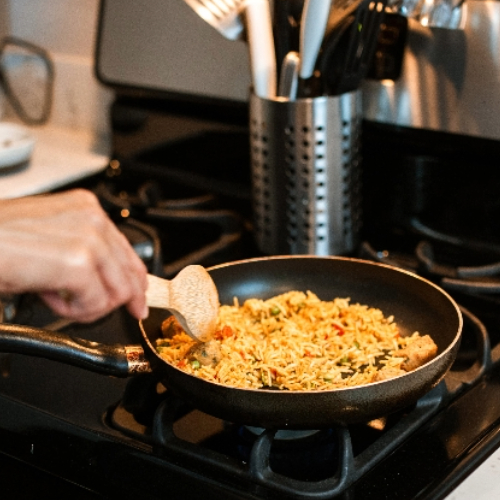
You can also freeze cooled rice in flat bags within an hour of cooking, and reheat it from frozen until steaming hot. Our egg fried rice is a good way to use chilled leftover rice.
Nutrition per serving (estimate)
One serving is a quarter of the recipe, about 185 g of cooked rice. These figures were calculated from USDA FoodData Central values for raw enriched long-grain white rice and salt, without the optional butter.
| Nutrient | Per serving |
|---|---|
| Calories | 230 kcal |
| Protein | 4.5 g |
| Carbohydrate | 50 g |
| Fiber | 1 g |
| Sugars | under 0.5 g |
| Fat | 0.5 g |
| Saturated fat | 0 g |
| Sodium | 100 mg (none without salt) |
White rice is low in fat and easy to digest, but low in fiber. Brown rice has more fiber and magnesium, and swapping half your white rice for brown is an easy step up. Pairing rice with beans, lentils, vegetables and a protein makes a more balanced meal; our guide to building a balanced meal shows the proportions. Our article on the glycemic index explains why basmati tends to raise blood sugar more slowly than some other white rices.
Contains: no common allergens (check labels of flavored rice). Add milk if you use butter.
Common questions
Should I always rinse rice?
For fluffy, separate grains, yes. Skip rinsing for risotto, rice pudding and paella, where you want the starch to make them creamy. Our rice pudding relies on it.
How much rice per person?
About 60 to 75 g (⅓ cup) of uncooked rice per person as a side, which gives roughly 180 to 225 g cooked. Rice about triples in weight when cooked.
Why is my rice sticky?
It wasn’t rinsed, it had too much water, or it was stirred during cooking. Short-grain rice is naturally stickier.
Can I reheat rice from a takeaway?
Yes, once, if it was refrigerated quickly and eaten within a day. If it sat out for a long time before chilling, it’s safer to throw it away.
This article is general information, not medical advice. Nutrition figures are estimates from USDA FoodData Central and will change with the brands and amounts you use. If you follow a diet for a medical reason, check the recipe with your doctor or dietitian.