To spatchcock a chicken, you cut out its backbone with kitchen scissors and press it flat, so it roasts evenly in about 40 to 45 minutes instead of 1½ hours. The breast stays juicy, the legs cook through at the same time, and the skin crisps all over because more of it faces the heat. This recipe rubs a 1.6 kg (3½ lb) chicken with olive oil, garlic, lemon and smoked paprika, roasts it at 220°C (425°F), and serves it with a cool yogurt sauce with pomegranate seeds and mint. It serves 4, with about 445 calories and 45 g of protein per portion. The chicken is ready when the thickest part of the thigh reaches 74°C (165°F).
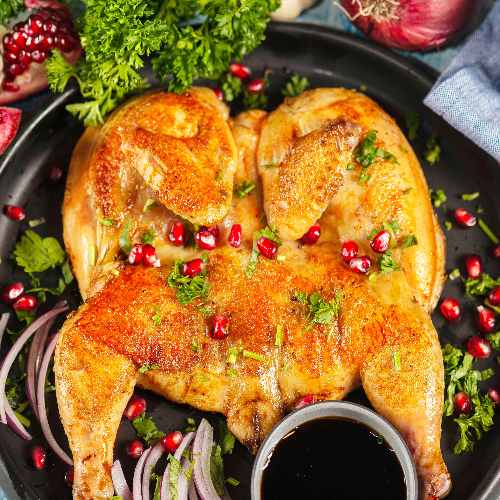
- Serves: 4
- Prep time: 15 minutes
- Cook time: 40 to 45 minutes, plus 10 minutes resting
- Total time: about 1 hour 10 minutes
Ingredients
- 1 whole chicken (about 1.6 kg or 3½ lb)
- 1 tablespoon olive oil
- 3 garlic cloves, crushed
- Zest and juice of 1 lemon
- 1 teaspoon smoked paprika
- ½ teaspoon ground cumin or dried oregano
- ½ teaspoon salt and black pepper
Yogurt sauce
- 150 g (⅔ cup) plain Greek yogurt
- 60 g (about ⅓ cup) pomegranate seeds
- A small handful of mint, chopped
- A squeeze of lemon juice and a pinch of salt
Method
- Heat the oven to 220°C (200°C fan, 425°F).
- Remove the backbone. Place the chicken breast side down on a board, with the legs toward you. Using strong kitchen scissors or poultry shears, cut along both sides of the backbone and remove it. Keep it for stock.
- Flatten. Turn the chicken over, breast side up, and press firmly on the breastbone with the heel of your hand until you hear a crack and the bird lies flat. Tuck the wing tips behind the breast.
- Season. Pat the skin dry with kitchen paper. Mix the oil, garlic, lemon zest and juice, paprika, cumin, salt and pepper, and rub it all over the chicken, including under the skin of the breast.
- Roast. Place skin side up in a large roasting tin or on a baking tray. Roast for 40 to 45 minutes, until the skin is deep golden and the juices run clear.
- Check the temperature. A thermometer in the thickest part of the thigh, not touching bone, should read 74°C (165°F).
- Rest. Leave the chicken loosely covered with foil for 10 minutes so the juices settle.
- Make the sauce. Stir together the yogurt, mint, lemon juice and salt, and scatter with pomegranate seeds.
- Serve. Cut the chicken into pieces with scissors or a knife and serve with the yogurt sauce and the pan juices.
Tips
- Use sturdy scissors. Poultry shears make cutting through the backbone much easier than a knife.
- Dry the skin. For extra-crisp skin, leave the seasoned chicken uncovered in the fridge for a few hours or overnight before roasting.
- Roast on vegetables. Lay thick slices of onion, potatoes or squash under the chicken; they cook in the juices.
- Don’t wash raw chicken. Washing spreads bacteria around the sink and kitchen and doesn’t make the meat safer, as the USDA explains. Cooking to the right temperature kills bacteria.
- Wash hands and surfaces after handling raw chicken, and use a separate board.
Swaps and variations
- Lemon and herb: replace the paprika and cumin with chopped rosemary, thyme and extra garlic, as in our lemon roast chicken.
- Spicy: add chili flakes or harissa paste to the rub.
- Barbecue: cook the flattened chicken over indirect heat on a covered barbecue for 45 to 55 minutes, turning once.
- Without skin: remove the skin before eating to roughly halve the fat.
- Dairy-free sauce: use coconut yogurt or a tahini and lemon sauce.
Nutrition per serving (estimate)
One serving is about 150 g of cooked chicken meat and skin with a quarter of the yogurt sauce. These figures were calculated from USDA FoodData Central values for roasted chicken meat and skin, olive oil, lemon juice, garlic, paprika, salt, whole-milk Greek yogurt, pomegranate seeds and mint.
| Nutrient | Per serving |
|---|---|
| Calories | 445 kcal |
| Protein | 45 g |
| Carbohydrate | 5.5 g |
| Fiber | 1 g |
| Sugars | 3.5 g |
| Fat | 26 g |
| Saturated fat | 7 g |
| Sodium | 330 mg |
Roast chicken is an excellent source of protein, B vitamins and selenium. Most of the fat and saturated fat is in the skin, so eating the meat without skin is a simple way to make the meal lighter. Serve with plenty of vegetables and a starchy side for a balanced plate; our guide to building a balanced meal shows the proportions.
Contains: milk (yogurt sauce).
What to serve with it
- Roast potatoes or our crispy roast potatoes.
- A big salad or our cucumber tomato salad.
- Roasted vegetables cooked in the same oven.
- Whole grains such as bulgur, couscous or brown rice.
- For a keto plate: our cauliflower mash and green beans.
Storage and leftovers
Cool leftovers quickly, refrigerate within 2 hours, and eat within 3 to 4 days, as the USDA advises for cooked leftovers. Cold roast chicken is great in sandwiches, salads and wraps. Reheat until steaming hot all the way through. You can freeze cooked chicken for up to 3 months. Use the backbone and leftover bones to make stock.
Common questions
What does spatchcock mean?
It’s a term for removing the backbone of a bird and flattening it so it cooks faster and more evenly.
Can I spatchcock a turkey?
Yes. A spatchcocked turkey cooks in a fraction of the usual time. Our guide on how to roast a turkey has timings for a whole bird.
How do I know when the chicken is done?
Use a thermometer: 74°C (165°F) in the thickest part of the thigh. The juices should run clear, with no pink near the bone.
Can I ask the butcher to do it?
Yes. Most butchers will spatchcock a chicken for you, and some supermarkets sell them ready to roast.
This article is general information, not medical advice. Nutrition figures are estimates from USDA FoodData Central and will change with the brands and amounts you use. If you follow a diet for a medical reason, check the recipe with your doctor or dietitian.