To make a salad that actually fills you up, build it from five parts: a big base of vegetables, a good portion of protein, a fiber-rich carb such as beans, lentils, quinoa or potatoes, some healthy fat, and something crunchy or tangy for flavor. A bowl of lettuce on its own has almost nothing to keep you going: 100 g of romaine has about 17 calories and 1 g of protein, according to USDA FoodData Central.
Add chicken, quinoa, avocado and an olive oil dressing and the same bowl becomes a 500 calorie meal with almost 40 g of protein and 9 g of fiber.
Why some salads leave you hungry
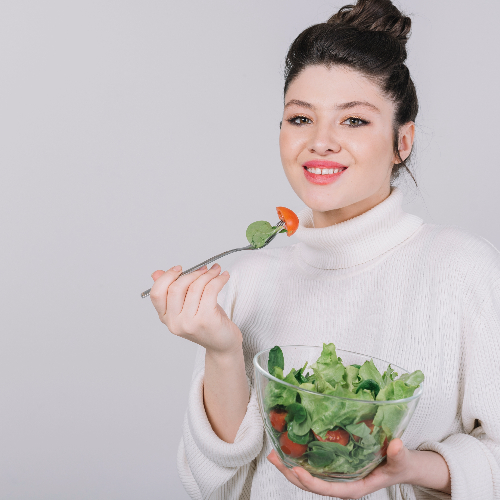
Protein, fiber and fat are the parts of a meal that help you feel full for longer, and a plain green salad has very little of any of them. Fat-free dressing makes it worse, and a big bowl of leaves fills your stomach for a short while, then empties quickly.
The opposite problem happens too. A salad loaded with croutons, bacon, fried chicken and creamy dressing can be filling but contain as many calories and as much salt as a burger meal. The aim is a balance: enough protein and fiber to last until your next meal, without a heavy dressing doing all the work.
The filling salad formula
| Part | How much | Examples |
|---|---|---|
| Vegetable base | 2 to 3 big handfuls | Romaine, spinach, rocket, cabbage, cucumber, tomatoes, peppers, carrots |
| Protein | A palm-sized portion, about 20 to 30 g of protein | Chicken, eggs, salmon, tuna, tofu, beans, lentils, cheese |
| Fiber-rich carb | A fist-sized portion | Quinoa, brown rice, new potatoes, chickpeas, lentils, whole grain bread |
| Healthy fat | 1 to 2 tablespoons of oil, or a small handful | Olive oil dressing, avocado, nuts, seeds, olives, cheese |
| Flavor and crunch | A little | Pickled onions, herbs, toasted seeds, lemon, chili, a few croutons |
This follows the same idea as a balanced plate, with vegetables filling about half the bowl. Our guide to building a balanced meal explains the plate model in more detail.
Protein: the most important addition
Protein portions, from USDA FoodData Central values:
| Protein food | Portion | Protein |
|---|---|---|
| Roast chicken breast | 100 g | 31 g |
| Salmon, cooked | 100 g | 22 g |
| Canned tuna in water, drained | 100 g | 19 g |
| Firm tofu | 100 g | 17 g |
| Eggs, hard-boiled | 2 (100 g) | 13 g |
| Lentils, cooked | 100 g | 9 g |
| Chickpeas, canned and rinsed | 120 g | 8 g |
| Feta | 30 g | 4 g |
| Pumpkin seeds | 15 g | 4.5 g |
Plant proteins such as beans and lentils give you fiber as well as protein, so they do two jobs at once. Combining two sources, such as chickpeas with feta, or lentils with an egg, makes a vegetarian salad more filling.
Fiber: beans, grains and plenty of vegetables
Most adults eat less fiber than the 30 g a day the NHS recommends. A well-built salad can provide a third of that. Beans, lentils and chickpeas are the richest sources, followed by whole grains, seeds and vegetables such as broccoli, peppers and carrots. Our list of green foods has more ideas for the vegetable base.
Don’t skip the fat
A little fat makes a salad more satisfying and helps your body absorb some of its nutrients. In a small 2004 study, people absorbed almost none of the beta carotene and lycopene from a salad eaten with fat-free dressing, and much more when the dressing contained fat. A dressing made with olive oil, or a few slices of avocado or a sprinkle of nuts, is enough. One tablespoon of olive oil has about 120 calories, so measure it rather than pouring freely.
Can a salad help with weight?
It can, if it replaces something heavier or comes before a meal. In a study of 42 women, eating a large, low-calorie salad before a pasta lunch reduced the total calories eaten at the meal by 12%. A salad with lots of cheese and creamy dressing had the opposite effect, increasing the total by up to 17%. The lesson: load up on vegetables, and be careful with high-calorie extras.
Four filling salads, with nutrition
Calculated from USDA FoodData Central values for one large bowl each:
| Salad | Calories | Protein | Fiber |
|---|---|---|---|
| Chicken, quinoa and avocado: romaine, tomatoes, cucumber, 100 g chicken, 100 g cooked quinoa, half a small avocado, lemon and olive oil | 500 kcal | 39 g | 9 g |
| Salmon and lentil: spinach, 100 g cooked lentils, 100 g salmon, tomatoes, red pepper, pumpkin seeds, lemon and olive oil | 510 kcal | 37 g | 12 g |
| Egg and potato: romaine, 2 eggs, 150 g new potatoes, green beans, tomatoes, mustard vinaigrette | 430 kcal | 19 g | 8 g |
| Chickpea Greek salad: romaine, tomatoes, cucumber, red onion, 120 g chickpeas, 30 g feta, olives, olive oil and vinegar | 410 kcal | 15 g | 11 g |
The chickpea Greek salad is high in fiber but lower in protein, so add a boiled egg or more feta if it doesn’t keep you full. It’s also the saltiest, at about 760 mg of sodium, mostly from the feta and olives.
Common mistakes
- Too little protein. Add a palm-sized portion to every main-meal salad.
- No carbohydrate at all. If you’re active or eating salad for lunch, a portion of beans, grains or potatoes helps you last the afternoon.
- Fat-free dressing. It saves calories but leaves you hungrier and absorbing fewer nutrients.
- Too much creamy dressing. Ask for it on the side and use a tablespoon or two.
- Fried toppings. Crispy chicken, tortilla strips and bacon bits add calories and salt quickly.
Making salads ahead
- Jar salads: put the dressing at the bottom, then sturdy vegetables, beans or grains, protein, and the leaves on top. Mix when you’re ready to eat.
- Keep leaves dry. Dry washed leaves well and store them with a paper towel in a sealed box.
- Keep it cold. Salads with chicken, fish or eggs should stay in the fridge or a cool bag. Cooked leftovers keep for 3 to 4 days, as the USDA advises, but salads made with cooked rice should be eaten within 24 hours.
For more packed lunch ideas, see our guide to meal prep for beginners, and our strawberry arugula salad for a lighter side salad.
Common questions
Will a salad keep me full until dinner?
It will if it has enough protein, fiber and some fat. If you’re hungry an hour later, add more protein first, then a portion of beans or grains.
Is it okay to eat salad every day?
Yes. Vary the vegetables, proteins and grains so you get a wide range of nutrients.
What’s the most filling salad topping?
Protein foods such as chicken, eggs, fish, tofu, beans and lentils, followed by whole grains and potatoes.
How much dressing should I use?
About 1 to 2 tablespoons for a main-meal salad is plenty. Toss the salad well, so a little dressing coats everything.
This article is general information, not medical advice. Talk to your doctor or a registered dietitian before making big changes to how you eat, especially if you have a health condition, take regular medication, or are pregnant or breastfeeding.