Yes, cottage cheese is healthy for most people. It’s one of the most protein-rich dairy foods: a 150 g serving of regular cottage cheese has about 17 g of protein for about 147 calories, according to USDA FoodData Central, and low-fat versions have even more protein for fewer calories. It also provides calcium, phosphorus and vitamin B12. The main thing to watch is salt: that same serving has about 470 mg of sodium, much more than yogurt.
Cottage cheese nutrition
Per 150 g serving (about ⅔ cup), calculated from USDA FoodData Central values:
| Nutrient (150 g) | Regular (about 4% fat) | Low-fat (1% fat) | Plain nonfat Greek yogurt |
|---|---|---|---|
| Calories | 147 kcal | 108 kcal | 89 kcal |
| Protein | 16.7 g | 18.6 g | 15.3 g |
| Carbohydrate | 5.1 g | 4.1 g | 5.4 g |
| Fat | 6.5 g | 1.5 g | 0.6 g |
| of which saturated | 2.6 g | 1.0 g | 0.2 g |
| Calcium | 125 mg | 92 mg | 165 mg |
| Sodium | 473 mg | 609 mg | 54 mg |
Cottage cheese has slightly more protein than Greek yogurt, but much more salt and less calcium. Brands vary, especially in sodium, so compare labels.
Why cottage cheese is a good choice
High in protein
Protein helps you feel full and helps maintain muscle. A bowl of cottage cheese gives you a good share of a meal’s protein in one easy step. That makes it useful for breakfasts, snacks and for people who need more protein, such as older adults and people who exercise regularly. Our high-protein breakfast ideas include it.
Low in carbohydrate
At about 3 g of carbohydrate per 100 g, cottage cheese fits easily into lower-carb and keto diets. Our guide to protein on keto lists it among useful protein sources.
Versatile
It works sweet or savory: with fruit and nuts, on toast with tomatoes, stirred into scrambled eggs, or blended into a creamy dip or pasta sauce.
The downsides
Salt
Cottage cheese is salty compared with most dairy foods. A 150 g serving of regular cottage cheese provides about a quarter of the 2,000 mg daily sodium limit the WHO recommends, and low-fat versions are often saltier. On UK labels, the NHS counts more than 1.5 g of salt per 100 g as high and 0.3 g or less as low. Look for reduced-salt cottage cheese if you eat it often, and go easy on added salt elsewhere in the meal.
Less calcium than yogurt or milk
Cottage cheese is made by separating the curds from the whey, and some calcium is lost with the whey. It still provides calcium, but yogurt, milk and hard cheeses are richer sources. Our guide to yogurt compares the options.
Lactose
Cottage cheese contains some lactose. People with lactose intolerance often manage small amounts, and lactose-free versions are available in some countries.
Is cottage cheese safe in pregnancy?
Yes, if it’s made from pasteurized milk, which almost all shop-bought cottage cheese is. The NHS lists pasteurized soft cheeses such as cottage cheese among the cheeses that are safe to eat. Our guide to foods to avoid during pregnancy covers the cheeses to avoid.
Regular or low-fat?
Both are healthy choices. Low-fat cottage cheese has fewer calories and less saturated fat, which helps if you’re watching your weight or cholesterol. Regular cottage cheese is creamier and more filling for some people. Plain versions are best: flavored cottage cheese with fruit can contain added sugar.
Cottage cheese compared with other cheeses
Per 30 g, calculated from USDA FoodData Central values:
| Cheese (30 g) | Calories | Protein | Saturated fat | Sodium |
|---|---|---|---|---|
| Cottage cheese, regular | 29 kcal | 3.3 g | 0.5 g | 95 mg |
| Mozzarella, low-moisture part-skim | 89 kcal | 7.1 g | 3.4 g | 200 mg |
| Feta | 80 kcal | 4.3 g | 4.0 g | 342 mg |
Cottage cheese has far fewer calories and much less saturated fat than firmer cheeses for the same weight, because it contains a lot of water. Gram for gram it has less protein, but it’s easy to eat in larger portions.
10 ways to eat cottage cheese
- With fruit: pineapple, peach, berries or sliced kiwi, with a sprinkle of nuts.
- On toast: with tomatoes, black pepper and basil.
- In scrambled eggs: stir in a spoonful at the end for extra creaminess and protein.
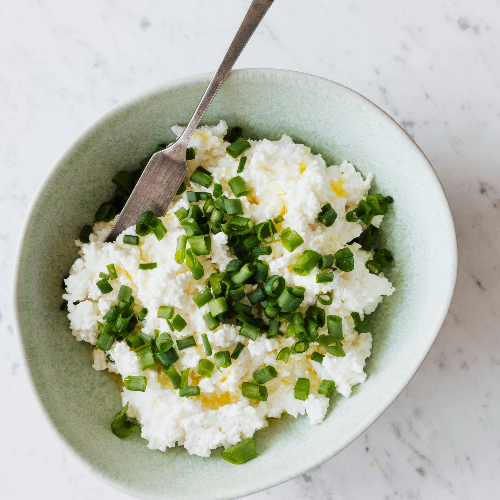
- With chives, as in our photo: stir in chopped chives and black pepper and serve with crackers or a baked potato.
- As a dip: blended until smooth with herbs, garlic and lemon, with vegetable sticks.
- In pasta sauces: blended with Parmesan for a creamy, high-protein sauce.
- In pancakes: blended into the batter.
- On crackers with cucumber and smoked salmon.
- In salads: a spoonful with greens, tomatoes and seeds.
- Savory bowl: with cherry tomatoes, cucumber, olive oil and everything bagel seasoning.
How to store it
Keep cottage cheese in the fridge with the lid on, use a clean spoon, and eat it within the time stated on the pack after opening, usually a few days. Throw it away if it smells sour or shows mold or a pink or yellow color.
Common questions
Is cottage cheese good for weight loss?
It can help. It’s high in protein and relatively low in calories, especially low-fat versions, which makes it filling. Watch the salt and any sweet toppings.
Does cottage cheese contain probiotics?
Some brands add live cultures after the cheese is made, and say so on the label. Many don’t. Our guide to probiotic foods explains which foods do.
Can I eat cottage cheese every day?
Yes, as part of a varied diet. If you eat it daily, choose a lower-salt version.
Is cottage cheese good for older adults?
Yes. It’s soft, easy to eat and high in protein, which helps maintain muscle with age. Our guide to healthy eating for older adults explains why protein matters.
Can I cook with cottage cheese?
Yes. It works in lasagne in place of ricotta, blended into sauces, baked into pancakes and in savory muffins. Blending it first gives a smooth texture.
This article is general information, not medical advice. Talk to your doctor or a registered dietitian before making big changes to how you eat, especially if you have a health condition, take regular medication, or are pregnant or breastfeeding.