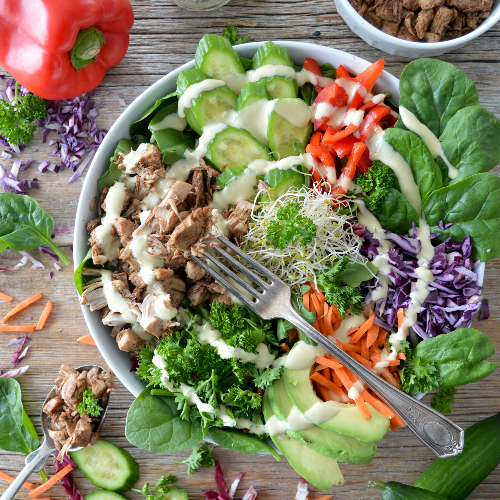
To calculate net carbs, take the total carbohydrate in a food and subtract the fiber. If the food contains sugar alcohols, many keto plans subtract those too. For example, 100 g of avocado has 8.5 g of total carbohydrate and 6.7 g of fiber, so it has about 1.8 g of net carbs. One catch: “net carbs” isn’t an official label term, and food labels outside the US often list carbohydrate with the fiber already taken out.

What net carbs are, and why keto counts them
Carbohydrate comes in several forms. Sugars and starches are digested and raise blood sugar. Fiber is a carbohydrate too, but your body doesn’t break it down into sugar, so UCLA Health explains that fiber doesn’t significantly affect blood-sugar levels and can be left out of the count.
That’s the thinking behind net carbs: they estimate the carbohydrate that your body actually digests. Keto plans usually set a daily limit, often 20 to 50 g, and counting net carbs leaves room for high-fiber foods such as vegetables, nuts and seeds. Our guide to keto macros explains how to set your limit.
It’s worth knowing the term’s status. The same UCLA Health article notes that the US Food and Drug Administration isn’t on board with the concept, and calls net carbs an estimate rather than an exact formula.
The basic formula
Net carbs = total carbohydrate minus fiber
If a food contains sugar alcohols (such as erythritol, xylitol or maltitol), many people also subtract those:
Net carbs = total carbohydrate minus fiber minus sugar alcohols
Use the same method every time, so your daily totals are comparable from one day to the next.
Worked examples
Here’s the basic formula applied to common foods, using values per 100 g from USDA FoodData Central:
| Food (100 g) | Total carbs | Fiber | Net carbs |
|---|---|---|---|
| Avocado | 8.5 g | 6.7 g | 1.8 g |
| Spinach, raw | 3.6 g | 2.2 g | 1.4 g |
| Broccoli, raw | 6.6 g | 2.6 g | 4.0 g |
| Raspberries | 11.9 g | 6.5 g | 5.4 g |
| Almonds | 21.6 g | 12.5 g | 9.1 g |
| Chia seeds | 42.1 g | 34.4 g | 7.7 g |
| Banana | 22.8 g | 2.6 g | 20.2 g |
Chia seeds show why net carbs matter: they look high in carbohydrate, but most of it is fiber. A banana is the opposite, with little fiber to subtract.
Now adjust for the amount you’ll eat. Say you add 15 g of chia seeds to a pudding. That’s 15% of 100 g, so 7.7 g × 0.15 = about 1.2 g of net carbs. A 30 g handful of almonds is 9.1 g × 0.3 = about 2.7 g.
Reading a US nutrition label
On a US Nutrition Facts label, the “Total Carbohydrate” line includes the dietary fiber, total sugars and any sugar alcohols listed underneath it, as the FDA’s label guide explains. So you subtract them yourself.
Say a hypothetical snack bar label shows, per bar:
- Total Carbohydrate: 24 g
- Dietary Fiber: 10 g
- Sugar Alcohol: 8 g
Using the basic formula: 24 minus 10 = 14 g of net carbs. Subtracting sugar alcohols too: 24 minus 10 minus 8 = 6 g. The difference is large, which is why it’s worth being careful with products that rely on sugar alcohols.
Reading a label outside the US
In the European Union and the UK, nutrition labels follow EU Regulation 1169/2011, which defines “carbohydrate” as carbohydrate that is metabolised by the body, including polyols (sugar alcohols), and lists fiber separately. In practice, the carbohydrate figure on these labels already has the fiber taken out.
That means you shouldn’t subtract fiber a second time. If you do, you’ll undercount. If the product contains polyols, they’re included in the carbohydrate figure and often listed on their own line too.
Labels in other countries vary, so check whether fiber is listed inside the carbohydrate total or as a separate line before you do the sum. If you buy imported food, the label format may not match your local one.
The catch with sugar alcohols
Sugar alcohols are sweeteners such as erythritol, xylitol, sorbitol and maltitol. They’re common in “keto” and “sugar-free” bars, sweets and chocolate. Subtracting them all assumes none of them affect your blood sugar, which is a simplification. If you have diabetes, check how a product affects your own readings, and talk to your doctor or diabetes team about how to count it.
They can also upset your stomach. Under the same EU regulation, foods with more than 10% added polyols must carry the warning that “excessive consumption may produce laxative effects”. If a keto bar leaves you bloated, that’s a likely reason.
Common mistakes when counting net carbs
- Subtracting fiber twice on EU, UK or similar labels where carbohydrate already excludes it.
- Ignoring the serving size. Labels often list a smaller serving than people eat.
- Treating “zero net carb” products as free. They still contain calories and may still affect blood sugar.
- Forgetting sauces, dressings and drinks, which can add several grams without you noticing.
- Counting only fiber-rich packaged foods while skipping vegetables, which are the best source of fiber on keto. The keto food list has carb counts for common vegetables.
Net carbs vs total carbs: which should you count?
Both work. Counting total carbohydrate is stricter and simpler. Counting net carbs lets you eat more vegetables, nuts and seeds without going over your limit, which is good for fiber intake. Many people use net carbs for whole foods and are more cautious with products sweetened with sugar alcohols. Whichever you choose, keep the method the same so your numbers stay meaningful.
Before you start
Safety note: Keto isn’t suitable for everyone. If you have diabetes, kidney or liver disease, take regular medication, or are pregnant or breastfeeding, talk to your doctor before cutting carbs this far (why it matters).
If you’re new to keto, our guide to keto flu explains the tiredness and headaches some people feel in the first weeks.
This article is general information, not medical advice. Talk to your doctor or a registered dietitian before making big changes to how you eat, especially if you have a health condition, take regular medication, or are pregnant or breastfeeding.