The best keto desserts are built on naturally low-carb ingredients: berries with whipped cream or Greek yogurt, very dark chocolate, nuts, cream cheese, eggs, almond flour and coconut. Good options include berries and cream, chia pudding, keto cheesecake, chocolate nut clusters, almond flour pancakes with berries, and baked cinnamon apples made with a small portion of fruit. Sugar substitutes such as erythritol, stevia and monk fruit make sweeter desserts possible, but they’re best used in moderation. Keto desserts are still high in calories, so think of them as occasional treats rather than everyday foods.
The best keto dessert options
Fruit-based
- Berries and cream. A small bowl of raspberries, strawberries or blackberries with whipped cream or Greek yogurt. Raspberries have about 5.4 g of net carbs per 100 g, according to USDA FoodData Central. Our list of low-carb fruits has more.
- Strawberries dipped in dark chocolate, using 85% chocolate.
- Frozen berry “ice cream”: blend frozen berries with Greek yogurt or cream for a quick soft-serve.
Chocolate
- Dark chocolate squares. Two squares of 85% or higher chocolate with a few almonds.
- Chocolate nut clusters. Our keto chocolate nut clusters have about 4.5 g of net carbs each.
- Chocolate mousse: whip cream with cocoa powder and a little sweetener, or blend avocado with cocoa.
- Keto hot chocolate. Our keto hot chocolate is a warming option.
Baked and creamy
- Keto cheesecake. Our keto cheesecake uses an almond flour base.
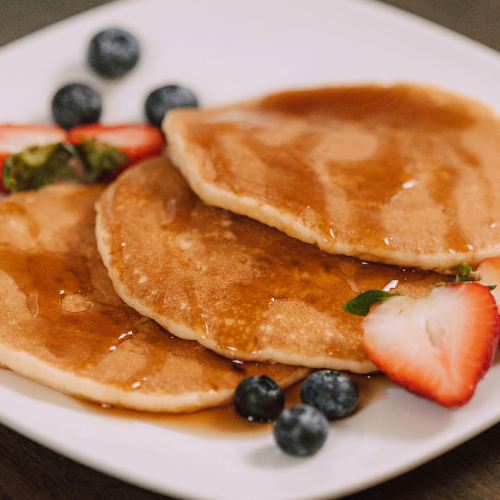
- Almond flour pancakes with berries, like those in our photo. See our keto pancakes.
- Chia pudding: chia seeds soaked in unsweetened almond or coconut milk with vanilla, topped with berries.
- Coconut macaroons: desiccated coconut, egg white and a little sweetener.
- Panna cotta made with cream, gelatin and vanilla, topped with a few berries.
About sugar substitutes
Most keto desserts use sugar substitutes. They differ in how they affect blood sugar, digestion and taste:
- Erythritol: a sugar alcohol with almost no calories that doesn’t raise blood sugar. It’s well tolerated in small amounts. A 2023 study in people at risk of heart disease found that higher blood levels of erythritol were linked with a higher risk of heart attack and stroke, and that it made platelets more reactive in the lab. This was mostly an observational finding in people already at higher risk, so it doesn’t prove harm, but it’s a reason to use erythritol sparingly rather than in large amounts every day.
- Stevia and monk fruit: very sweet, plant-based sweeteners with no calories. Often blended with erythritol.
- Allulose: a rare sugar with few calories that browns like sugar in baking.
- Xylitol: a sugar alcohol with some calories that can cause stomach upset. It’s dangerous for dogs: the FDA warns that even small amounts can be life-threatening to them.
- Maltitol: common in “sugar-free” chocolate and sweets. It raises blood sugar more than other sugar alcohols and often causes bloating and diarrhea.
Our guide to sugar-free candy on keto covers the labels to look for.
Tips for healthier keto desserts
- Keep portions small. Nut flours, cream, butter and chocolate are calorie-dense, so a keto brownie can contain more calories than a regular one.
- Let fruit do the sweetening where possible: berries, a little grated apple or orange zest.
- Add protein and fiber with Greek yogurt, nuts and chia seeds.
- Use spices and flavorings such as cinnamon, vanilla, cardamom and citrus zest, which make desserts taste sweeter.
- Don’t rely on sweet treats daily. Many people find their sugar cravings fade on keto if they avoid very sweet foods. Our tips on sugar cravings on keto may help.
- Watch saturated fat. Desserts made mostly with cream, butter and coconut add up. Our guide to keto and cholesterol explains why it matters.
A simple 5-minute keto dessert
Whip 100 ml of cold heavy cream until soft peaks form, fold in a few drops of vanilla, and spoon over 100 g of mixed berries. Sprinkle with a few toasted almonds. It serves 2, with roughly 5 g of net carbs per portion.
Keto dessert ideas by occasion
- Everyday treat: a few squares of 85% dark chocolate, or berries with plain Greek yogurt and cinnamon.
- After a dinner party: a lemon or berry cheesecake made with an almond base, served in small slices.
- Hot weather: frozen berries blended with yogurt into a quick soft-serve, or homemade ice lollies made with pureed berries and coconut milk.
- Cold evenings: a mug of keto hot chocolate, or baked berries topped with an almond and butter crumble.
- For children who aren’t on keto: the same desserts work, but there’s no need to use sweeteners; fruit with yogurt is ideal.
How to read a keto dessert label
Check the total carbohydrate, fiber and sugar alcohol content, the serving size, and the type of sweetener. In the US, sugar alcohols are listed within total carbohydrate. Manufacturers often subtract them to give a “net carb” figure, but maltitol raises blood sugar more than erythritol, so not all net-carb claims mean the same thing. Also look at calories and saturated fat per serving; many keto desserts are made with cream, butter and coconut oil.
Common questions
Are store-bought keto desserts healthy?
They can be convenient, but many are highly processed, high in saturated fat and sweetened with sugar alcohols that upset some people’s stomachs. Check the label for net carbs, sweeteners and portion size.
Can I eat fruit for dessert on keto?
Small portions of berries fit well. Higher-sugar fruits such as bananas, mangoes and grapes are harder to fit into a strict keto diet.
Will keto desserts stop me losing weight?
Not if they’re occasional and in sensible portions. Eaten often, their calories can slow weight loss.
Safety note: Keto isn’t suitable for everyone. If you have diabetes, kidney or liver disease, take regular medication, or are pregnant or breastfeeding, talk to your doctor before cutting carbs this far (why it matters).
This article is general information, not medical advice. Talk to your doctor or a registered dietitian before making big changes to how you eat, especially if you have a health condition, take regular medication, or are pregnant or breastfeeding.