Yes, pasta can be part of a healthy diet. It’s a starchy food that provides energy, some protein and B vitamins, and it’s low in fat and salt on its own. Whether a pasta meal is healthy depends mostly on the portion size, the type of pasta and, above all, what you serve with it: a plate of whole wheat pasta with a tomato and vegetable sauce and some fish or beans is a balanced meal, while a large bowl of white pasta in a cream and cheese sauce isn’t. In a review of 32 trial comparisons, pasta eaten as part of a low glycemic index diet didn’t lead to weight gain.
Pasta nutrition
Per 100 g (3½ oz) cooked, from USDA FoodData Central, with rice and potatoes for comparison:
| Nutrient | White pasta | Whole grain pasta (51% whole wheat) | White rice | Boiled potatoes |
|---|---|---|---|---|
| Calories | 158 kcal | 159 kcal | 130 kcal | 86 kcal |
| Carbohydrate | 30.9 g | 31.5 g | 28.2 g | 20 g |
| Fiber | 1.8 g | 4.6 g | 0.4 g | 1.8 g |
| Protein | 5.8 g | 5.8 g | 2.7 g | 1.7 g |
| Iron | 1.3 mg | 1.7 mg | 1.2 mg | 0.3 mg |
In the US and some other countries, white pasta is often enriched with iron and B vitamins, including folic acid. Whole wheat pasta keeps more of the grain’s natural fiber, magnesium and other nutrients.
Benefits of pasta
A good source of energy
Like bread, rice and potatoes, pasta is a starchy carbohydrate, the body’s main fuel. The NHS recommends that starchy foods make up just over a third of what you eat, choosing whole grain varieties where you can.
Lower glycemic index than many starches
Pasta, especially when cooked al dente, is digested more slowly than white bread or potatoes, because of the way its starch is packed during manufacture. That means a gentler rise in blood sugar. Our guide to the glycemic index explains what that means.
It doesn’t have to cause weight gain
The BMJ Open review found that, in the context of low glycemic index diets, eating pasta didn’t increase body weight or body fat, and was linked with a small weight loss of about 0.6 kg compared with higher glycemic index diets. Portion size still matters, as with any food.
Cheap, versatile and easy
Pasta is a cheap staple that keeps for months and pairs well with vegetables, beans, fish and lean meat, which makes it easier to cook balanced meals at home.
Downsides of pasta
- Large portions. It’s easy to serve 150 g or more of dry pasta per person, which is 2 to 3 times a typical portion.
- Rich sauces. Cream, cheese, butter and processed meat sauces add calories, saturated fat and salt.
- Low fiber in white pasta. Most people don’t eat enough fiber; whole wheat pasta helps.
- Gluten. Wheat pasta isn’t suitable for people with coeliac disease. Gluten-free pastas made from rice, corn, lentils or chickpeas are alternatives.
How to make pasta healthier
- Watch the portion. A typical portion is about 75 g (2½ oz) of dry pasta per adult, which becomes about 170 to 180 g cooked. Use a little less if you’re adding plenty of vegetables.
- Choose whole wheat or legume pasta for more fiber and protein. Pasta made from lentils or chickpeas can have around twice the protein of regular pasta; check the label.
- Cook it al dente for a lower glycemic response and better texture.
- Fill half the bowl with vegetables: tomatoes, spinach, peppers, zucchini, mushrooms, peas or broccoli. Our pasta primavera is a good example.
- Add a protein: beans, lentils, fish, prawns, chicken or a little cheese. Our cherry tomato pasta and creamy mushroom pasta show how.
- Choose tomato- or vegetable-based sauces over cream and cheese sauces, and use cheese as a topping, not the base.
- Go easy on salt in the cooking water and the sauce.
Pasta types compared
| Type | Pros | Cons |
|---|---|---|
| White wheat pasta | Cheap, familiar, often enriched | Lower in fiber |
| Whole wheat pasta | More fiber and minerals | Firmer, nuttier taste |
| Lentil or chickpea pasta | More protein and fiber, gluten-free | More expensive, softer texture |
| Fresh egg pasta | Quick to cook, rich taste | Often lower in fiber; usually higher in fat |
| Rice or corn pasta | Gluten-free | Low in fiber and protein |
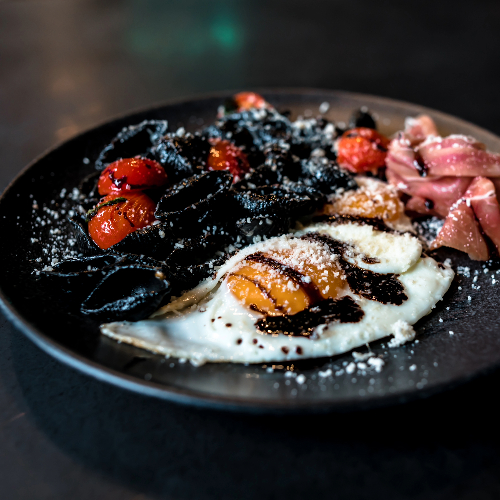
| Squid ink pasta, like in our photo | Striking color, mild seafood taste | Nutritionally similar to regular pasta |
If you’re following a low-carb or keto diet, our guide to keto pasta alternatives covers zucchini noodles, spaghetti squash and other swaps.
Does cooling pasta make it healthier?
When pasta is cooked and then cooled, some of its starch turns into resistant starch, which behaves more like fiber. There’s limited evidence that this slightly reduces the rise in blood sugar after eating, and any effect is modest. Eating pasta salad or reheated leftovers is fine, but don’t rely on it to make a big difference.
Storing leftover pasta
Cool cooked pasta quickly, cover it and refrigerate it within 2 hours. Eat it within 3 to 4 days, as the USDA advises for leftovers, and reheat it until steaming hot.
Common questions
How much pasta should I eat?
About 75 g of dry pasta per adult is a typical portion, served with plenty of vegetables and a protein. Very active people may need more, and children need less. If you’re trying to lose weight, filling half the bowl with vegetables lets you enjoy a satisfying plate with a smaller portion of pasta.
Is pasta fattening?
No single food is. Pasta is moderate in calories; weight gain is more about portion size and rich sauces than the pasta itself.
Is pasta better than rice?
They’re similar. Pasta has more protein and a lower glycemic index than most white rice, while brown rice and whole wheat pasta both add fiber.
Can people with diabetes eat pasta?
Yes, in sensible portions, ideally whole wheat, cooked al dente, and served with vegetables and protein. Our type 2 diabetes diet guide explains how to balance carbohydrates.
This article is general information, not medical advice. Talk to your doctor or a registered dietitian before making big changes to how you eat, especially if you have a health condition, take regular medication, or are pregnant or breastfeeding.



