To poach an egg, crack a fresh egg into a small sieve to drain the watery part of the white, slide it into a pan of gently simmering water about 7 cm (3 inches) deep, and cook it for 3 minutes for a runny yolk or 4 minutes for a jammy one. Lift it out with a slotted spoon and drain it on paper towel. Poached eggs need no oil or butter, and two large eggs have about 140 calories and 13 g of protein. This guide covers timings, the sieve trick, making them ahead and how to fix common problems.
- Serves: 1 (2 eggs)
- Prep time: 2 minutes
- Cook time: 3 to 6 minutes, depending on how firm you like the yolk
- Total time: about 10 minutes, including heating the water
Ingredients
- 2 large eggs, as fresh as possible, straight from the fridge
- 1 teaspoon white wine or cider vinegar (optional)
- Water
- A pinch of salt and black pepper, to serve
To serve (optional)
- Toast, avocado slices, sautéed spinach or asparagus
Method
- Fill a medium saucepan with water to a depth of about 7 cm (3 inches). Bring it to a boil, then turn the heat down until only small bubbles rise from the bottom. The water should barely move.
- Add the vinegar, if using. It helps the white set quickly but isn’t essential with very fresh eggs.
- Set a fine sieve over a small bowl and crack an egg into it. Swirl it gently for a few seconds to let the thin, watery white drain away. That’s the part that forms wispy strands in the pan.
- Tip the egg from the sieve into a small cup or ramekin.
- Lower the cup close to the water and gently slide the egg in. Repeat with the second egg on the other side of the pan.
- Cook without stirring: 3 minutes for a soft, runny yolk and just-set white, 4 minutes for a jammy yolk, or 5 to 6 minutes for a firm yolk.
- Lift each egg out with a slotted spoon. Press the side gently: the white should feel set, and the yolk should give.
- Rest the spoon on folded paper towel for a few seconds to drain, trim any ragged edges with the spoon, and serve straight away with salt and pepper.
Why the sieve trick works
An egg white has two parts: a thick white that holds close to the yolk, and a thin, watery white around it. The thin part spreads out in the water and makes the ragged, wispy bits people dislike. Straining it off first leaves a neat, rounded egg. Fresh eggs have more thick white, which is why they poach best.
Do you need to swirl the water?
You don’t have to. Swirling the water into a gentle whirlpool before adding the egg can wrap the white around the yolk, but it only works for one egg at a time. With the sieve trick and barely simmering water, you can poach two or three eggs together without swirling.
Poaching eggs for a crowd
- Poach the eggs as above, but take them out 30 seconds early.
- Put them straight into a bowl of iced water to stop the cooking.
- Keep them in the fridge, covered with cold water, for up to a day.
- To serve, warm them in a pan of hot (not boiling) water for about 1 minute.
Microwave poached egg
Fill a microwave-safe mug with about 120 ml (½ cup) of water and crack in an egg, making sure it’s covered. Prick the yolk once with a toothpick to stop it bursting. Cover with a plate and microwave on high for 45 to 60 seconds, then check and continue in 10-second bursts until the white is set. Microwaves vary, so watch it carefully the first time.
Is a runny yolk safe?
Raw and lightly cooked eggs can carry salmonella. The FDA advises cooking eggs until both the yolk and the white are firm, especially for people at higher risk: pregnant women, young children, older adults and people with weakened immune systems. For them, poach eggs for 5 to 6 minutes, or use pasteurized eggs.
In the UK, the NHS says hens’ eggs with the British Lion mark are safe to eat runny, including in pregnancy. Advice varies by country, so follow local guidance. Our guide to foods to avoid during pregnancy has more detail.
Nutrition per serving (estimate)
One serving is 2 large poached eggs, without toast or toppings. These figures were calculated from USDA FoodData Central values for whole eggs, without added salt.
| Nutrient | Per serving |
|---|---|
| Calories | 143 kcal |
| Protein | 12.6 g |
| Carbohydrate | 0.7 g |
| Fiber | 0 g |
| Sugars | 0.4 g |
| Fat | 9.5 g |
| Saturated fat | 3 g |
| Sodium | 140 mg |
Poaching is one of the lightest ways to cook eggs, because it uses no fat. Eggs also provide vitamin D, vitamin B12 and choline. Our article on high-protein breakfast ideas shows how to build a filling breakfast around them.
Contains: eggs.
Common problems and fixes
| Problem | Cause | Fix |
|---|---|---|
| Lots of wispy white | Old eggs or no straining | Use fresh eggs and the sieve trick |
| Egg sticks to the pan | Water too shallow | Use at least 7 cm (3 inches) of water |
| White breaks apart | Water boiling too hard | Keep it at a bare simmer |
| Yolk overcooked | Left too long | Use a timer; take eggs out a little early |
| Watery egg on the plate | Not drained | Rest the egg on paper towel before serving |
Serving ideas
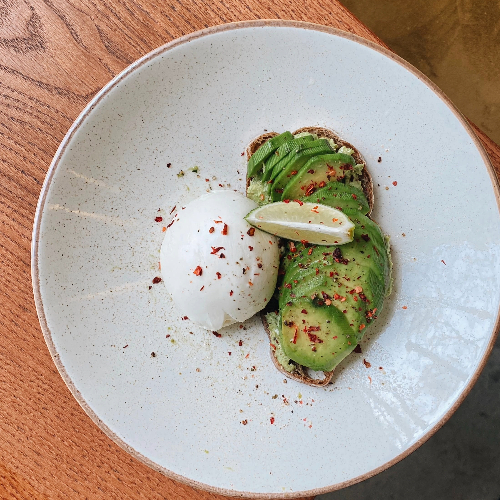
- On toast with smashed avocado and chili flakes. Our caprese toast is another good base.
- On greens: sautéed spinach or kale with a squeeze of lemon.
- With asparagus dipped into the yolk.
- On a grain bowl with quinoa, roasted vegetables and a little feta.
- In soup: slide a poached egg into a bowl of brothy soup or ramen.
Common questions
How do I know if my eggs are fresh enough?
Place the egg in a bowl of water. Very fresh eggs sink and lie flat. Older eggs tilt or stand upright, and these are better for boiling than poaching.
Should I add salt to the water?
It’s not needed, and some cooks find it makes the white break up. Season the egg after cooking instead.
This article is general information, not medical advice. Nutrition figures are estimates from USDA FoodData Central and will change with the brands and amounts you use. If you follow a diet for a medical reason, check the recipe with your doctor or dietitian.