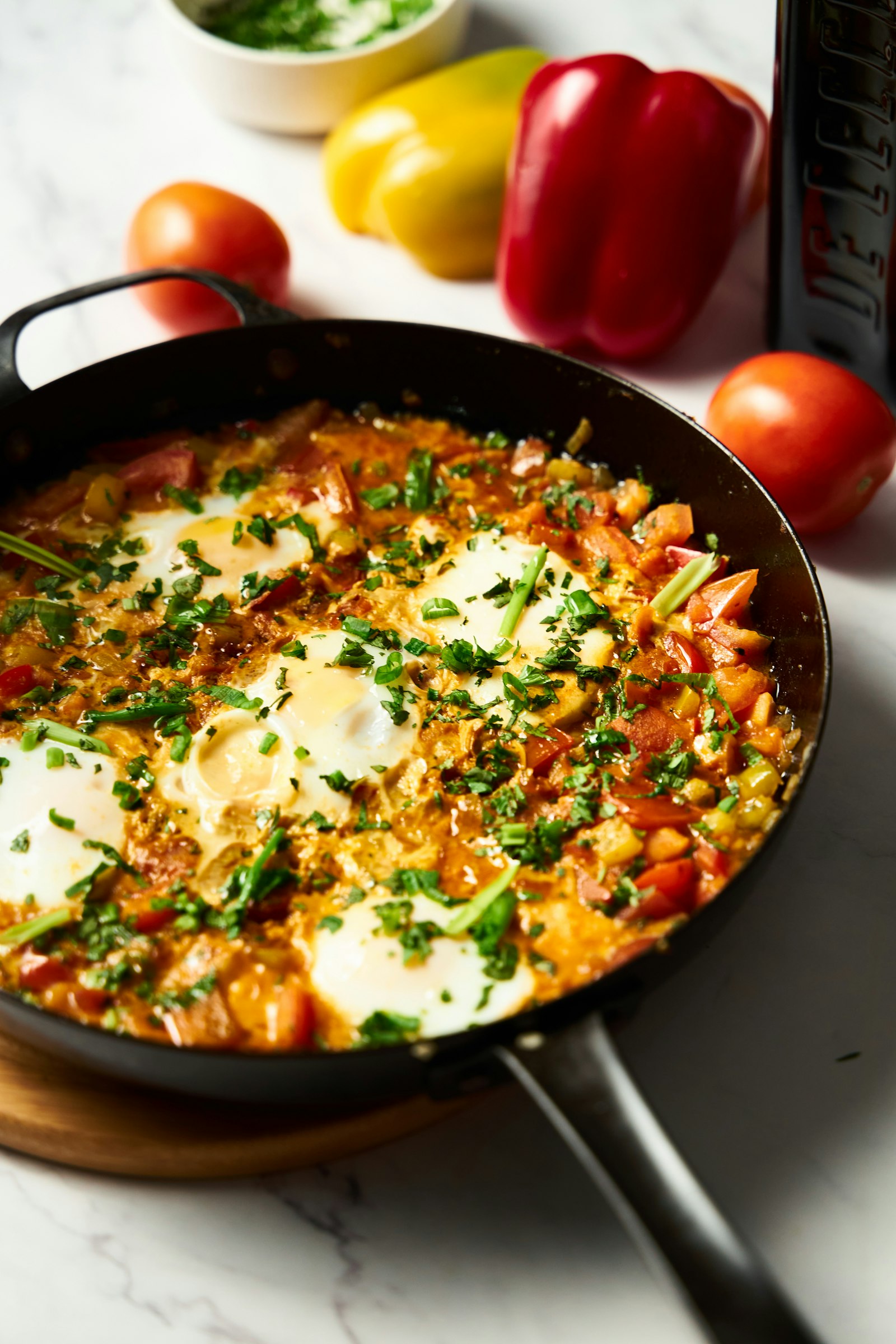
Egg fried rice is a quick, savory stir-fry of cold cooked rice, scrambled egg, peas, carrot and spring onions, seasoned with garlic, ginger, a little soy sauce and a few drops of sesame oil. It takes about 15 minutes once your rice is cooked and chilled, which is the secret to fluffy, separate grains rather than a sticky mush. This version uses less oil and reduced-salt soy sauce than most takeaways, and serves 4 with about 365 calories and 12 g of protein per portion. It’s a good way to use leftover rice, as long as the rice was cooled and stored safely, which we explain below.

- Serves: 4
- Prep time: 10 minutes (with rice cooked and chilled ahead)
- Cook time: 8 to 10 minutes
- Total time: about 20 minutes
Ingredients
- 600 g (about 4 cups) cooked long-grain rice, chilled, from about 200 g (1 cup) uncooked rice
- 3 large eggs
- 2 tablespoons vegetable or rapeseed oil
- 2 garlic cloves, finely chopped
- 1 teaspoon finely grated fresh ginger
- 1 carrot (about 80 g), finely diced
- 120 g (1 cup) frozen peas
- 4 spring onions (scallions), sliced, white and green parts kept separate
- 2 tablespoons reduced-salt soy sauce
- 1 teaspoon toasted sesame oil
- A pinch of white or black pepper
Method
- Get organized. Stir-frying moves quickly, so chop everything and line it up beside the stove. Rub the cold rice between your fingers to separate the grains.
- Scramble the eggs. Beat the eggs with a pinch of pepper. Heat 1 teaspoon of the oil in a wok or large non-stick frying pan over medium-high heat. Pour in the eggs and stir gently until just set but still soft, about 1 minute. Tip onto a plate.
- Cook the vegetables. Add the remaining oil to the pan over high heat. Add the carrot and stir-fry for 2 minutes, then add the garlic, ginger and the white parts of the spring onions and stir-fry for 30 seconds.
- Fry the rice. Add the rice and spread it out across the pan. Leave it for 30 seconds to toast slightly, then stir-fry for 3 to 4 minutes, tossing so every grain is hot and coated in oil.
- Add peas and seasoning. Stir in the frozen peas and cook for 2 minutes until hot. Drizzle the soy sauce around the edge of the pan so it sizzles, then toss.
- Return the egg. Add the scrambled egg, breaking it into pieces, and the green parts of the spring onions. Toss for 30 seconds.
- Finish. Turn off the heat and stir in the sesame oil. Taste and add a little more soy sauce only if needed. Make sure the rice is steaming hot all the way through before serving.
Tips
- Use cold, cooked rice. Freshly cooked rice is too soft and wet, and clumps. Rice cooked the day before and chilled in the fridge has drier, firmer grains that fry well.
- Use a big pan and high heat. A crowded pan steams the rice instead of frying it. If your pan is small, cook in two batches.
- Season at the end. Soy sauce added too early makes the rice soggy.
- Long-grain rice works best. Jasmine or basmati give separate grains; short-grain rice is stickier.
- Keep the egg soft. It cooks again when you return it to the pan.
Leftover rice and safety
Fried rice is the classic way to use leftovers, so handle that rice with care. Rice can harbor a heat-resistant bacterium, Bacillus cereus, which multiplies if cooked rice sits around warm, and the harmful substances it makes survive reheating. Spread freshly cooked rice out so it cools fast, get it into the fridge within an hour, use it the next day, and reheat it only once. The UK government’s home food fact checker sets out the same rules, and our guide on how to cook rice and store it safely explains them in detail.
Swaps and variations
- More protein: add 200 g of cooked chicken, shrimp or diced firm tofu with the peas.
- More vegetables: add diced red pepper, corn, bean sprouts, shredded cabbage or chopped broccoli.
- Brown rice: use cold cooked brown rice for more fiber and a nutty flavor.
- Kimchi fried rice: stir in 100 g of chopped kimchi with the rice and top with a fried egg.
- Pineapple: add 100 g of fresh pineapple chunks for a sweet and savory version.
- Lower carb: use cauliflower rice instead. Our cauliflower fried rice shows how.
- Vegan: replace the egg with crumbled firm tofu. Our vegetable fried rice is a fully plant-based version.
Nutrition per serving (estimate)
One serving is a quarter of the recipe. These figures were calculated from USDA FoodData Central values for cooked enriched long-grain white rice, whole eggs, canola oil, garlic, ginger, carrot, frozen peas, spring onions, low-sodium soy sauce and sesame oil.
| Nutrient | Per serving |
|---|---|
| Calories | 365 kcal |
| Protein | 11.5 g |
| Carbohydrate | 51 g |
| Fiber | 3 g |
| Sugars | 3 g |
| Fat | 12.5 g |
| Saturated fat | 2 g |
| Sodium | 390 mg |
This is a lighter version of a takeaway favorite, with less oil and salt. Restaurant fried rice can contain far more sodium, as regular soy sauce and stock powder add up quickly. To make it a more balanced meal, add extra vegetables and a source of protein, or serve it with a stir-fry such as our tofu stir-fry.
Contains: egg, soy and wheat (gluten, in soy sauce). Use tamari for a gluten-free version.
Storage and reheating
Cool any leftover fried rice quickly, refrigerate within an hour, and eat within 1 day. Reheat once only, in a hot pan or the microwave, until steaming hot throughout. Because the rice has already been cooked and cooled once, it’s best to make only as much fried rice as you’ll eat.
Common questions
Why is my fried rice mushy?
The rice was probably freshly cooked or the pan was too crowded. Use cold, day-old rice and cook in batches if needed.
Can I use freshly cooked rice?
If you must, spread it on a tray and let it cool and dry for 20 to 30 minutes, then chill it briefly in the fridge. It won’t be quite as fluffy.
Is egg fried rice healthy?
Homemade egg fried rice can be a reasonable meal, especially with plenty of vegetables and some extra protein. Takeaway versions are often high in oil and salt.
Can I freeze cooked rice for fried rice?
Yes. Freeze cooled rice in flat bags within an hour of cooking. Use it straight from frozen, breaking up the grains in the pan, and cook until steaming hot.
This article is general information, not medical advice. Nutrition figures are estimates from USDA FoodData Central and will change with the brands and amounts you use. If you follow a diet for a medical reason, check the recipe with your doctor or dietitian.