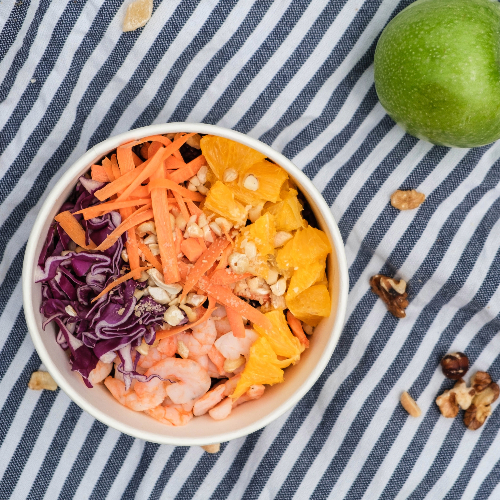
A salmon poke bowl is a Hawaiian-inspired bowl of cubed salmon marinated in soy sauce and sesame oil, served over rice with crunchy vegetables, fruit and toppings. This version uses carrots, red cabbage, cucumber, edamame, mango and avocado, with a reduced-salt soy and rice vinegar dressing, and serves 4 with about 575 calories, 30 g of protein and 6 g of fiber per bowl. Traditional poke uses raw fish, so buy salmon sold specifically for eating raw from a trusted fishmonger, keep it very cold and eat it the same day. If you’re pregnant, cooking for young children or older adults, or prefer not to eat raw fish, use cooked salmon instead; it’s just as good.
- Serves: 4
- Prep time: 25 minutes
- Cook time: none if rice is already cooked (otherwise 20 minutes)
- Total time: about 30 minutes, plus 10 to 15 minutes marinating
Ingredients
Salmon and marinade
- 400 g (14 oz) very fresh salmon fillet, sold for raw eating, skin removed, cut into 2 cm cubes (or cooked salmon, cooled and flaked)
- 2 tablespoons reduced-salt soy sauce or tamari
- 2 teaspoons toasted sesame oil
- 1 tablespoon rice vinegar
- 1 teaspoon grated fresh ginger
- 2 spring onions, finely sliced
Bowls
- 600 g (about 4 cups) cooked sushi rice or brown rice, from about 200 g uncooked
- 1 large carrot (about 100 g), grated or cut into ribbons
- 100 g (about 1½ cups) red cabbage, finely shredded
- ½ cucumber (about 150 g), sliced
- 100 g (⅔ cup) shelled edamame, thawed if frozen
- 120 g (about ¾ cup) mango, diced
- 1 avocado (about 150 g of flesh), sliced
- 2 teaspoons sesame seeds
- Pickled ginger, chili flakes, nori strips or lime wedges, to serve (optional)
Method
- Cook the rice if needed, and let it cool to room temperature, or slightly warm. If using leftover rice, make sure it was cooled quickly and kept in the fridge for no more than a day.
- Marinate the salmon. Keep the salmon in the fridge until the last moment. Mix the soy sauce, sesame oil, rice vinegar, ginger and half the spring onions in a bowl. Add the salmon cubes, toss gently, and chill for 10 to 15 minutes. Don’t marinate for longer than about 30 minutes, as the vinegar starts to change the texture.
- Prepare the vegetables. Grate the carrot, shred the cabbage, slice the cucumber and avocado, and dice the mango.
- Build the bowls. Divide the rice between 4 bowls. Arrange the vegetables, edamame, mango and avocado in sections around the bowl.
- Add the salmon. Spoon the salmon and its marinade into the center of each bowl.
- Finish. Sprinkle with sesame seeds and the remaining spring onions, and add pickled ginger, chili or lime. Serve straight away.
Raw fish safety
Raw fish can carry parasites and bacteria. Fish intended for eating raw is usually frozen first at very low temperatures to kill parasites, which is why it’s often labeled for sushi or sashimi. Ask your fishmonger if the salmon is suitable for eating raw, buy it on the day you plan to eat it, keep it chilled, and wash your hands, knives and boards well. The US Food and Drug Administration advises choosing fish that smells fresh and mild, with firm flesh, and keeping it cold.
Some people should avoid raw fish altogether. The NHS advises pregnant women to avoid sushi made with raw fish, even if it has been frozen, and to choose sushi made with cooked fish instead. Young children, older adults and people with weakened immune systems are also at higher risk of food poisoning. For them, use salmon baked or poached until it reaches 63°C (145°F), then cooled; our guide on how to cook salmon shows four easy ways.
Tips
- Cut the salmon with a very sharp knife for clean cubes.
- Season the rice with a little rice vinegar for a sushi-style flavor.
- Use brown rice for more fiber, or half rice and half quinoa.
- Keep the components separate if you’re prepping ahead, and assemble just before eating.
- Prepare the salmon last so it spends as little time out of the fridge as possible.
Swaps and variations
- Tuna poke: use tuna sold for raw eating.
- Tofu poke: use firm tofu, pressed and cubed, marinated in the same dressing.
- Spicy mayo: mix 2 tablespoons of mayonnaise with sriracha to drizzle on top.
- Lower carb: use cauliflower rice or salad leaves instead of rice.
- More greens: add spinach, seaweed salad or shredded lettuce.
- Cooked shrimp instead of salmon.
Nutrition per serving (estimate)
One serving is a quarter of the recipe. These figures were calculated from USDA FoodData Central values for raw farmed Atlantic salmon, cooked sushi rice, carrots, red cabbage, mango, cucumber, edamame, avocado, low-sodium soy sauce, sesame oil, rice vinegar, sesame seeds and spring onions.
| Nutrient | Per serving |
|---|---|
| Calories | 575 kcal |
| Protein | 30 g |
| Carbohydrate | 60 g |
| Fiber | 6 g |
| Sugars | 8 g |
| Fat | 24.5 g |
| Saturated fat | 4.5 g |
| Sodium | 375 mg |
This is a balanced meal with protein, healthy fats and plenty of vegetables. Salmon provides long-chain omega-3 fats, and the NHS recommends at least one portion of oily fish a week. Using reduced-salt soy sauce keeps the sodium moderate; regular soy sauce can double it. Brown rice would add a few more grams of fiber. Our guide to whether sushi is healthy covers similar dishes.
Contains: fish (salmon), soy (soy sauce, edamame), wheat (gluten, in soy sauce) and sesame. Use tamari for a gluten-free version.
Storage
Raw salmon poke should be eaten the day it’s made. Leftover rice and vegetables can be stored separately in the fridge; eat cooked rice within a day. If you’re meal prepping, use cooked salmon, which keeps for up to 2 days in the fridge.
Common questions
What does poke mean?
Poke (pronounced poh-kay) is Hawaiian for “to cut into pieces”, referring to the cubed raw fish.
Can I use frozen salmon?
Yes, if it’s sold for raw eating. Thaw it in the fridge and use it the same day. Otherwise, cook it.
Is a poke bowl healthy?
It can be, especially homemade with plenty of vegetables and reduced-salt sauces. Restaurant bowls with mayonnaise sauces, fried toppings and large rice portions are higher in calories and salt.
This article is general information, not medical advice. Nutrition figures are estimates from USDA FoodData Central and will change with the brands and amounts you use. If you follow a diet for a medical reason, check the recipe with your doctor or dietitian.