Yes, olives are good for you in moderate amounts. They’re rich in monounsaturated fat, the same kind of fat that makes olive oil a staple of the Mediterranean diet, and they also provide fiber, vitamin E and plant compounds called polyphenols. The main drawback is salt: 10 green olives contain about 1 g of salt, a fifth of the 5 g daily maximum recommended by the World Health Organization. A small handful a day fits most healthy diets.
Olive nutrition
Values from USDA FoodData Central:
| Per 100 g | Ripe black olives (canned) | Green olives (in brine) |
|---|---|---|
| Calories | 116 kcal | 145 kcal |
| Fat | 10.9 g | 15.3 g |
| of which monounsaturated | 7.7 g | 11.3 g |
| of which saturated | 2.3 g | 2.0 g |
| Carbohydrate | 6.0 g | 3.8 g |
| Fiber | 1.6 g | 3.3 g |
| Vitamin E | 1.7 mg | 3.8 mg |
| Sodium | 735 mg | 1,560 mg |
| Salt equivalent | 1.8 g | 3.9 g |
What that means for a typical portion of 10 olives:
| 10 olives | Calories | Fat | Salt |
|---|---|---|---|
| Large ripe black olives (44 g) | 51 kcal | 4.8 g | 0.8 g |
| Green olives (27 g) | 39 kcal | 4.1 g | 1.1 g |
Sizes vary a lot, from small pitted olives to large stuffed ones, so check the label of the brand you buy.
What makes olives a healthy choice
Mostly unsaturated fat
About 70% to 75% of the fat in olives is monounsaturated, mainly oleic acid, with only a small amount of saturated fat. The NHS explains that replacing saturated fats with some unsaturated fats can help lower cholesterol. Olives and olive oil are a simple way to do that, for example in place of butter or processed meats on a sandwich or pizza.
Part of the Mediterranean diet
Olives and olive oil are central to the traditional Mediterranean diet, which is linked with lower rates of heart disease. In the PREDIMED trial, people at high heart risk who followed a Mediterranean diet supplemented with extra virgin olive oil had about 30% fewer heart attacks, strokes and heart-related deaths than a control group. That trial tested olive oil rather than olives, but both are part of the same eating pattern. Our Mediterranean diet guide explains how to eat this way.
Fiber and vitamin E
Green olives have about 3.3 g of fiber per 100 g, which is more than many fruits. Olives also provide vitamin E, an antioxidant nutrient found mainly in oils, nuts and seeds.
Polyphenols
Olives contain polyphenols such as hydroxytyrosol and oleuropein. These compounds are part of why extra virgin olive oil is valued. Curing reduces them, and amounts vary between olive types, so it’s best not to rely on olives for any particular compound.
The salt problem
Olives are preserved in salty brine, which is why they’re so high in sodium. On the NHS food label guide, more than 1.5 g of salt per 100 g counts as high. Ripe black olives have about 1.8 g, and green olives about 3.9 g.
Ways to enjoy olives with less salt:
- Count a portion, about 5 to 10 olives, rather than eating from the jar.
- Rinse them under cold water before eating. This removes some of the surface brine.
- Look for reduced-salt versions, and compare labels.
- Balance the rest of the meal, for example by skipping extra salt or salty cheese in a salad that already has olives.
If you have high blood pressure, heart failure or kidney disease, or you’ve been told to limit salt, ask your doctor or dietitian how olives fit your plan.
Why olives are always cured
Olives can’t be eaten straight from the tree. Raw olives are extremely bitter, mainly because of oleuropein, so they’re cured to make them edible. Common methods include soaking in water, curing in brine, packing in dry salt, or treating with a dilute lye solution, which works fastest.
Green and black olives are mostly the same fruit at different stages: green olives are picked before they ripen, and naturally black olives are left on the tree longer. Canned “California-style” black olives are different again. According to the California Olive Committee, they’re picked green, cured in lye, and turned black by bubbling air through the curing tanks, with a trace of an iron salt (ferrous gluconate) sometimes added to keep the color. That’s one reason canned black olives list so much iron in USDA data.
Home-curing olives is possible, but follow a tested recipe. Low-acid foods stored in oil or preserved incorrectly can carry a risk of botulism.
Olives vs olive oil
| Per 15 g | Calories | Fat | Fiber | Salt |
|---|---|---|---|---|
| Green olives (about 5 to 6) | 22 kcal | 2.3 g | 0.5 g | 0.6 g |
| Olive oil (15 g, just over 1 tablespoon) | 133 kcal | 15 g | 0 g | 0 g |
Calculated from USDA FoodData Central values. Olive oil is far more concentrated in calories, but contains no salt. Olives give you fewer calories per bite, plus fiber, but more salt.
Ways to eat olives
- In salads: Greek salad, pasta salad, or a grain bowl. Our strawberry arugula salad shows how a few salty ingredients balance sweet ones.
- In cooking: pasta sauces, stews, baked fish and chicken dishes.
- As a snack: a few olives with vegetable sticks and a little cheese. Our list of healthy snack ideas has more.
- Tapenade: blend olives with capers, garlic, lemon and olive oil for a spread.
- On keto: olives are low in carbs and high in fat. Our guide to healthy fats on keto includes them.
Common questions
How many olives should I eat a day?
There’s no official limit. Around 5 to 10 olives is a sensible portion that adds flavor and healthy fat without too much salt.
Are black olives healthier than green?
Neither is clearly healthier. Green olives have more fiber and vitamin E per 100 g, but also about twice the salt of canned black olives.
Are olives fattening?
Not in normal portions. Ten large black olives have about 51 calories. They’re easy to overeat straight from a jar, so serve a portion in a bowl.
Are olives a fruit?
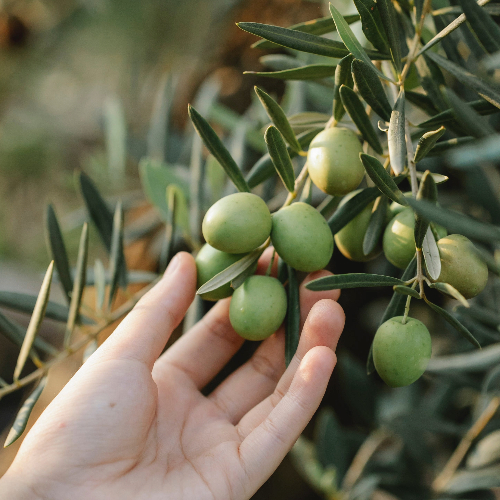
Yes. Olives are the fruit of the olive tree, and botanically they’re stone fruits, like cherries and plums. Because of their salt and fat, they’re used as a savory ingredient rather than eaten like other fruit.
This article is general information, not medical advice. Talk to your doctor or a registered dietitian before making big changes to how you eat, especially if you have a health condition, take regular medication, or are pregnant or breastfeeding.



