Yes, you can drink coffee on keto. Black coffee has almost no carbohydrate, so it fits any keto plan. What matters is what you add: a splash of cream or unsweetened almond milk adds well under 1 g of carbohydrate, while a teaspoon of sugar adds about 4 g and a large milky latte can add 10 g or more. Caffeine limits still apply, and the US Food and Drug Administration says up to 400 mg a day is not generally linked with harm for most healthy adults.
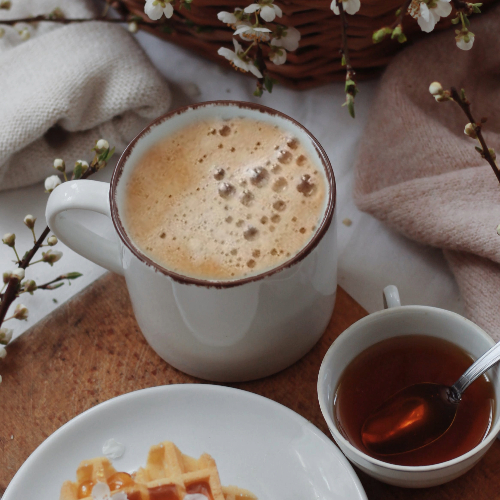
What to add to coffee on keto
Here’s how common coffee add-ins compare, using values per 100 g (about 100 ml) from USDA FoodData Central, then for a typical splash of 2 tablespoons (30 ml):
| Add-in | Carbs per 100 ml | Carbs in 2 tablespoons | Calories in 2 tablespoons |
|---|---|---|---|
| Heavy cream | 2.8 g | 0.9 g | 102 |
| Half-and-half | 4.3 g | 1.3 g | 39 |
| Whole milk | 4.8 g | 1.4 g | 18 |
| 2% milk | 4.8 g | 1.4 g | 15 |
| Unsweetened almond milk | 1.3 g | 0.4 g | 5 |
| Granulated sugar (1 teaspoon, 4 g) | 100 g | 4.0 g | 15 |
A splash is fine on almost any keto plan. The trouble starts with large milky drinks. A 350 ml (12 oz) latte made with about 300 ml of milk contains roughly 14 g of carbohydrate from the milk alone, more than half of a strict 20 g daily limit.
Keto-friendly coffee orders
- Black coffee, espresso or Americano: essentially no carbohydrate.
- Coffee with a splash of cream: under 1 g of carbohydrate for 2 tablespoons.
- Cold brew with unsweetened almond milk: very low in carbohydrate and calories.
- A small flat white or cortado: less milk than a latte, so fewer carbs. Ask for it unsweetened.
Coffee orders that break keto
- Lattes, cappuccinos and mochas in large sizes, because of the milk and any sugar or chocolate.
- Flavored syrups: most contain sugar. Sugar-free syrups exist, but check the label for sugar alcohols.
- Frappés and blended iced drinks, which are often sweetened and topped with cream and sauce.
- Ready-to-drink bottled coffees, which often contain added sugar.
- Oat milk, which is usually higher in carbohydrate than unsweetened almond or soy milk. Check the label of the brand you use.
Our keto food list covers other drinks and foods.
What about sweeteners?
Low- and no-calorie sweeteners don’t contain sugar, so they don’t add carbohydrate in the amounts used in coffee. Sweeteners such as stevia and sucralose are widely used on keto. Some “sugar-free” syrups and tablets use sugar alcohols, which are counted differently. Our guide to calculating net carbs explains how.
Many people find they need less sweetness after a few weeks. Gradually cutting back is often easier than switching overnight.
Bulletproof coffee: is it worth it?
“Bulletproof” or butter coffee is black coffee blended with butter and coconut or MCT oil. It’s popular on keto because it adds fat without carbohydrate. But it adds a lot of calories and saturated fat. A tablespoon of butter (14 g) adds about 100 calories and 7 g of saturated fat, and a tablespoon of coconut oil about 120 calories and 11 g of saturated fat, based on USDA values.
The World Health Organization recommends getting no more than 10% of your energy from saturated fat, which is about 22 g on a 2,000 calorie day. One mug of butter coffee with both fats would use up most of that. If you enjoy it, treat it as an occasional drink rather than a daily breakfast, and our guide to keto macros explains how to fit fat into your day.
How much caffeine is too much?
The FDA says 400 mg a day, roughly two to three 12-ounce cups of coffee, is not generally associated with negative effects for most healthy adults. Coffee strength varies a lot, so a strong coffee-shop cup can contain much more than a home-brewed one.
Talk to your doctor about caffeine if you’re pregnant, trying to get pregnant or breastfeeding, have a heart rhythm problem or high blood pressure, or take medicines that interact with caffeine. If coffee makes you jittery or disturbs your sleep, cut back, and avoid it in the afternoon.
Does coffee affect ketosis?
Plain black coffee won’t add carbohydrate, so it won’t affect ketosis through carbs. The add-ins are what count. If you’re tracking carefully, log your milk and cream like any other food.
Coffee also counts toward your daily fluids. The NHS includes tea and coffee in the drinks that make up your fluid intake, which matters on keto because many people pass more urine in the first weeks. Our guide to keto flu explains why.
A simple keto coffee routine
- Morning: coffee black or with a splash of cream.
- Mid-morning: water or tea.
- After lunch: one more coffee if you like, with unsweetened almond milk.
- Afternoon and evening: switch to water, herbal tea or decaf to protect your sleep.
Before you start
Safety note: Keto isn’t suitable for everyone. If you have diabetes, kidney or liver disease, take regular medication, or are pregnant or breastfeeding, talk to your doctor before cutting carbs this far (why it matters).
Common questions
Is decaf coffee keto?
Yes. Decaf has essentially the same carbohydrate as regular coffee, which is almost none. The same rules apply to what you add. Decaf still contains a little caffeine, according to the FDA, but much less than regular coffee, so it’s a good choice later in the day.
Can I drink coffee with heavy cream every day on keto?
A splash is fine for most people. Two tablespoons of heavy cream add about 102 calories and 7 g of saturated fat, based on USDA values. If you drink several cups a day, that adds up, so measure your cream for a few days to see how much you actually use.
What about coffee pods and instant coffee?
Plain instant coffee and plain pods have almost no carbohydrate. Flavored pods, “latte” pods and instant coffee mixes often contain milk powder and sugar, so check the label.
Does coffee break a fast?
Black coffee has almost no calories, so many people who fast drink it during their fasting window. Adding cream or milk adds calories. If you’re fasting for a medical reason, follow your doctor’s advice.
This article is general information, not medical advice. Talk to your doctor or a registered dietitian before making big changes to how you eat, especially if you have a health condition, take regular medication, or are pregnant or breastfeeding.