Eggs are one of the best foods on keto: a large egg has less than half a gram of carbohydrate, about 6 g of protein and 5 g of fat, plus choline, vitamin D, vitamin B12 and selenium, according to USDA FoodData Central. How many you should eat depends on your cholesterol and health. Harvard’s Nutrition Source says up to one egg a day isn’t linked with higher heart disease risk in healthy people, but people with diabetes or hard-to-control LDL cholesterol may want to be more careful with yolks.
Egg nutrition
Per large egg (50 g), from USDA FoodData Central:
| Nutrient | One large egg |
|---|---|
| Calories | 72 kcal |
| Carbohydrate | 0.4 g |
| Protein | 6.3 g |
| Fat | 4.8 g |
| of which saturated | 1.6 g |
| Cholesterol | 186 mg |
| Choline | 147 mg |
| Vitamin D | 1.0 mcg |
| Folate | 24 mcg |
Most of the fat, cholesterol, choline and vitamin D are in the yolk. The white is almost pure protein, with about 3.6 g per egg and very few calories.
Why eggs suit keto so well
- Almost no carbs. You can eat eggs at every meal without touching your carb limit.
- A good balance of protein and fat. Eggs fit keto macros naturally. Our guide to keto macros explains the targets.
- Filling. Protein and fat at breakfast keep many people satisfied until lunch.
- Cheap and quick. Eggs are one of the most affordable protein foods and cook in minutes.
- Nutrient-rich. Choline is needed for the brain and liver, and eggs are one of the richest common sources. A large egg also provides about a tenth of the 10 mcg of vitamin D the NHS recommends each day.
How many eggs can you eat on keto?
There’s no single limit, but the evidence gives some guidance.
For healthy people, Harvard notes that large studies following tens of thousands of people found that up to one egg a day wasn’t linked with higher heart disease risk. The 2015 US Dietary Guidelines dropped their old 300 mg daily limit on dietary cholesterol, because for most people the cholesterol in food has less effect on blood cholesterol than the mix of fats in the diet.
For people with diabetes, Harvard points out that some long-term studies found a higher heart disease risk in people with diabetes who ate one or more eggs a day. If you have diabetes, ask your doctor or dietitian how many eggs suit you.
For people with high LDL cholesterol, egg whites are a lower-cholesterol option. This matters on keto, because LDL rises a lot in some people on a high-fat diet. Our guide to keto and cholesterol explains how to tell if you’re one of them.
In practice, many people on keto eat 1 to 3 eggs a day. If you eat more than that regularly, ask for a cholesterol test after a few months.
What to eat with your eggs
What you eat alongside eggs matters as much as the eggs themselves. Bacon, sausages, butter and cheese add saturated fat and salt, and processed meats are best kept occasional. Better keto pairings:
- Vegetables: spinach, mushrooms, tomatoes, peppers, zucchini or asparagus.
- Healthy fats: avocado, olive oil or a handful of seeds. Our article on whether avocado is keto has portion sizes.
- Fish: smoked salmon, mackerel or sardines.
10 keto egg ideas
- Vegetable omelette with spinach, mushrooms and a little cheese.
- Egg muffins baked with peppers and onion, made ahead for the week.
- Shakshuka-style eggs poached in a tomato and pepper sauce, keeping the sauce portion small.
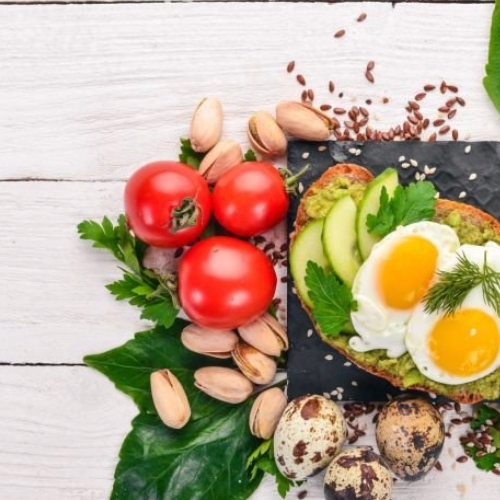
- Avocado and egg plate: half an avocado, two soft-boiled eggs and tomatoes.
- Egg salad with mayonnaise, mustard and chives, served in lettuce cups.
- Deviled eggs for a snack or party.
- Frittata with whatever vegetables you have. Our spinach and feta frittata has 8 g of carbohydrate per slice.
- Egg drop soup made with chicken broth and green onions.
- Baked eggs in ramekins with cream and herbs.
- Keto pancakes made with eggs, cream cheese and almond flour.
Our keto breakfast ideas include more egg dishes, and our guide on how long to boil eggs has exact timings.
What about the “egg fast”?
An egg fast is a short diet of mostly eggs, butter and cheese, promoted for breaking weight loss plateaus. There’s no good evidence behind it. It cuts out vegetables and fiber, it’s very high in saturated fat and cholesterol, and it’s hard to stick to. A balanced keto diet with eggs, vegetables, fish and healthy fats is a better approach. If you’re stuck, see our guide to the keto weight loss plateau.
Egg safety
Raw and undercooked eggs can carry salmonella. The FDA advises:
- Keep eggs in the fridge at 4°C (40°F) or below.
- Cook eggs until the yolk and white are firm if you’re pregnant, older, very young or have a weakened immune system.
- Use pasteurized eggs for recipes that call for raw eggs, such as homemade mayonnaise.
- Keep hard-boiled eggs in the fridge and eat them within a week.
Advice differs between countries. In the UK, the NHS says hens’ eggs with the British Lion mark can be eaten runny, even in pregnancy. Our guide to foods to avoid during pregnancy explains more.
Common questions
Are egg whites or whole eggs better on keto?
Whole eggs fit keto better, because the yolk provides fat and most of the nutrients. Egg whites are useful if you want more protein with less fat and cholesterol.
Do eggs raise cholesterol?
For most people, eggs have a modest effect on blood cholesterol. Some people are more sensitive. A blood test is the only way to know how you respond.
Are brown eggs healthier than white eggs?
No. Shell color depends on the breed of hen. Nutrition is the same.
Can I eat eggs every day on keto?
Yes, most people can. Vary how you cook them, add vegetables, and keep processed meat on the side to a minimum.
Safety note: Keto isn’t suitable for everyone. If you have diabetes, kidney or liver disease, take regular medication, or are pregnant or breastfeeding, talk to your doctor before cutting carbs this far (why it matters).
This article is general information, not medical advice. Talk to your doctor or a registered dietitian before making big changes to how you eat, especially if you have a health condition, take regular medication, or are pregnant or breastfeeding.