A healthy breakfast combines three things: a protein food, such as eggs, yogurt, milk, beans, tofu or nut butter; a fiber-rich carbohydrate, such as oats, whole grain bread or fruit; and, ideally, some fruit or vegetables. That mix keeps you full and gives steadier energy than sugary cereals, pastries or white toast with jam. The NHS says a healthy breakfast that’s high in fiber and low in fat, sugar and salt can form part of a balanced diet and help you get the nutrients you need. Below are healthy breakfast ideas for every taste, from savory plates to sweet bowls and dishes from around the world.
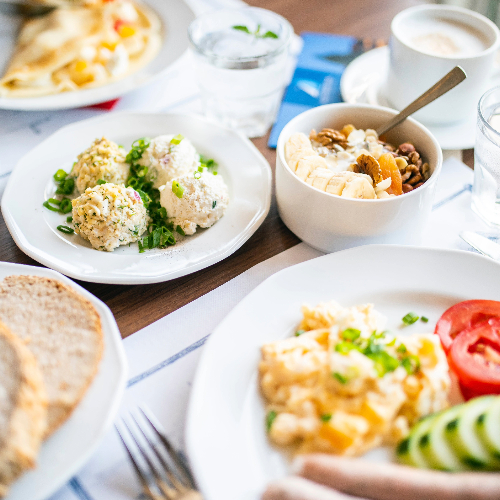
The healthy breakfast formula
| Part | Examples | Why |
|---|---|---|
| Protein | Eggs, Greek yogurt, milk, cottage cheese, beans, tofu, nut butter, smoked fish | Keeps you full |
| Fiber-rich carbohydrate | Oats, whole grain bread, whole grain cereal, fruit, sweet potato | Slow-release energy |
| Fruit or vegetables | Berries, banana, tomatoes, spinach, mushrooms, peppers | Vitamins, minerals and fiber |
| Healthy fat, optional | Avocado, nuts, seeds, olive oil | Flavor and fullness |
Savory breakfast ideas
- Scrambled eggs with spinach and tomatoes on whole grain toast.
- Vegetable omelet with peppers, mushrooms and onion. Add a side of roasted cauliflower or leftover vegetables, like the breakfast table in our photo.
- Shakshuka: eggs poached in a spiced tomato and pepper sauce, with bread for dipping. Our roasted red pepper sauce makes a quick base.
- Avocado toast with a poached egg. Our avocado toast has variations.
- Beans on whole grain toast, using reduced-salt and sugar baked beans.
- Cottage cheese with cucumber, tomatoes and black pepper on rye crispbread.
- Smoked salmon and cream cheese on a whole grain bagel. Our article on whether smoked salmon is healthy covers salt and pregnancy advice.
- Tofu scramble with turmeric, spinach and mushrooms, for a plant-based option.
- Mushrooms on toast with garlic and parsley.
- A spinach and feta frittata, baked in advance and eaten over several days. Our spinach feta frittata keeps well.
Sweet breakfast ideas
- Porridge with berries and nuts. Our article on whether oats are healthy explains why they keep you full.
- Greek yogurt with fruit and a little granola. Our low-sugar granola keeps sugar down.
- Banana oat pancakes made in a blender, without added sugar. See our banana pancakes.
- Overnight oats with grated apple and cinnamon.
- Whole grain toast with peanut butter and banana.
- Chia pudding made with milk or soy milk and topped with mango.
- A smoothie bowl with yogurt, frozen berries and seeds. Our berry smoothie bowl shows how.
- Bircher muesli: muesli soaked overnight in milk with grated apple.
Breakfasts from around the world
Many traditional breakfasts are naturally balanced:
- Mediterranean: whole grain bread with tomatoes, cucumber, olives, feta and olive oil, or Greek yogurt with honey and walnuts.
- Middle Eastern: ful medames (stewed fava beans) or hummus with eggs, vegetables and flatbread.
- Japanese: miso soup, rice, grilled fish and pickled vegetables. Watch the salt in miso and pickles.
- Indian: vegetable poha (flattened rice), upma or moong dal chilla (lentil pancakes) with yogurt.
- Mexican: huevos rancheros with beans, salsa and corn tortillas.
- Scandinavian: rye bread with eggs, smoked fish and cucumber.
Breakfasts to have less often
- Sugary breakfast cereals, which can contain several teaspoons of sugar per bowl. Our guide on how to choose a healthy cereal helps you compare labels.
- Pastries, croissants and muffins, which are high in fat and sugar and low in protein.
- Processed breakfast meats, such as bacon and sausages, which are high in salt and are processed meats.
- Large glasses of fruit juice, whose sugars count as free sugars. The NHS recommends limiting juice and smoothies to 150 ml a day.
- Flavored coffee drinks with syrup and cream.
These can still be occasional treats. A weekend cooked breakfast can be made healthier by grilling instead of frying, choosing eggs, mushrooms, tomatoes and beans, and keeping bacon or sausages to one item.
Tips for building a breakfast habit
- Prepare the night before: soak oats, set out bowls, or boil eggs.
- Keep staples in stock: oats, eggs, yogurt, frozen berries, bananas, whole grain bread and nut butter.
- Start small if you’re not hungry in the morning: a piece of fruit and a yogurt, then build up.
- Take it with you on busy days. Our guide to healthy breakfasts on the go has portable options.
- Add protein. Our high-protein breakfast ideas help if you get hungry by mid-morning.
Healthy breakfasts for children
Children need breakfast to fuel their morning. Good options include porridge with fruit, whole grain cereal with milk, eggs on toast, yogurt with berries, or banana pancakes. Choose cereals lower in sugar, offer water or milk rather than juice, and include a little protein to keep them going until lunch. Our guide to healthy lunchbox ideas helps plan the rest of the school day.
Breakfast on a budget
Some of the healthiest breakfasts are also the cheapest: oats, eggs, bananas, frozen berries, plain yogurt in a large tub, and whole grain bread. A bowl of porridge made with milk and a sliced banana costs far less than most cereals or café breakfasts.
Common questions
Is it bad to skip breakfast?
Not necessarily. Some people aren’t hungry in the morning and eat well later in the day. But for many, skipping breakfast leads to mid-morning hunger and less healthy snacks, so it’s worth finding a breakfast that suits you.
What’s the healthiest breakfast for weight loss?
One that’s high in protein and fiber and keeps you full, such as eggs with vegetables and whole grain toast, or Greek yogurt with berries and oats.
Are eggs a healthy breakfast every day?
For most people, yes. Two eggs provide about 12.5 g of protein, according to USDA FoodData Central, along with vitamin B12, vitamin D and choline. Serve them with vegetables and whole grains rather than processed meats.
This article is general information, not medical advice. Talk to your doctor or a registered dietitian before making big changes to how you eat, especially if you have a health condition, take regular medication, or are pregnant or breastfeeding.



