The easiest ways to eat more vegetables are to add one to every meal, keep frozen and canned vegetables on hand, bulk out sauces, soups and stews with extra vegetables, and make vegetables the first thing on your plate. The World Health Organization recommends at least 400 g of fruit and vegetables a day, roughly five 80 g portions, and a large analysis of 95 studies linked each extra 200 g a day with a 10% lower risk of early death. Below are 15 practical ideas that don’t need special recipes or a lot of time.
How much is a portion?
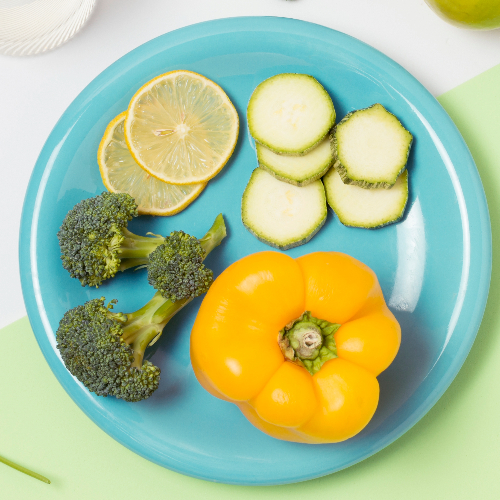
The NHS counts 80 g of vegetables as one adult portion. That’s about:
- 3 heaped tablespoons of cooked vegetables, such as carrots, peas or sweetcorn
- 2 broccoli spears
- 8 cauliflower florets
- 4 heaped tablespoons of cooked kale, spring greens or green beans
- 1 medium tomato or 7 cherry tomatoes
- 3 celery sticks or a 5 cm piece of cucumber
The NHS says almost all fruit and vegetables count, whether fresh, frozen, canned, dried or juiced. Potatoes, yams and cassava don’t count because they mainly provide starch, and beans and juice count only once a day however much you have.
Why it’s worth the effort
The 2017 meta-analysis found that higher fruit and vegetable intake was linked with lower risks of heart disease, stroke and early death, with benefits seen up to about 800 g a day. Vegetables also provide fiber, which most adults lack: the NHS notes most adults eat only about 20 g of the recommended 30 g a day.
15 easy ways to eat more vegetables
At breakfast
- Add vegetables to eggs: spinach, tomatoes, mushrooms or peppers in an omelette or scramble. Our spinach and feta frittata is an easy start.
- Top toast with tomatoes, avocado or wilted spinach.
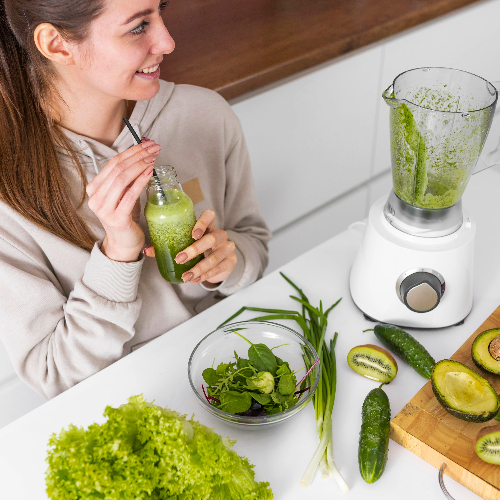
- Blend a handful of spinach into a fruit smoothie. You’ll barely taste it.
At lunch
- Add a side salad or a handful of cherry tomatoes and cucumber to any sandwich.
- Choose vegetable-based soups, such as lentil and vegetable, minestrone or our green pea and mint soup.
- Fill wraps and pittas with plenty of salad, grated carrot and peppers.
At dinner
- Fill half your plate with vegetables first, then add the protein and starch. Our guide to building a balanced meal explains the half-plate idea.
- Bulk out sauces: grate carrot, zucchini or mushrooms into bolognese, chili and curries.
- Add frozen peas, sweetcorn or spinach to pasta, rice and stir-fries in the last few minutes.
- Roast a big tray of vegetables on the weekend and use them through the week.
- Swap some pasta or rice for vegetable noodles, cauliflower rice or extra vegetables.
Snacks and shopping
- Keep vegetable sticks ready: carrots, cucumber, peppers and celery with hummus or a yogurt dip. Our guide to whether hummus is healthy includes a recipe.
- Stock frozen and canned vegetables. They’re cheap, last for months and count toward your 5 A Day. Choose canned vegetables in water without added salt.
- Try one new vegetable a week to add variety.
- Start meals with a salad or vegetable soup. In a study of 42 women, eating a large, light salad before a pasta lunch reduced the total calories eaten at the meal by 12%.
A day with 5 portions of vegetables
| Meal | Example | Portions |
|---|---|---|
| Breakfast | Scrambled eggs with a handful of spinach and 7 cherry tomatoes | 2 |
| Lunch | Lentil and vegetable soup with a side salad | 1 to 2 |
| Snack | Carrot and cucumber sticks with hummus | 1 |
| Dinner | Chicken stir-fry with peppers, broccoli and onion | 2 |
That’s around 6 to 7 portions of vegetables without any special effort, before adding fruit. Our green foods list has more ideas.
Make vegetables taste better
Many people eat fewer vegetables simply because they find them bland. Easy fixes:
- Roast them at 200°C (400°F) until browned at the edges. Roasting makes vegetables sweeter.
- Add flavor: garlic, lemon, chili, herbs, spices, a little Parmesan or a drizzle of olive oil.
- Don’t overcook. Steam or stir-fry until just tender and bright.
- Use a dressing on salads. A little fat also helps your body absorb some vitamins.
Our guide to cruciferous vegetables explains the best ways to cook broccoli, cabbage and Brussels sprouts.
Vegetables for picky eaters and children
Children often need to taste a new vegetable many times before they accept it. Offer small amounts often, eat vegetables yourself, and avoid pressure or bribes. Our guide on how to get kids to eat vegetables has more strategies.
On a budget
- Buy seasonal produce, which is usually cheaper and tastier.
- Use frozen vegetables, which are often cheaper than fresh and cause less waste.
- Buy whole vegetables rather than pre-cut ones.
- Cook in batches and freeze soups and stews.
Common questions
Are frozen vegetables as healthy as fresh?
Yes. Frozen vegetables are usually frozen soon after picking and count toward your 5 A Day just like fresh ones. They’re a convenient way to always have vegetables on hand.
Do potatoes count as a vegetable?
Not toward your 5 A Day in the UK, because the NHS says they mainly provide starch. They’re still a useful food, especially with their skins on, but count them as the starchy part of the meal.
Is vegetable juice as good as whole vegetables?
No. Juice loses most of the fiber, and it only counts as one portion a day, however much you drink.
Do I need to eat organic vegetables?
No. Conventional and organic vegetables are both healthy, and eating more of either matters far more than which you choose. Wash all produce before eating. Our guide on how to wash vegetables explains how.
Are canned vegetables healthy?
Yes. Choose ones in water without added salt, and rinse them if they’re in brine. Canned tomatoes, sweetcorn, beans and peas are useful cupboard staples.
This article is general information, not medical advice. Talk to your doctor or a registered dietitian before making big changes to how you eat, especially if you have a health condition, take regular medication, or are pregnant or breastfeeding.