Mediterranean keto combines the very low carb intake of a ketogenic diet with the foods of the Mediterranean diet: olive oil, oily fish, non-starchy vegetables, nuts, seeds, olives, and moderate amounts of cheese and yogurt. Compared with a typical keto diet based on butter, cream, bacon and red meat, it’s richer in unsaturated fats and fiber and lower in saturated fat, which may help limit the rise in LDL cholesterol that some people see on keto. The trade-off is that it leaves out some of the healthiest Mediterranean foods, such as beans, lentils, whole grains and most fruit. If you want to do keto, this is one of the healthier ways to do it; if you don’t need keto, a standard Mediterranean diet has stronger long-term evidence.
What the evidence says
The Mediterranean diet has strong evidence
In the large PREDIMED trial, about 7,400 people at high risk of heart disease were assigned to a Mediterranean diet supplemented with extra virgin olive oil or nuts, or to a lower-fat control diet. The Mediterranean groups had about 30% fewer major cardiovascular events, such as heart attacks and strokes, over about 5 years. Our Mediterranean diet for beginners guide explains the pattern.
Keto vs Mediterranean head to head
In the Keto-Med trial, adults with prediabetes or type 2 diabetes followed a well-formulated keto diet and a low-sugar Mediterranean diet for 12 weeks each. Blood sugar control (HbA1c) was similar on both. Keto lowered triglycerides more, but LDL cholesterol rose by about 10% on keto while it fell by about 5% on the Mediterranean diet. People ate less fiber and fewer of several nutrients on keto, and they found the Mediterranean diet easier to stick to afterward.
Mediterranean keto specifically
There’s little direct evidence on combined “Mediterranean ketogenic” diets, so the case for them rests on choosing healthier fats and more vegetables within keto. Our guide to keto and cholesterol explains why the type of fat matters.
What to eat
| Food group | Examples | Why |
|---|---|---|
| Fats | Extra virgin olive oil as the main fat, avocado, olives | Mostly monounsaturated fat |
| Fish and seafood | Salmon, sardines, mackerel, anchovies, prawns, at least 2 to 3 times a week | Protein and omega-3 fats |
| Non-starchy vegetables | Leafy greens, zucchini, eggplant, peppers, tomatoes in moderation, artichokes, cauliflower | Fiber, vitamins and minerals |
| Nuts and seeds | Walnuts, almonds, pine nuts, pumpkin and sesame seeds, tahini | Healthy fats and fiber |
| Dairy | Feta, halloumi, Greek yogurt, in moderation | Protein and calcium |
| Eggs and poultry | Eggs, chicken | Protein |
| Herbs and spices | Garlic, oregano, rosemary, lemon, mint, sumac | Flavor without carbs |
Our list of keto vegetables has carb counts for each.
What to limit
- Red and processed meat: keep lamb and beef to occasional meals, and limit bacon, sausages and salami.
- Butter, cream and coconut oil: use them sparingly, and favor olive oil.
- Grains, bread, pasta, potatoes, beans, lentils and most fruit: too high in carbs for keto. Small amounts of berries and pomegranate seeds can add color and flavor.
- Sweets and sugary drinks.
A day of Mediterranean keto
| Meal | Example |
|---|---|
| Breakfast | Greek yogurt with walnuts, a few raspberries and a drizzle of tahini, or eggs scrambled with spinach and feta |
| Lunch | Big salad with sardines or tuna, olives, cucumber, peppers, red onion and olive oil and lemon dressing |
| Snack | A handful of almonds or celery with tahini |
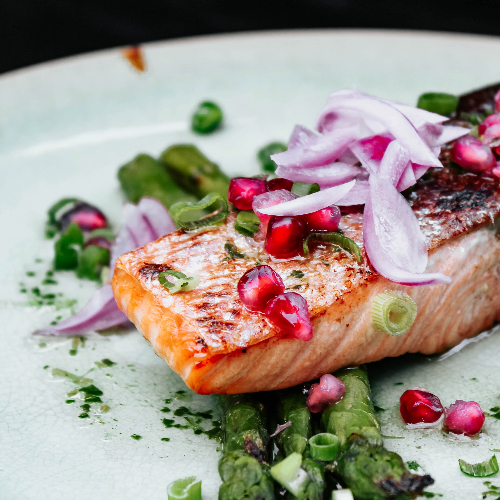
| Dinner | Grilled salmon with roasted zucchini and eggplant, finished with herbs, red onion and a sprinkle of pomegranate seeds, like in our photo |
Other good dinners include our keto baked cod with herb butter, made with olive oil instead of butter, or our sheet pan salmon with green beans.
Tips for success
- Make olive oil your main fat for cooking and dressing.
- Eat fish more often than red meat. The NHS recommends at least 2 portions of fish a week, one of them oily.
- Fill half your plate with vegetables at lunch and dinner.
- Season boldly with herbs, garlic, lemon and spices, so meals don’t rely on cheese and cream for flavor.
- Check your cholesterol after a few months, as our guide to keto blood tests explains.
- Plan for the long term. If strict keto becomes hard to keep up, moving to a regular Mediterranean diet, with beans, lentils and whole grains added back, is a healthy next step.
Mediterranean keto vs standard keto
| Standard keto | Mediterranean keto | |
|---|---|---|
| Main fats | Butter, cream, bacon, cheese, coconut oil | Extra virgin olive oil, olives, avocado, nuts |
| Main proteins | Red meat, processed meat, eggs, cheese | Fish and seafood, eggs, poultry, some cheese and yogurt |
| Vegetables | Often a small part of the plate | Half the plate at most meals |
| Saturated fat | Often high | Moderate |
| Effect on LDL cholesterol | Can rise significantly in some people | Likely to rise less, though responses vary |
Both keep carbohydrate very low, so both lead to ketosis. The difference is in the quality of the fats and how many vegetables you eat. If you’re already on keto, swapping butter for olive oil, eating fish instead of bacon a few times a week, and adding a large salad to lunch and dinner moves you toward the Mediterranean version.
Common questions
Can vegetarians follow Mediterranean keto?
Yes. Replace fish and poultry with eggs, Greek yogurt, cheese, tofu and tempeh, and use plenty of olive oil, nuts, seeds and vegetables. Our guide to vegetarian keto explains which nutrients to watch.
Is the Mediterranean diet low carb?
No. The traditional Mediterranean diet includes whole grains, beans, fruit and potatoes. Mediterranean keto removes these to keep carbs very low.
Can Mediterranean keto lower cholesterol?
It’s more likely to keep LDL cholesterol in check than a keto diet high in butter and meat, because it’s lower in saturated fat. But individual responses vary, so get your levels checked.
Is red wine allowed?
Dry red wine has few carbs, but alcohol adds calories, and your body deals with alcohol before it uses fat for energy. Our guide to keto and alcohol explains the trade-offs.
Safety note: Keto isn’t suitable for everyone. If you have diabetes, kidney or liver disease, take regular medication, or are pregnant or breastfeeding, talk to your doctor before cutting carbs this far (why it matters).
This article is general information, not medical advice. Talk to your doctor or a registered dietitian before making big changes to how you eat, especially if you have a health condition, take regular medication, or are pregnant or breastfeeding.