Family meal planning means deciding in advance what you’ll eat for the week, then shopping and cooking around that plan. It saves money, cuts food waste and makes it easier to eat well on busy days. The simplest method is to choose one evening a week to plan, check what’s already in the fridge and cupboards, pick five or six dinners using a mix of family favorites and one new recipe, write a shopping list by aisle, and prep a few things ahead. Build each meal around the plate the NHS Eatwell Guide recommends: plenty of vegetables and fruit, whole grains or potatoes, a protein, and some dairy or alternatives, and plan to use leftovers on purpose.
Step 1: Look at your week
Before choosing meals, check the calendar. Which nights are busy with work, sports or clubs? Which nights does someone have more time to cook? Busy nights need 15-minute meals, leftovers or something from the freezer. Slower nights can handle a roast or a new recipe.
Step 2: Check what you have
Look in the fridge, freezer and cupboards first. Plan meals that use up vegetables that need eating, opened jars and freezer items. This is one of the easiest ways to reduce food waste. Our guide to reducing food waste has more ideas.
Step 3: Choose your meals
A simple weekly structure takes the decision-making out of planning:
| Night | Theme | Example |
|---|---|---|
| Monday | Meat-free | Lentil bolognese or chickpea curry |
| Tuesday | Fish | Salmon foil packets with potatoes and green beans |
| Wednesday | Leftovers or freezer | Monday’s bolognese, or soup from the freezer |
| Thursday | Stir-fry or noodles | Vegetable stir-fry with tofu or chicken |
| Friday | Build your own | Tacos, wraps or homemade pizza |
| Saturday | Something new | A recipe the family chooses |
| Sunday | Roast or tray bake | Roast chicken with vegetables; cook extra for Monday lunches |
Try to include fish at least once a week, two or three meat-free meals, and a vegetable or salad with every dinner. Our salmon foil packets, sheet pan chicken and potatoes and chicken tacos work well for families.
Step 4: Involve the family
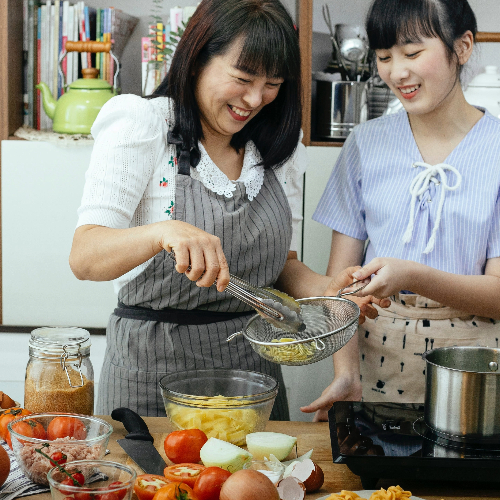
Ask each family member to choose one dinner a week. Children are more likely to eat meals they helped choose and cook. Give them a few healthy options to pick from, and let older children help plan and shop. Our guide to cooking with kids has age-appropriate jobs.
Step 5: Write the shopping list
Group your list by store section (vegetables and fruit, fridge, freezer, cupboard) so shopping is quicker. Add breakfast, lunch and snack basics, such as oats, bread, milk, yogurt, eggs, fruit and sandwich fillings. Stick to the list, and buy frozen vegetables and fruit for nights when fresh food has run out. Our healthy grocery list is a useful template.
Step 6: Prep ahead
An hour on the weekend makes weeknight cooking much faster:
- Wash and chop vegetables for the first few days.
- Cook a batch of rice, pasta or grains and chill it quickly.
- Make a sauce, soup or chili to use twice.
- Marinate meat or tofu for the next day.
- Boil eggs for snacks and lunches.
Our guide to meal prep for beginners explains how to batch cook safely.
Cooking once, eating twice
Plan leftovers deliberately. Cook double portions of chili, curry, soup or a roast chicken, then use them for lunches or a second dinner later in the week. Cool leftovers quickly, refrigerate them within 2 hours, and eat them within 3 to 4 days, or freeze them, as the USDA advises. Rice is the exception: the UK government’s home food fact checker advises cooling it within an hour and eating it within a day.
Feeding picky eaters
You don’t need to cook separate meals for every family member. Serve one family meal with at least one food each person usually eats, such as bread, rice or a familiar vegetable. Serve sauces and toppings on the side, and let children serve themselves where possible. Keep offering new foods without pressure; it can take many tries. The American Academy of Pediatrics has practical advice, and our guide to getting kids to eat vegetables has ideas that work.
Planning for young children
Toddlers and young children need regular meals and snacks, child-sized portions and a variety of foods. The NHS recommends offering foods from all the main food groups and at least one portion of oily fish a week. Most family meals can be adapted by setting a portion aside before adding salt or spice. Our guide to how much children should eat explains portion sizes by age.
Lunches and breakfasts
Planning lunches and breakfasts reduces morning stress. Make overnight oats or set out cereal bowls the night before. Pack lunchboxes with leftovers, wraps or pasta salad, plus fruit and a dairy food. Our healthy lunchbox ideas have more.
Keeping it going
- Save your plans. After a few weeks you’ll have a rotation of tried-and-tested menus to reuse.
- Keep a list of family favorites on the fridge for quick inspiration.
- Be flexible. Swap nights around when plans change.
- Keep a backup meal in the cupboard or freezer, such as pasta with canned tomatoes and beans, for nights when nothing goes to plan.
- Eat together when you can. Our guide to family meals explains the benefits of sharing the table.
Common questions
How long does meal planning take?
About 20 to 30 minutes a week once you’re used to it, less if you reuse previous plans.
How do I meal plan on a budget?
Build meals around cheaper proteins such as beans, lentils, eggs and chicken thighs, use frozen vegetables, cook in bulk, and plan leftovers. Our guide to healthy eating on a budget has more tips.
What if my family won’t eat new recipes?
Introduce one new meal a week alongside favorites, and involve them in choosing it. Small changes to familiar dishes, such as adding lentils to bolognese, often work better than completely new meals.
This article is general information, not medical advice. Talk to your doctor or a registered dietitian before making big changes to how you eat, especially if you have a health condition, take regular medication, or are pregnant or breastfeeding.