“Eating the rainbow” means choosing fruit and vegetables of many different colors, red, orange, yellow, green, blue and purple, and white, because the pigments that give them their color often come with different vitamins, minerals and plant compounds. No single color is best; variety is the point. It’s a simple, visual way to make sure you’re getting a wide range of nutrients and plenty of fiber, and a fun way to get children interested in vegetables. Aim for at least 5 portions of fruit and vegetables a day, with as many colors as you can across the week.
Why color matters
Fruit and vegetables contain thousands of plant compounds, sometimes called phytonutrients, alongside vitamins, minerals and fiber. Many are pigments, so color gives a rough guide to what’s inside. Eating a variety of colors means a wider mix.
The bigger message is simply to eat more produce. A large analysis of studies published in the International Journal of Epidemiology found that higher fruit and vegetable intake, up to about 800 g a day, was associated with lower risks of heart disease, stroke, cancer and early death. The NHS recommends at least 5 portions of a variety of fruit and vegetables a day.
The colors and what they offer
| Color | Examples | Notable nutrients and compounds |
|---|---|---|
| Red | Tomatoes, red peppers, strawberries, watermelon, red apples | Lycopene (tomatoes, watermelon), vitamin C, anthocyanins (berries) |
| Orange and yellow | Carrots, sweet potatoes, squash, mangoes, oranges, yellow peppers | Beta carotene (turned into vitamin A), vitamin C, potassium |
| Green | Spinach, kale, broccoli, peas, green beans, kiwi, avocado | Folate, vitamin K, lutein, fiber |
| Blue and purple | Blueberries, blackberries, red cabbage, eggplant, purple grapes | Anthocyanins |
| White and tan | Cauliflower, garlic, onions, mushrooms, bananas | Allicin (garlic and onions), potassium, fiber |
Red
Tomatoes and watermelon are rich in lycopene, which is better absorbed from cooked tomatoes and with a little oil. Red peppers and strawberries are excellent sources of vitamin C. Our guide to bell peppers explains more.
Orange and yellow
Carrots, sweet potatoes and squash are packed with beta carotene, which your body converts into vitamin A for healthy vision, skin and immunity. Our guide to vitamin A lists the best sources.
Green
Leafy greens and green vegetables provide folate, vitamin K, fiber and lutein. Cruciferous greens, such as broccoli, kale and cabbage, contain glucosinolates. Our guides to green foods and cruciferous vegetables cover them in detail.
Blue and purple
Blueberries, blackberries, red cabbage and eggplant get their color from anthocyanins. In a large US study, people who ate more blueberries had a lower risk of type 2 diabetes, though observational findings like this can’t prove cause and effect. Our article on whether eggplant is good for you covers one purple vegetable.
White
Don’t overlook pale vegetables. Garlic and onions add flavor and sulfur compounds, cauliflower is a versatile cruciferous vegetable, and mushrooms provide B vitamins and, when exposed to UV light, vitamin D. Our guide to mushroom nutrition explains more.
Easy ways to eat the rainbow
- Add color to breakfast: berries on porridge, spinach in eggs, or tomatoes on toast.
- Build a rainbow salad: leafy greens, cherry tomatoes, grated carrot, red cabbage, cucumber and peppers.
- Roast a tray of mixed vegetables: squash, red onion, peppers, zucchini and broccoli.
- Use frozen mixes: frozen peppers, peas, sweetcorn and berries make color easy and cheap.
- Stir-fries: add three or four different colored vegetables.
- Snack on color: carrot and pepper sticks, cherry tomatoes, grapes or a kiwi.
- Try one new color each week.
Our guide on how to eat more vegetables has more ideas.
Eat the rainbow with children
Color is a great way to make vegetables fun:
- Make a “rainbow chart” and let children tick off each color they eat during the week.
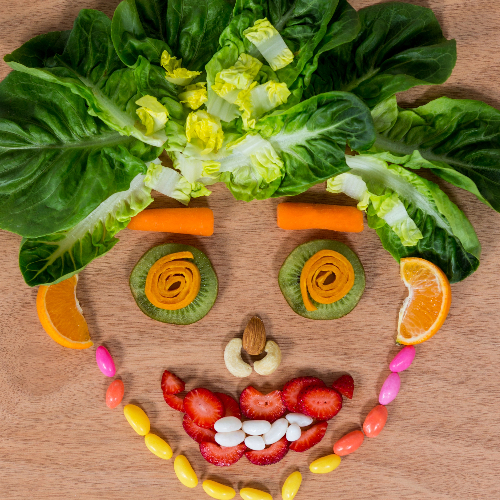
- Arrange vegetables into faces or pictures on the plate, like the vegetable face in our photo.
- Let children pick a new colored fruit or vegetable at the shop.
- Involve them in washing and preparing produce. Our guide to cooking with kids has age-by-age tasks.
Our tips on getting kids to eat vegetables include more strategies for fussy eaters.
Do supplements give the same benefits?
No. Supplements can provide individual vitamins, but they don’t replace the fiber, water and combination of compounds in whole fruit and vegetables. Some high-dose single nutrients, such as beta carotene supplements in smokers, have even caused harm. Whole foods are the best way to eat the rainbow.
A rainbow week
You don’t need every color at every meal. Aim to cover them across the week:
- Monday: porridge with blueberries, a red pepper and hummus wrap, and a stir-fry with broccoli and carrots.
- Tuesday: yogurt with strawberries, tomato soup, and baked salmon with sweet potato and spinach.
- Wednesday: eggs with mushrooms, a lentil salad with red onion and parsley, and a chickpea curry with cauliflower.
- Thursday: a banana and nuts, a tuna salad with cucumber and sweetcorn, and pasta with roasted squash and kale.
- Friday: a smoothie with spinach and mango, a rainbow salad, and homemade pizza topped with peppers, onion and olives.
Frozen mixed vegetables and berries make this cheaper and easier. Our guide to healthy eating on a budget has more ideas.
Common questions
Do fruit juices and smoothies count?
A 150 ml glass counts as one portion of your 5 a day, but only once a day, and its sugars count as free sugars. Whole fruit and vegetables are better.
Are frozen and canned vegetables as colorful and healthy?
Yes. Frozen and canned produce counts toward your 5 a day and keeps most of its nutrients. Choose canned vegetables without added salt and fruit in juice.
How many colors should I eat each day?
There’s no set number. Aim for a variety across the week, and try to include at least two or three colors at most meals.
This article is general information, not medical advice. Talk to your doctor or a registered dietitian before making big changes to how you eat, especially if you have a health condition, take regular medication, or are pregnant or breastfeeding.



