High-protein meals are easiest to build by starting with a palm-sized portion of a protein food, such as chicken, fish, eggs, Greek yogurt, cottage cheese, tofu, tempeh, lentils or beans, then adding vegetables and a whole grain. Aiming for roughly 20 to 30 g of protein per meal suits most adults, spreading it through the day rather than eating most at dinner. Most people already eat enough protein overall: the British Nutrition Foundation gives the adult reference intake as 0.75 g per kg of body weight a day, about 56 g for a 75 kg man and 45 g for a 60 kg woman. Older adults, athletes and people losing weight benefit from more. Below are easy ideas for breakfast, lunch and dinner.
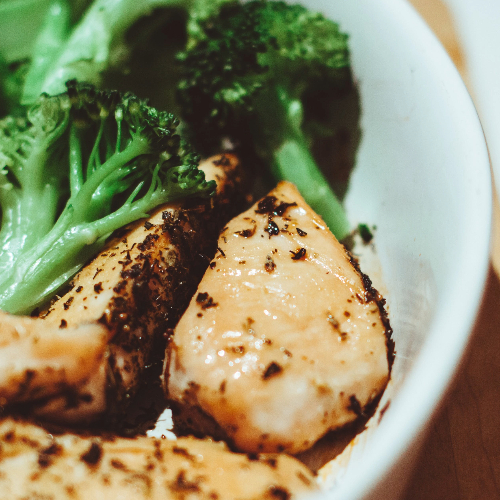
Protein in common foods
Calculated from USDA FoodData Central:
| Food | Portion | Protein | Calories |
|---|---|---|---|
| Chicken breast, cooked | 120 g | 37 g | 198 kcal |
| Canned light tuna, drained | 120 g | 31 g | 139 kcal |
| Ground beef (90% lean), cooked | 100 g | 28 g | 230 kcal |
| Salmon, cooked | 120 g | 26.5 g | 247 kcal |
| Firm tofu | 150 g | 26 g | 216 kcal |
| Tempeh | 100 g | 20 g | 192 kcal |
| Lentils, cooked | 200 g (about 1 cup) | 18 g | 232 kcal |
| Plain nonfat Greek yogurt | 170 g pot | 16 to 17 g | about 100 kcal |
| Cottage cheese (2% fat) | 150 g | 15.5 g | 122 kcal |
| Eggs, hard-boiled | 2 large (100 g) | 12.5 g | 155 kcal |
High-protein breakfast ideas
- Greek yogurt bowl: 170 g Greek yogurt with berries, a spoonful of nut butter and seeds (about 25 g protein).
- Eggs on toast: two or three eggs, scrambled or poached, on whole grain toast with spinach (about 20 to 25 g).
- Overnight oats with protein: oats soaked in milk with Greek yogurt and chia. Our overnight oats can be adapted.
- Cottage cheese and fruit with a slice of rye toast.
- Tofu scramble with vegetables and whole grain toast.
- Smoked salmon and eggs on a bagel thin.
Our list of high-protein breakfast ideas has more.
High-protein lunch ideas
- Chicken and quinoa salad with chickpeas, cucumber and feta.
- Tuna salad on whole grain bread or in lettuce cups. Our lighter tuna salad has 17 g of protein per serving before bread.
- Lentil soup with a boiled egg or a slice of cheese on the side.
- Chickpea avocado salad, like our chickpea avocado salad, with grilled chicken or tofu.
- Salmon poke bowl with edamame; see our salmon poke bowl.
- Leftover chili with beans and a spoonful of Greek yogurt.
High-protein dinner ideas
- Sheet pan chicken with roasted vegetables and potatoes.
- Salmon with green vegetables and brown rice. See our guide on how to cook salmon.
- Lean beef or turkey chili with kidney beans.
- Tofu or tempeh stir-fry with broccoli, peppers and noodles. Try our tofu stir-fry.
- Lentil and vegetable curry with a side of Greek yogurt.
- Garlic shrimp with zucchini noodles or whole wheat pasta.
- Spatchcock roast chicken, like our spatchcock chicken, with salad.
High-protein snacks
- Greek yogurt or skyr
- Boiled eggs
- A handful of nuts or roasted chickpeas
- Cottage cheese with cucumber
- Edamame
- Cheese with an apple
- Hummus with vegetable sticks
A sample high-protein day
| Meal | Example | Approximate protein |
|---|---|---|
| Breakfast | Greek yogurt with berries, oats and seeds | 25 g |
| Lunch | Chicken and chickpea salad with quinoa | 35 g |
| Snack | Two boiled eggs or a pot of cottage cheese | 12 to 15 g |
| Dinner | Salmon with vegetables and brown rice | 30 g |
| Total | 100 g or more |
This is more than most people need, but it shows how easy it is to reach higher targets for older adults, athletes or anyone losing weight, simply by including a protein food at each meal. A smaller version, with lighter portions, would suit most adults well. Spreading protein through the day like this also helps keep you full between meals.
Who needs more protein?
- Older adults: an expert group recommends 1.0 to 1.2 g per kg of body weight a day for healthy older people, to help maintain muscle, as described in the PROT-AGE recommendations.
- People losing weight, to help keep muscle while losing fat.
- Athletes and very active people, especially those doing strength training.
- Pregnant and breastfeeding women, who need a little more.
People with kidney disease may need to limit protein, so follow your doctor’s advice.
Plant and animal protein
Animal proteins contain all the essential amino acids in good proportions. Most plant proteins are lower in one or more, but eating a variety of plant proteins across the day, such as beans, lentils, grains, nuts, seeds and soy, covers your needs. Plant proteins also bring fiber. Our guide to plant-based protein explains how to combine them.
Keeping high-protein meals healthy
- Choose lean or plant proteins often, and limit processed meat, which the World Health Organization classes as a cause of bowel cancer.
- Keep half the plate for vegetables. High-protein diets can crowd out fiber.
- Include oily fish once a week.
- Watch protein bars and shakes, which can be high in sugar or sweeteners and expensive. Food first is usually best.
Common questions
How much protein should be in a meal?
About 20 to 30 g per meal suits most adults, with more for larger or very active people and older adults.
Is too much protein harmful?
For healthy people, moderately high protein intakes appear safe. People with kidney disease should follow medical advice.
Can I get enough protein without meat?
Yes. Eggs, dairy, beans, lentils, tofu, tempeh, nuts and seeds provide plenty. Our guide to the vegetarian diet explains how.
Are protein bars and shakes worth it?
They can be handy when you’re short of time, after exercise or when traveling, but they’re often expensive and some are high in sugar or sweeteners. Check the label for protein, sugar and fiber, and treat them as an occasional backup rather than a replacement for meals. A glass of milk, a pot of Greek yogurt or a handful of nuts and a boiled egg give similar protein for less money.
What’s the cheapest source of protein?
Eggs, dried or canned lentils and beans, canned fish, milk, peanut butter, tofu and chicken thighs are among the cheapest protein foods in most countries.
This article is general information, not medical advice. Talk to your doctor or a registered dietitian before making big changes to how you eat, especially if you have a health condition, take regular medication, or are pregnant or breastfeeding.



